




Types of Radioactive Waste
6 min read
There are many types of radioactive waste, each requiring appropriate handling and safety measures. The period for which radioactive waste must be isolated from people and the environment also varies considerably. Some waste may present additional chemical hazards, for example from toxic metals, or biological hazards, such as contaminated excreta, blood or laboratory animals.
Classification of Radioactive Waste
Radioactive waste is commonly divided into several classes according to its characteristics and the type of disposal required. The three principal classes discussed here are low-level, intermediate-level and high-level waste.
Low-level waste
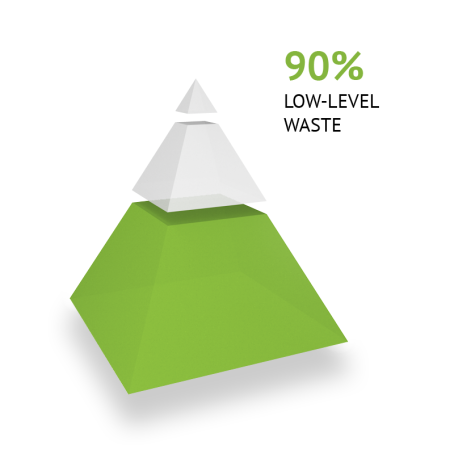
Low-level waste (LLW) makes up the largest proportion of radioactive waste by volume. It is generated by nuclear facilities as well as medicine, industry and research, and includes items such as contaminated clothing, paper, tools, filters and medical materials. LLW contains limited amounts of radioactivity and generally requires little or no shielding during handling and transport. It may contain both short-lived radionuclides and limited concentrations of long-lived radionuclides and is generally suitable for disposal in near-surface facilities.
Intermediate-level waste
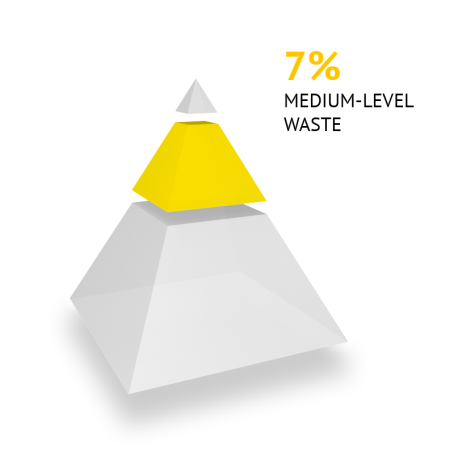
Intermediate-level waste (ILW) contains higher concentrations of radionuclides than LLW and generally requires shielding during handling and transport. It includes materials such as ion-exchange resins, chemical sludges and contaminated or activated components from nuclear facilities, as well as some disused radioactive sources. ILW may contain significant quantities of long-lived radionuclides and therefore requires a greater degree of isolation from people and the environment than LLW. However, it generates little or no heat compared with high-level waste.
High-level waste
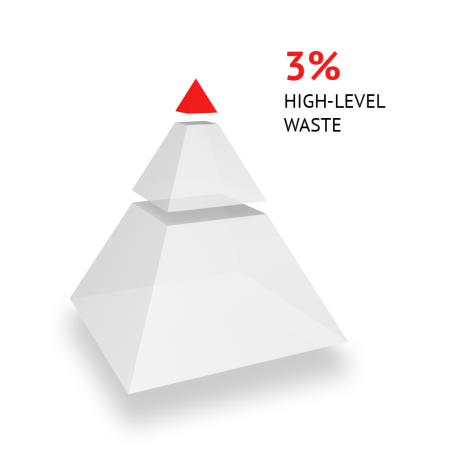
High-level waste (HLW) contains very high concentrations of radionuclides and generates significant amounts of heat through radioactive decay. It includes highly radioactive waste remaining after the reprocessing of spent nuclear fuel. In countries where spent fuel is not intended for reprocessing and is designated as waste, it is also managed as high-level waste; where reprocessing is used, spent fuel is considered a resource from which uranium and plutonium can be recovered for further use.
HLW contains a mixture of radionuclides with widely differing half-lives. Short-lived fission products initially account for much of its activity and heat generation, but their contribution gradually decreases as they decay. In the longer term, long-lived radionuclides become increasingly important and determine how the waste must be isolated from people and the environment. Technologies for separating some long-lived radionuclides and potentially transmuting them into shorter-lived or stable nuclides are being researched, but they do not eliminate the need for long-term disposal.
Because of its high activity, HLW requires substantial shielding and careful containment. Freshly discharged spent fuel also generates considerable decay heat and is therefore initially stored and cooled in water-filled pools. As its heat output decreases over time, it can be transferred to dry storage systems where heat is removed passively, usually by natural air circulation. Ultimately, HLW and spent fuel designated as waste require disposal in deep geological repositories, where engineered and natural barriers provide isolation over periods of hundreds of thousands of years or longer.
High-level waste represents only a few percent of radioactive waste by volume but contains about 95% of its radioactivity.
Classification According to Radionuclide Half-Life
The radionuclides contained in radioactive waste have widely differing half-lives. Short-lived radionuclides, conventionally including many with half-lives of about 30 years or less, decay relatively quickly and may require shielding while their activity remains high. Long-lived radionuclides can remain hazardous for thousands or even millions of years and therefore have a major influence on the requirements for long-term waste disposal. The type and energy of the radiation emitted, rather than the half-life alone, determine the shielding required during handling and storage.
Classification According to State
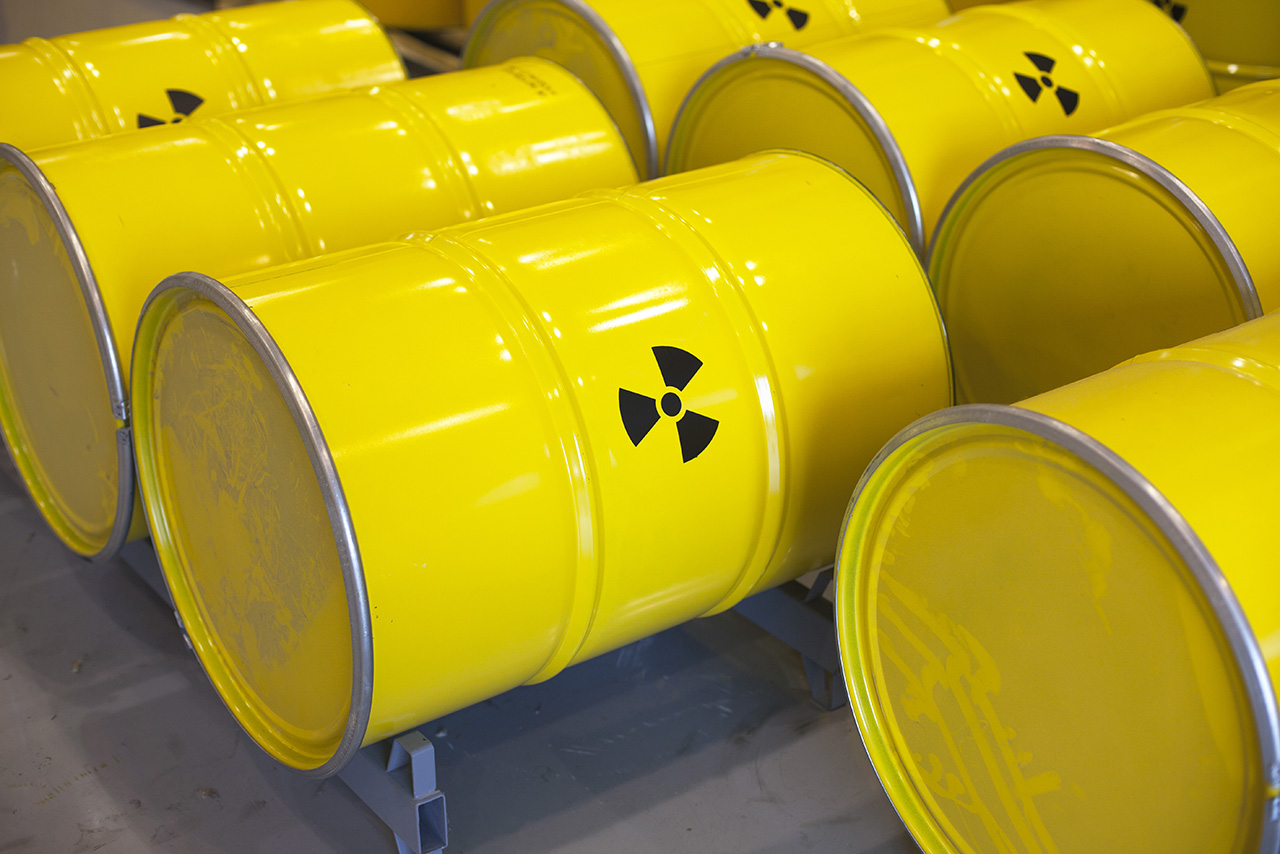
Most radioactive waste by volume is solid low-level waste. Its volume can be reduced by methods such as incineration or compaction before packaging in containers.
Solid Waste
Radioactive waste is often handled in solid form. Many treatment and conditioning processes therefore aim to convert liquid or other waste into a stable solid form. Solid waste is generally easier to handle, package and store, and radionuclides can be more effectively contained and isolated from the environment.
Liquid Waste
Liquid radioactive waste includes contaminated water and other liquids containing dissolved or suspended radionuclides. In nuclear power plants, it may arise from the treatment of reactor coolant and spent fuel pool water, as well as from decontamination, maintenance and laboratory activities. Liquid waste is usually treated to concentrate and separate the radionuclides before further conditioning.
Gaseous Waste
Radioactive gases and airborne radioactive substances may arise during nuclear operations and waste treatment. They can include radioactive noble gases such as xenon and krypton, as well as volatile forms of iodine and radioactive aerosols. Gaseous effluents are treated and monitored before any controlled release to the environment.
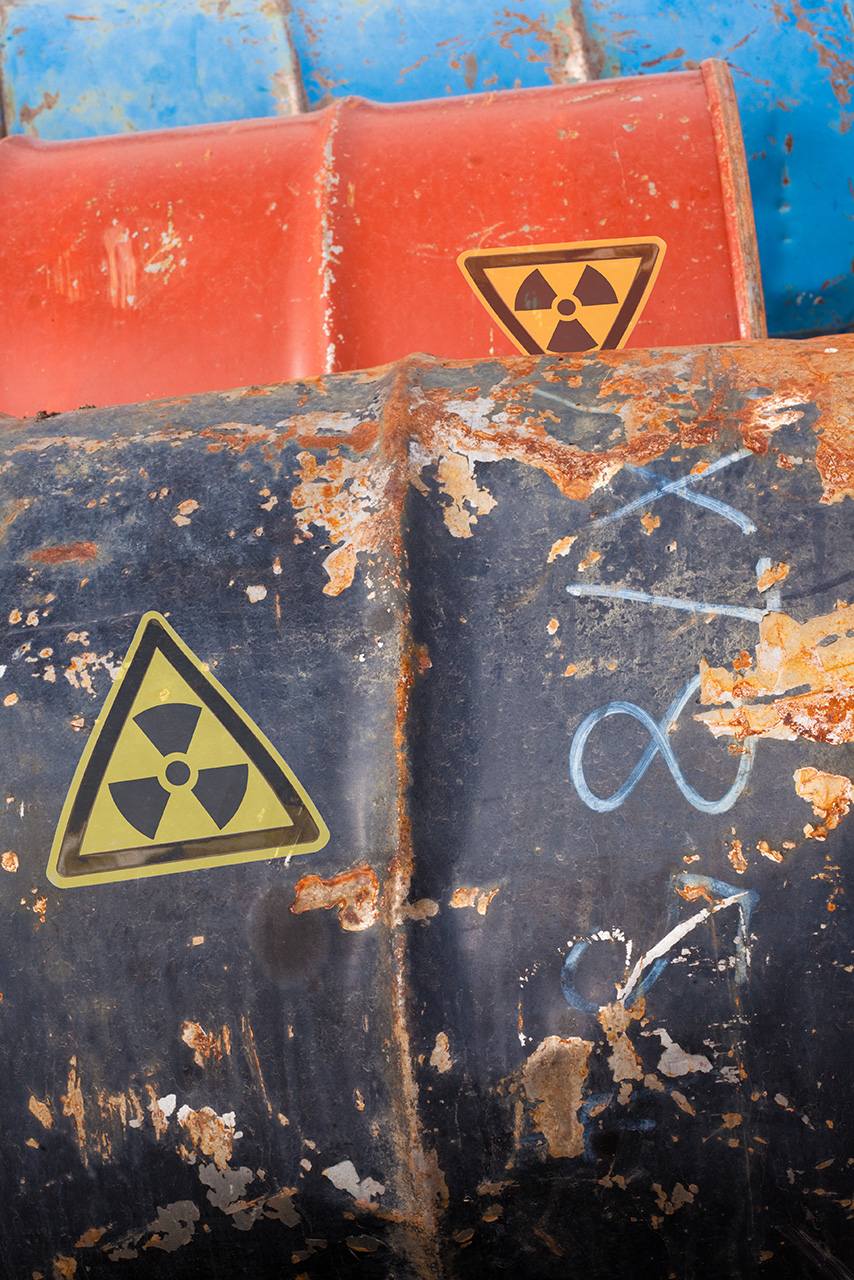
Radioactive waste may be solid, liquid or gaseous. Solid waste is generally easier to handle and contain, so many waste treatment and conditioning processes aim to convert waste into a stable solid form.
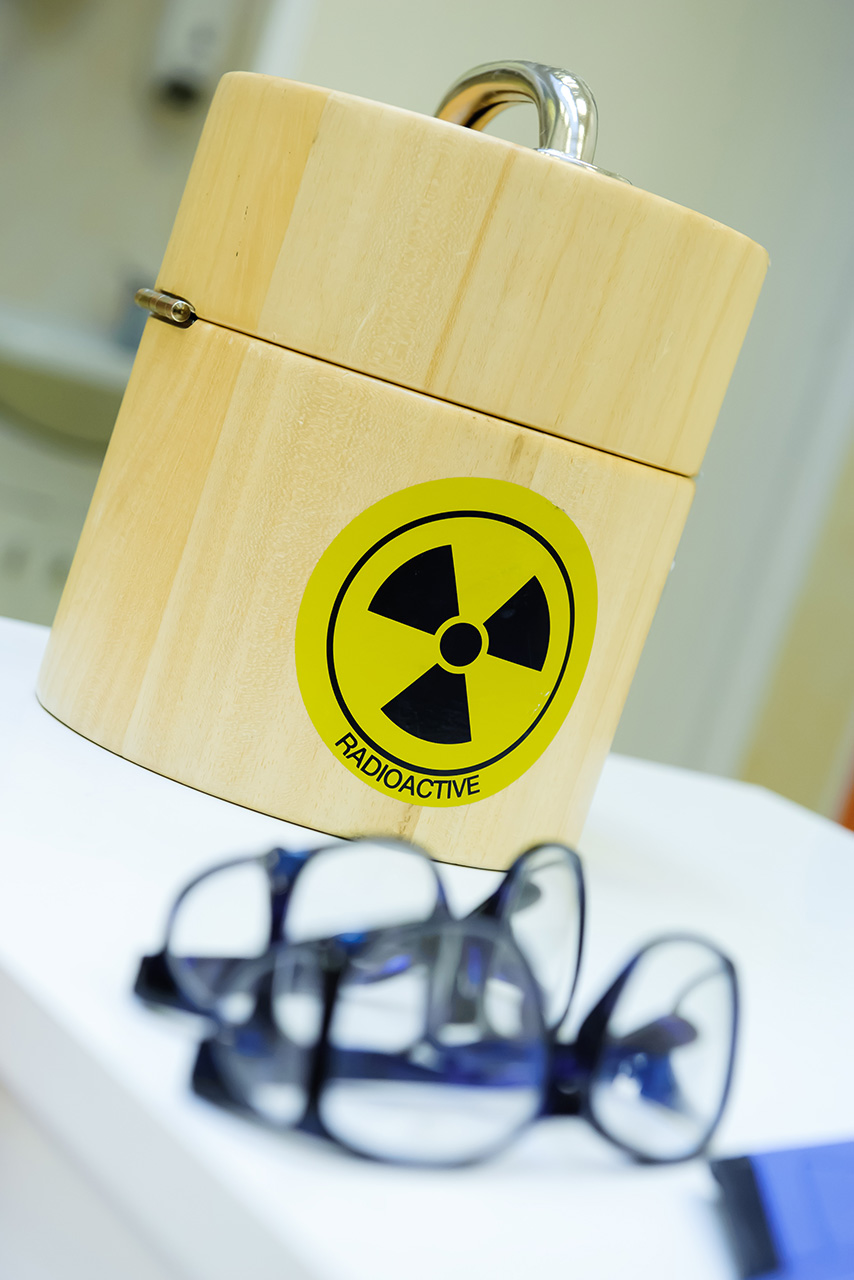
Sealed radioactive sources are transported in shielded containers. At the end of their useful life, they must be safely managed according to their activity and radionuclide content, which determine the required shielding and disposal method.
Brazilian coffee beans were once brought into a British nuclear facility to demonstrate natural radioactivity. After entering the facility, their natural radioactivity meant that they had to be treated as low-level radioactive waste rather than disposed of as ordinary waste.


Robie, your AI assistant