


The Energy Use of the Photovoltaic Effect
8 min read
Photovoltaic Effect
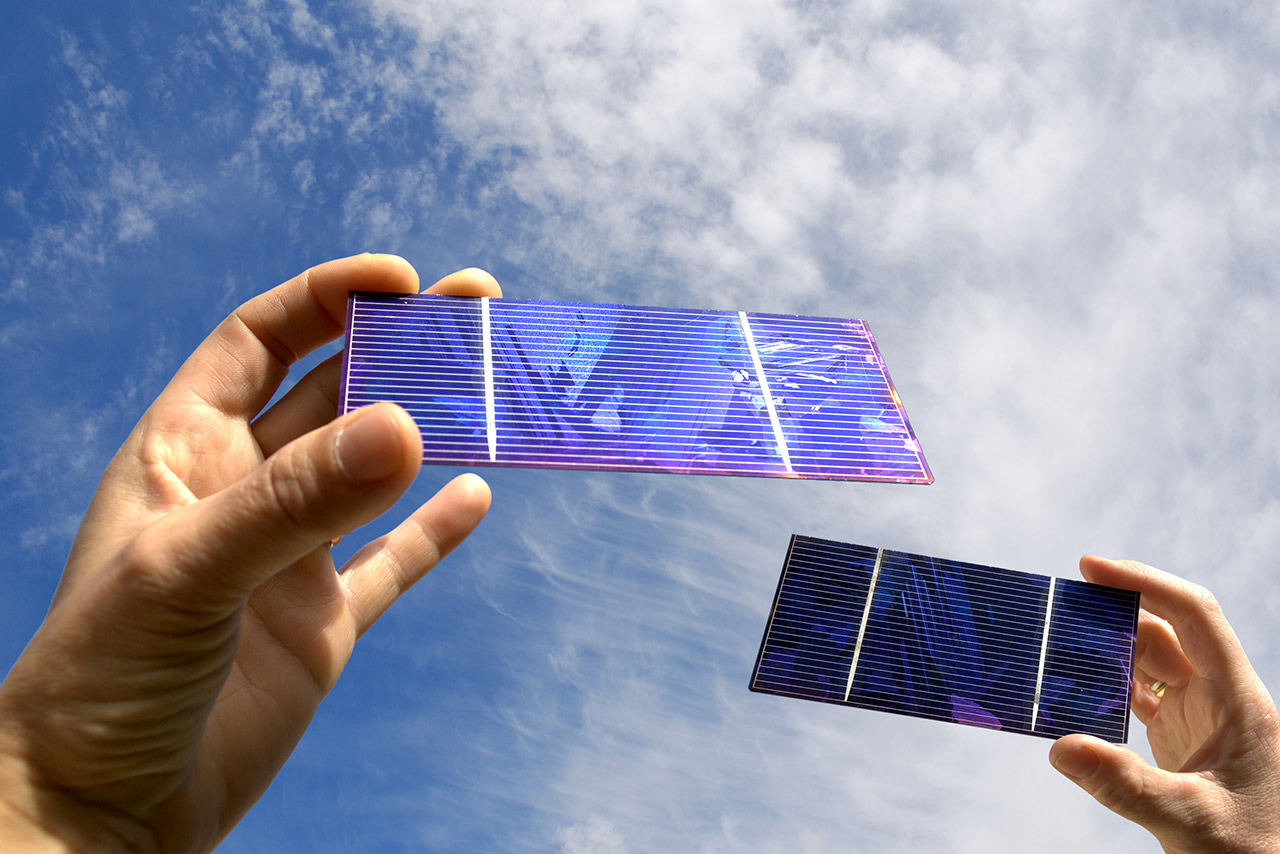
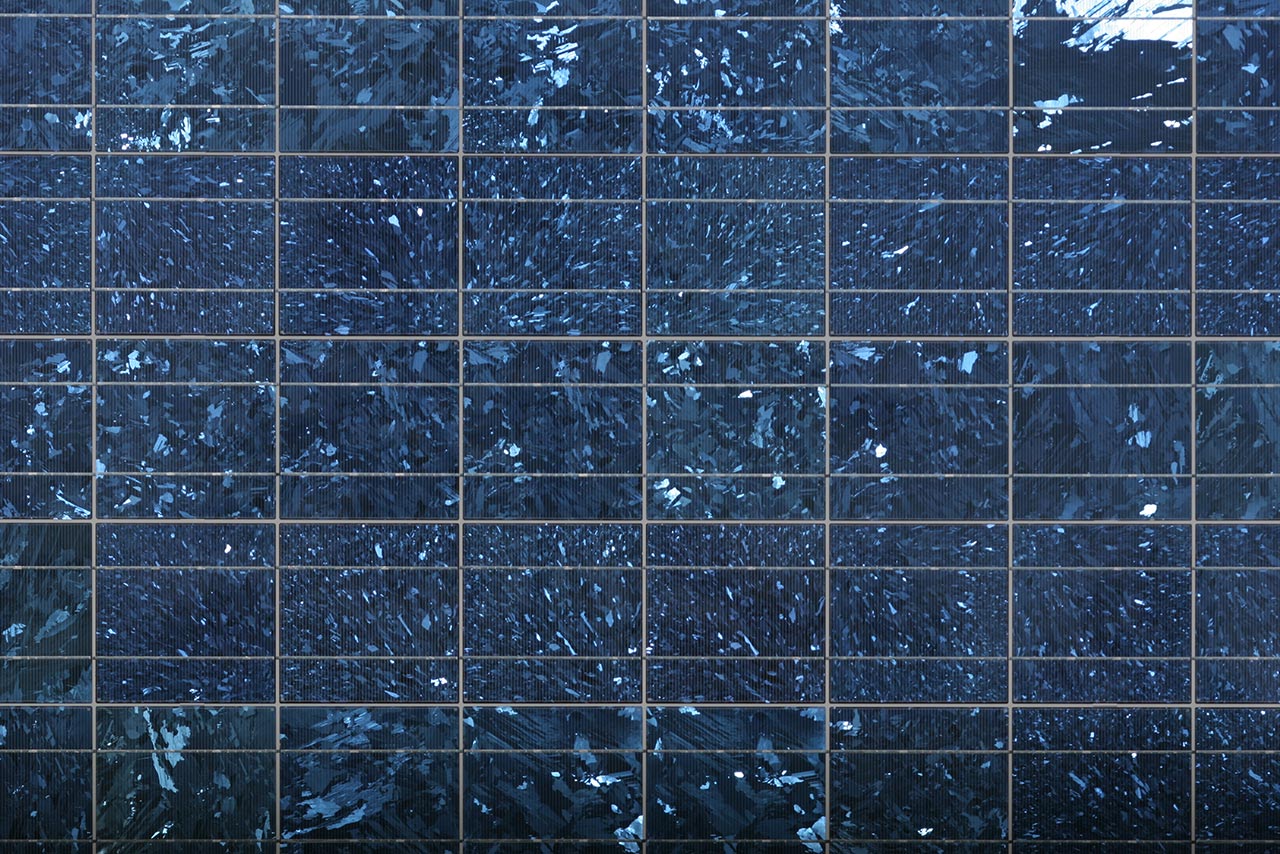
Polycrystalline solar cells ready to be used in solar panels.
The photovoltaic effect is a phenomenon in which light absorbed by a material generates an electric voltage. Light consists of photons whose energy depends on their wavelength. In semiconductors, absorbed photons can provide the energy needed to create mobile charge carriers.
In practice, the most commonly used semiconductor is silicon. It has a band gap of approximately 1.12 eV, corresponding to a photon wavelength of about 1,100 nm. Photons with sufficient energy can excite electrons from the valence band into the conduction band, where they can move through the material. Photons with lower energies cannot overcome the band gap.
When an electron is excited into the conduction band, it leaves behind a vacant state in the valence band called a hole, which behaves as a positively charged carrier. Together, the electron and hole form an electron-hole pair.
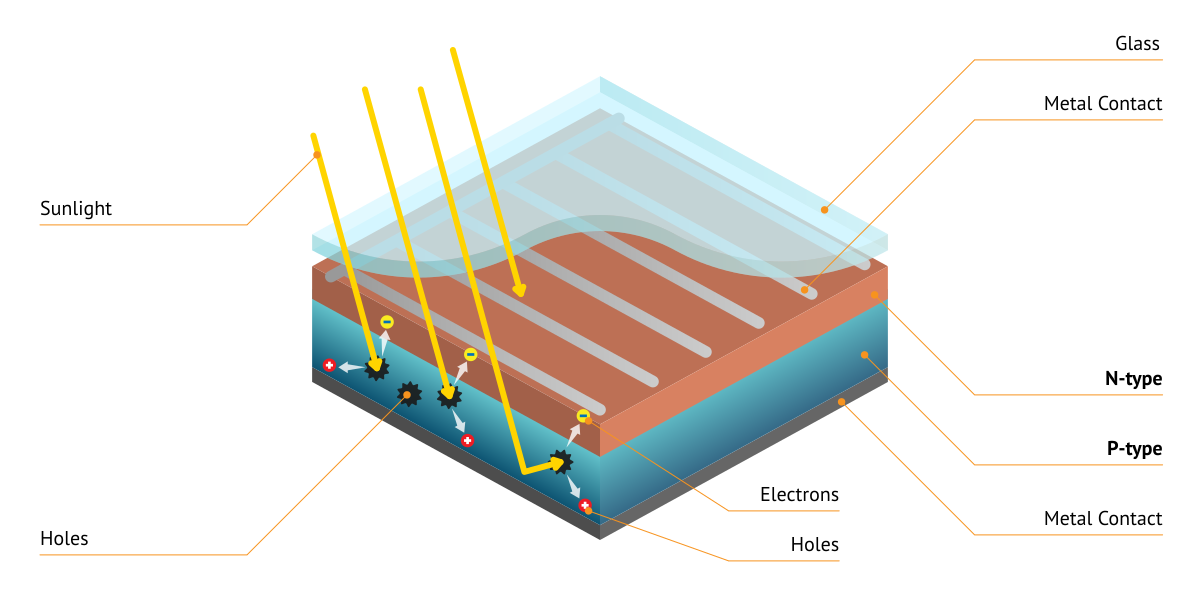
The photovoltaic effect in a crystalline-silicon solar cell.
History
The photovoltaic effect was first observed by the French physicist Alexandre Edmond Becquerel in 1839. In 1905, Albert Einstein explained the closely related photoelectric effect, providing an important foundation for understanding the interaction of light with electrons. For his discovery of the law of the photoelectric effect, he was awarded the 1921 Nobel Prize in Physics, which he received in 1922. The first practical photovoltaic solar cell, made of crystalline silicon and with an efficiency of about 6%, was developed at Bell Laboratories in 1954.
Solar Cells
Solar cells (or photovoltaic cells) are the basic building elements of any solar system that transforms solar radiation directly into electric energy. Solar cells exploit the photovoltaic effect in semiconductors.
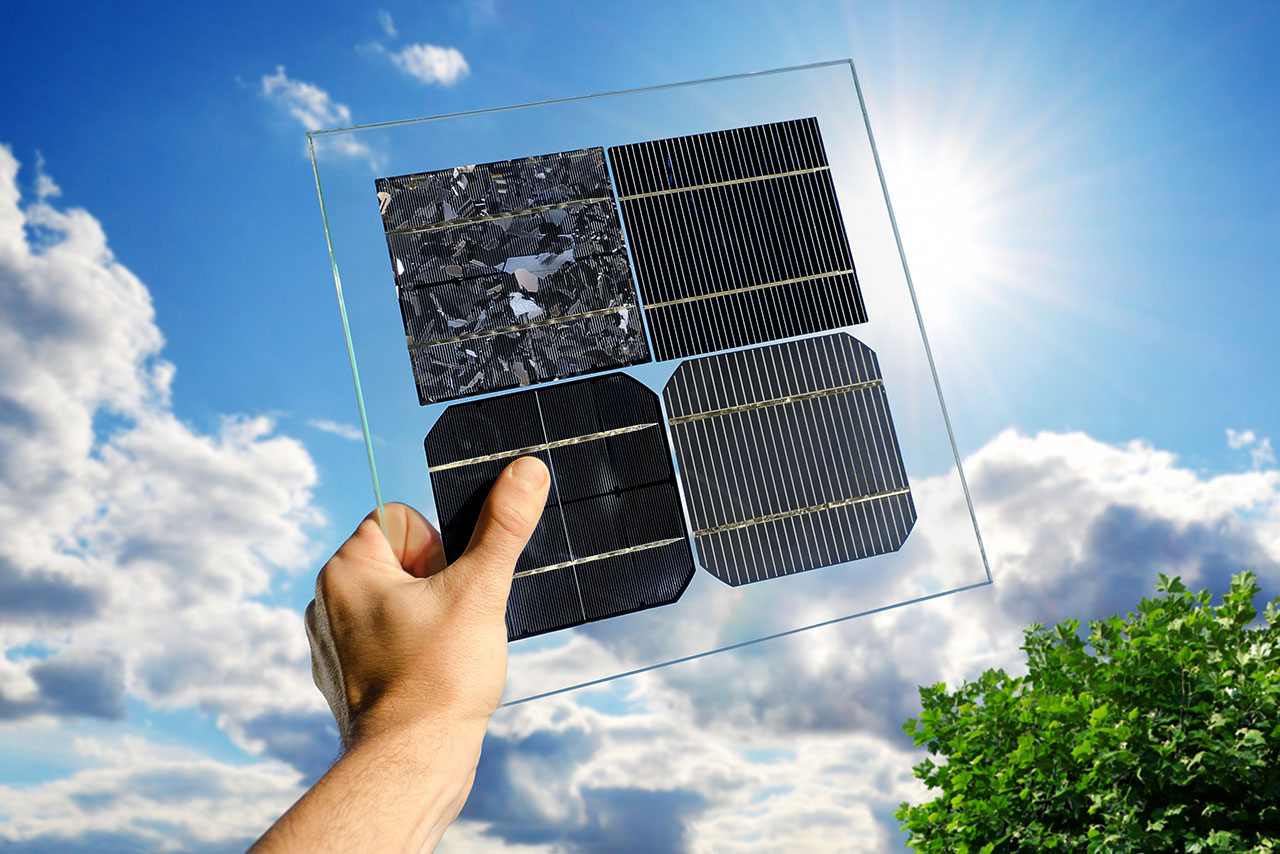
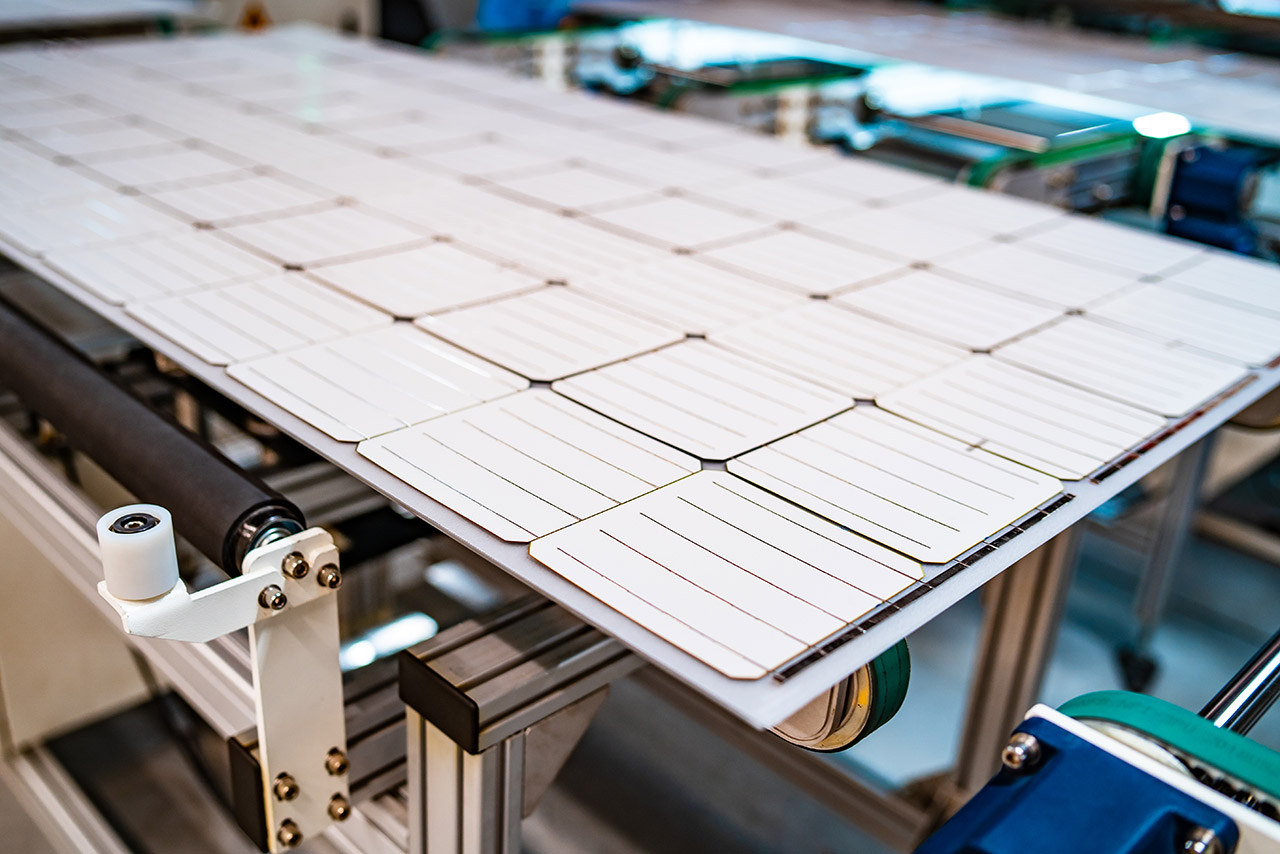
Various kinds of monocrystalline and polycrystalline solar cells.
A basic crystalline-silicon solar cell contains a P-N junction formed between P-type and N-type semiconductor regions. P-type silicon can be produced by doping silicon with boron, while phosphorus is commonly used to produce N-type silicon. At the interface between the two regions, an internal electric field is created that helps separate the electrons and holes generated by absorbed light.
The internal electric field of the P-N junction separates the charge carriers generated by absorbed light, directing electrons and holes towards opposite sides of the cell. This creates a voltage of around 0.6 V in a typical crystalline-silicon solar cell. When the cell is connected to an external circuit through metal contacts, the electrons can flow through the circuit and produce an electric current.
Solar cells can be divided into several types according to the semiconductor material and manufacturing technology:
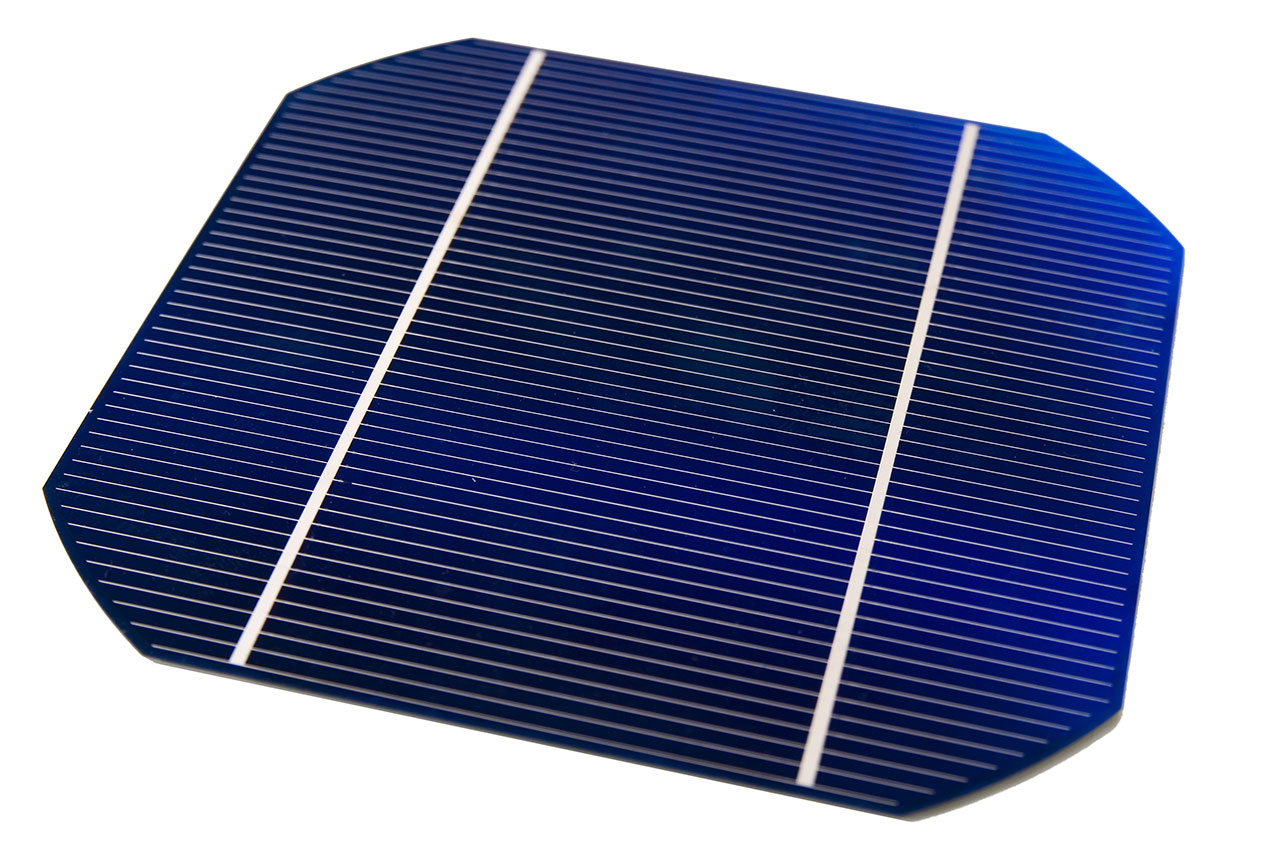
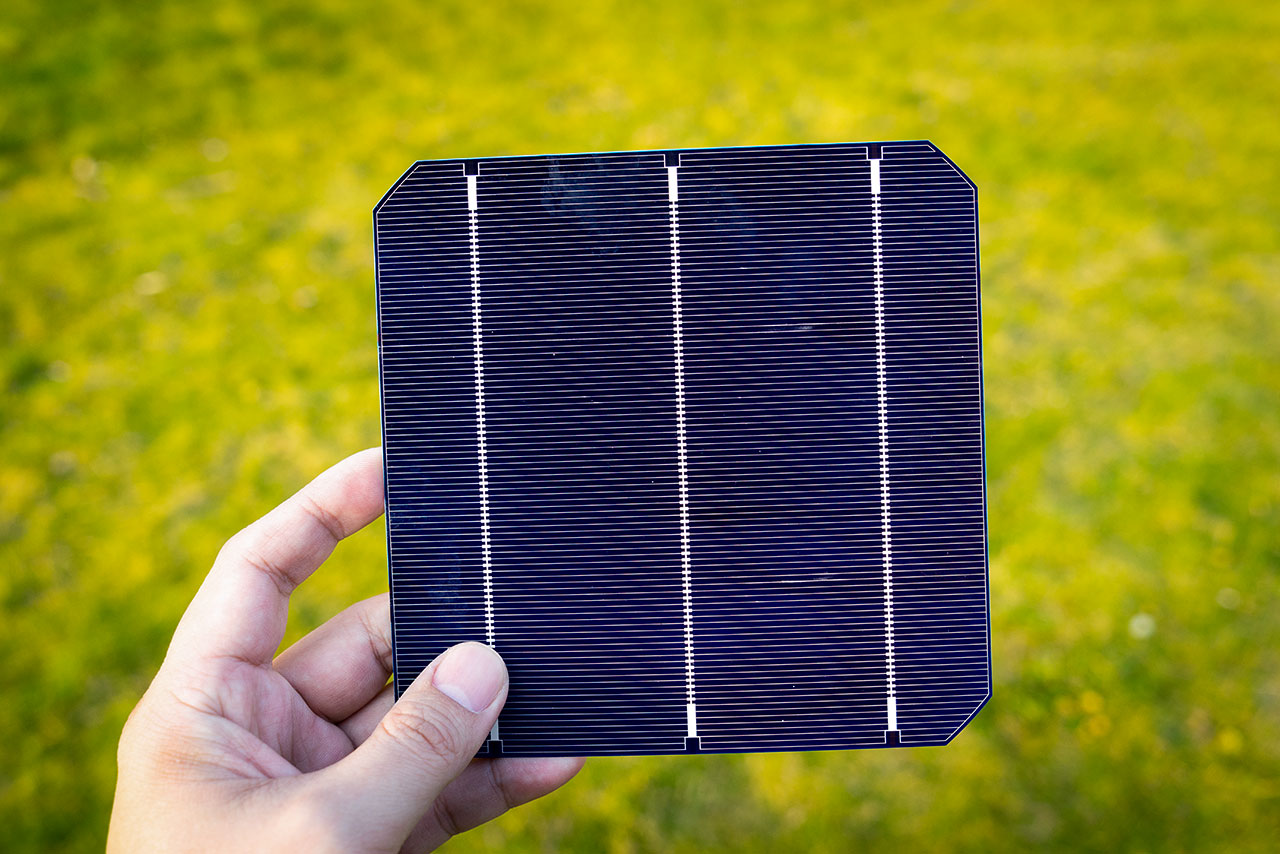
A monocrystalline silicon solar cell.
Monocrystalline solar cells
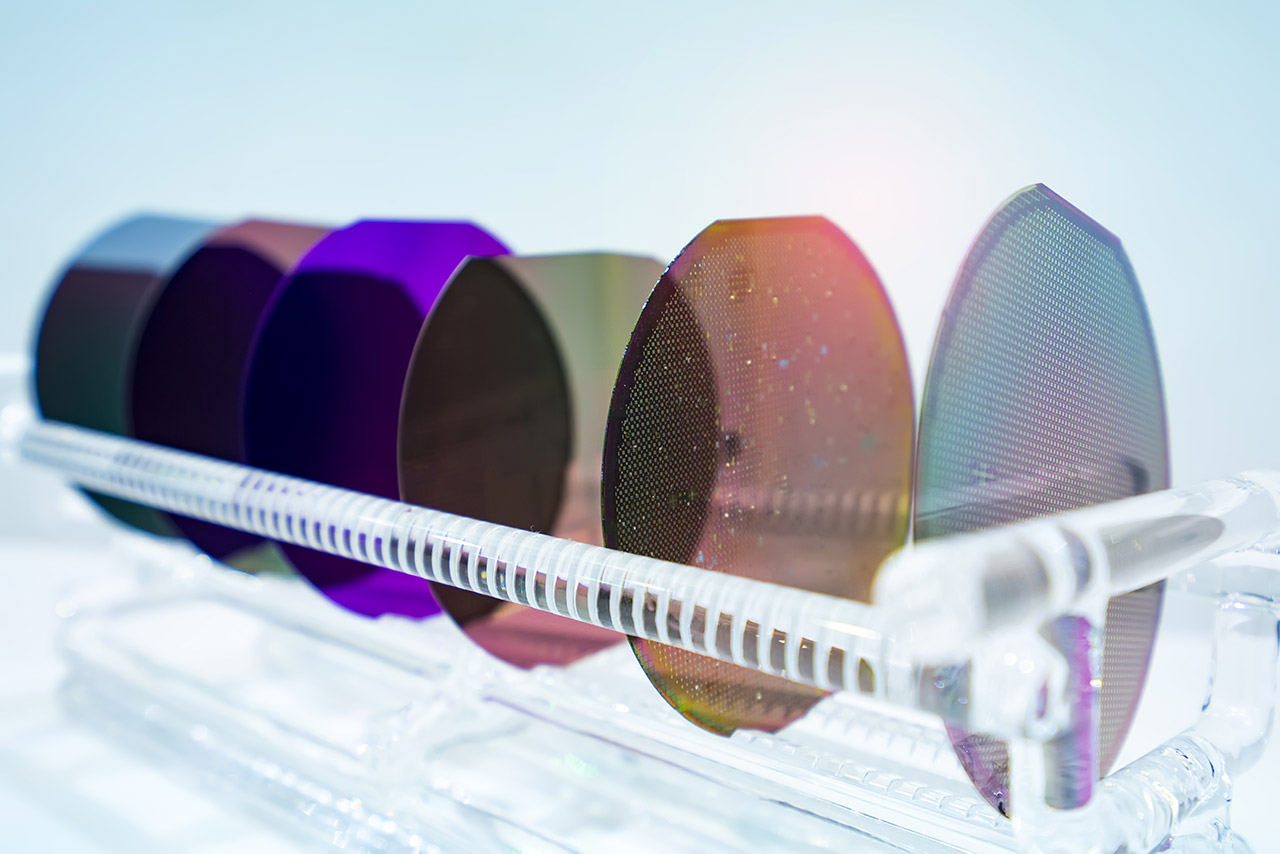
The main element of a monocrystalline solar cell is a thin silicon wafer cut from a single-crystal silicon ingot. The crystal is typically grown from molten silicon in the form of a cylindrical ingot, from which thin wafers are sliced and processed into solar cells. Monocrystalline cells are usually dark blue to black and are currently the dominant type of crystalline-silicon solar cell. Modern commercial cells typically achieve efficiencies above 20%, with the most efficient designs approaching 25%.
Video: 3D model of photovoltaic panels mounted on a solar tracking structure. Such structures follow the position of the Sun and adjust the orientation of the panels to increase the amount of solar radiation they receive.
Polycrystalline solar cells
The main element of a polycrystalline, or multicrystalline, solar cell is a silicon wafer consisting of many individual crystal grains. The silicon is solidified into an ingot and then sliced into wafers. The cells are usually square and have a characteristic blue appearance in which the individual crystal grains may be visible. Commercial polycrystalline cells typically achieved efficiencies of around 15—20%, generally lower than comparable monocrystalline cells. Their share of the photovoltaic market has declined substantially, and the technology has now largely been displaced by monocrystalline silicon.
Thin film solar cells
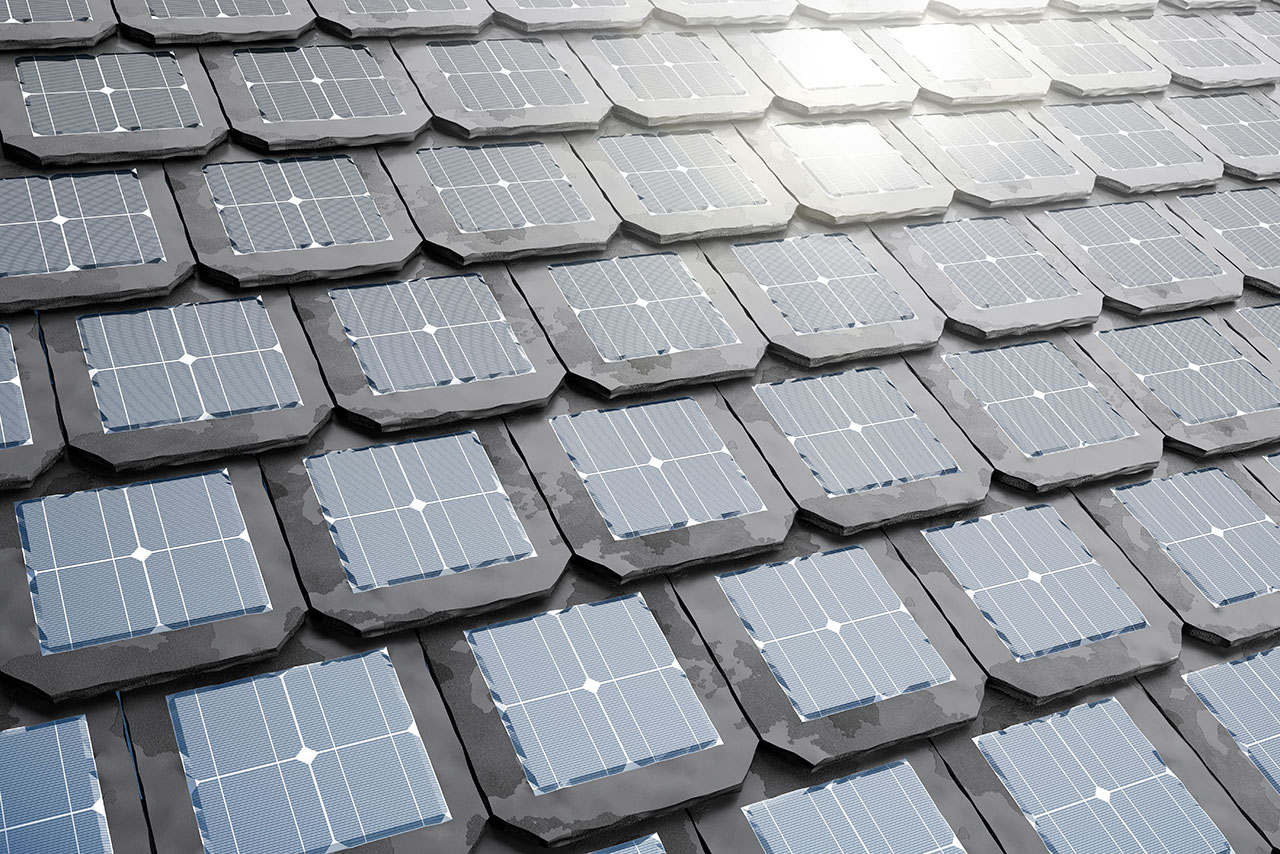
The main element of a thin-film solar cell is a suitable substrate, such as glass, plastic or metal, onto which one or more thin layers of semiconductor material are deposited. Thin-film photovoltaic technologies include amorphous silicon, cadmium telluride (CdTe) and copper indium gallium selenide (CIGS). Some thin-film cells can be made flexible or integrated directly into building materials, while others are manufactured as conventional rigid solar modules.
The performance of thin-film solar cells depends strongly on the semiconductor technology used. Some thin-film technologies have favourable temperature characteristics and can perform well under diffuse light. Their conversion efficiencies have increased considerably. Commercial thin-film modules typically achieve efficiencies of roughly 10—20%, while laboratory CdTe and CIGS cells exceed 20%. However, commercial thin-film modules generally require a larger area than high-efficiency crystalline-silicon modules to produce the same rated power.
Thin-film cells use much less semiconductor material than conventional crystalline-silicon cells, but this does not necessarily result in lower overall manufacturing costs. Crystalline silicon now dominates the global photovoltaic market. In 2024, thin-film technologies accounted for only about 2% of global PV module production, with CdTe representing the great majority of this share.
5 pictures
5 pictures
Solar Panels
The voltage produced by a single solar cell is too low for most practical applications. Therefore, solar cells are interconnected to form larger units called photovoltaic modules, commonly known as solar panels. The cells are usually connected in series to increase the voltage, while parallel connections may be used to increase the current. The voltage and current produced by a module depend on its design and operating conditions. The current generated by a solar panel increases approximately in proportion to the solar irradiance falling on it.
Online 3D Model › Energy Efficient House / Photovoltaic Panels
Free Downloads › Online 3D › Energy Efficient House / Photovoltaic Panels
Video: 3D model of a solar panel.
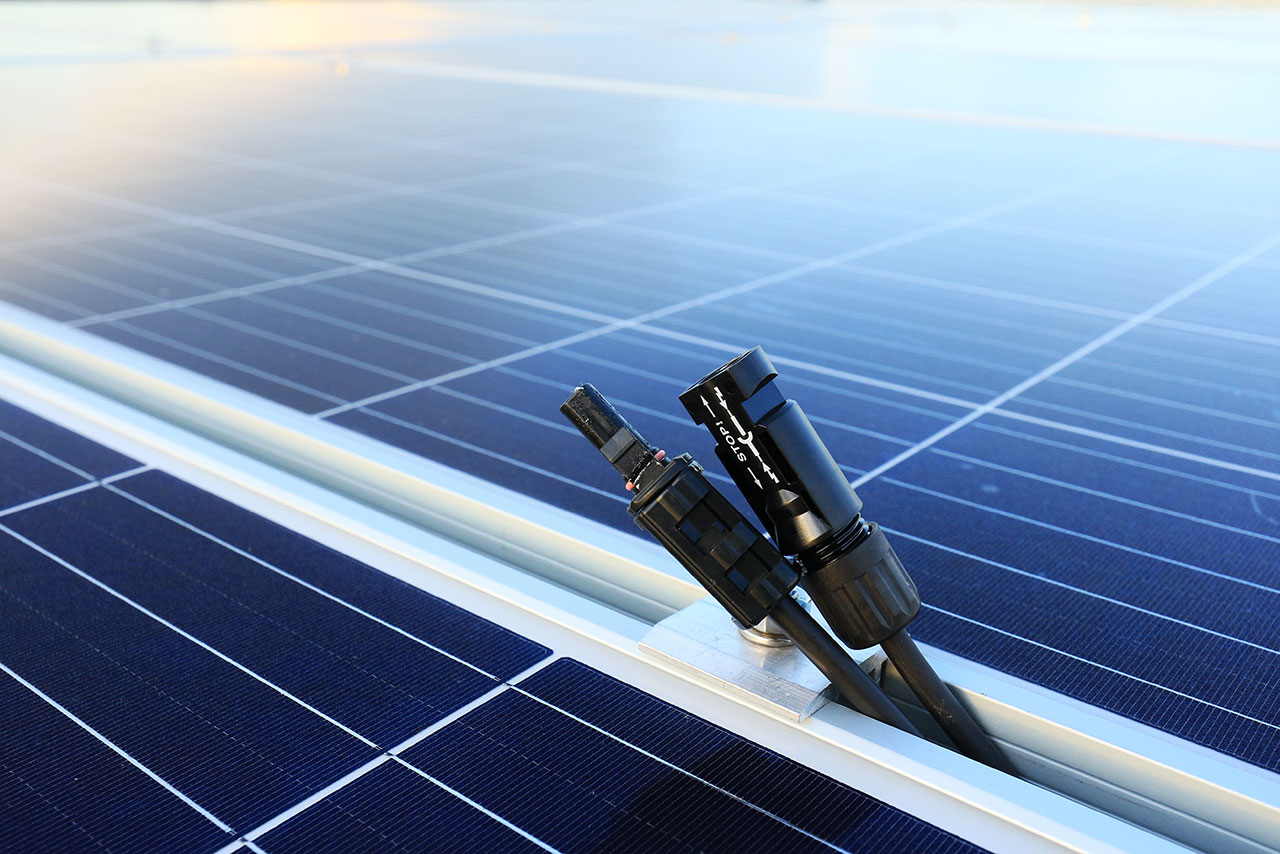
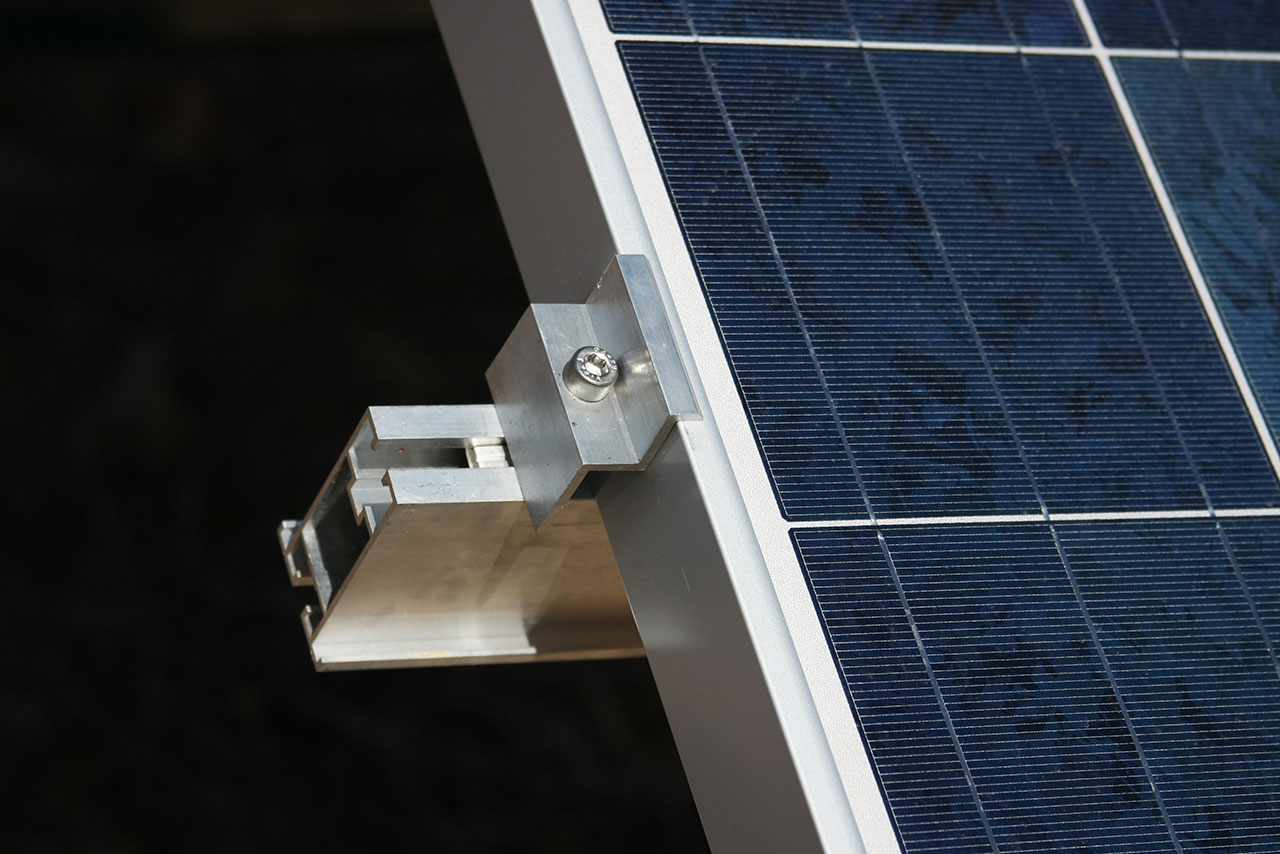
A typical crystalline-silicon solar panel consists of interconnected solar cells encapsulated between protective layers. The front is usually made of highly transparent tempered glass, while the cells are embedded in an encapsulating material such as EVA. The rear side may be protected by a polymer backsheet or, in glass-glass modules, by a second sheet of glass. The module is often fitted into an aluminium frame that provides mechanical strength and facilitates installation.
The front glass protects the solar cells from mechanical damage and weather while allowing as much solar radiation as possible to reach them. Low-iron solar glass is commonly used because of its high optical transmittance and may be provided with an anti-reflective coating to reduce reflection losses. The encapsulating layers protect the cells against moisture and mechanical stresses and electrically insulate them from the surroundings.
Solar panels produce the most energy when sunlight strikes their surface as directly as possible. Fixed panels are therefore installed at an orientation and inclination chosen to maximise the amount of solar radiation received over the year. Solar tracking systems can be used to increase energy yield by continuously adjusting the orientation of the panels towards the Sun, although they make the installation more complex and expensive. Modern photovoltaic modules typically have a service life of 25—30 years or more, with their power output gradually decreasing over time.
The most efficient mass-produced solar panels can deliver more than 230 W of power per square metre under standard test conditions.
22 pictures

22 pictures


Robie, your AI assistant