


Wind Power Plants
4 min read
Wind Power Plant Types
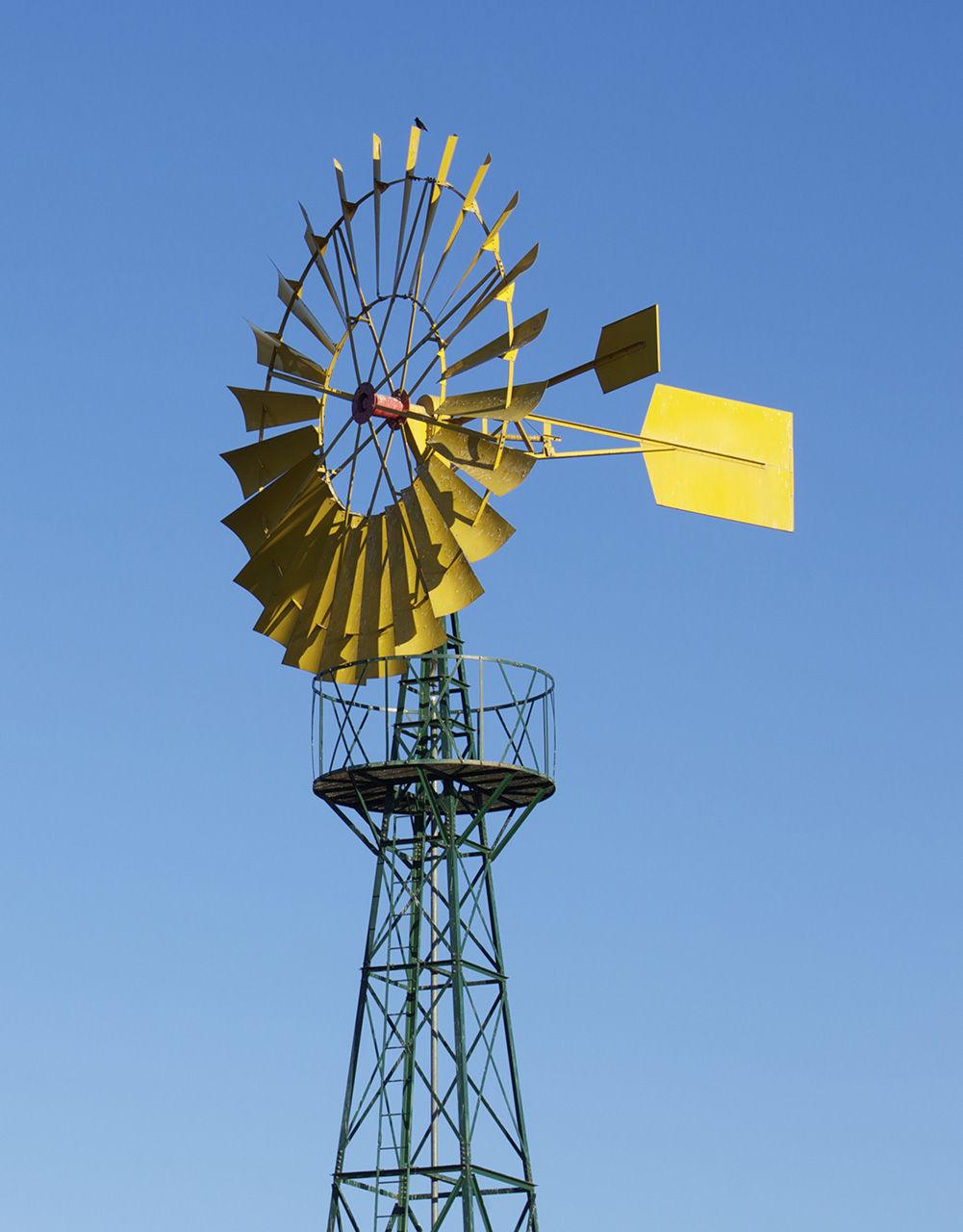
An example of a drag-based wind turbine.
The basic classification of wind turbines is based on the principle used to extract kinetic energy from the moving air.
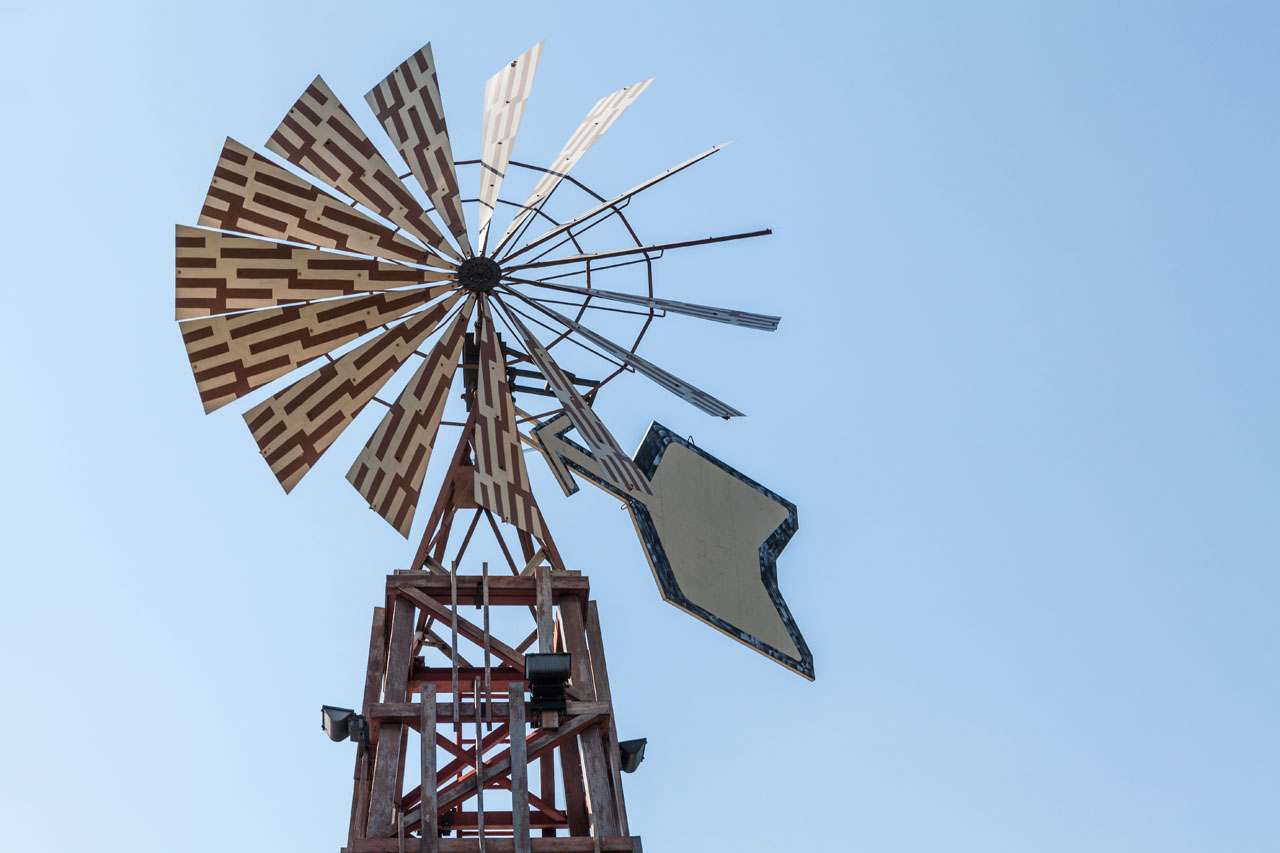
Drag Turbines
Some low-output wind turbines use mainly the drag principle. A surface exposed to the wind experiences a drag force, which can be used to produce rotation of a shaft. Drag-based wind turbines typically achieve power coefficients of around 10—20%, depending on their design.
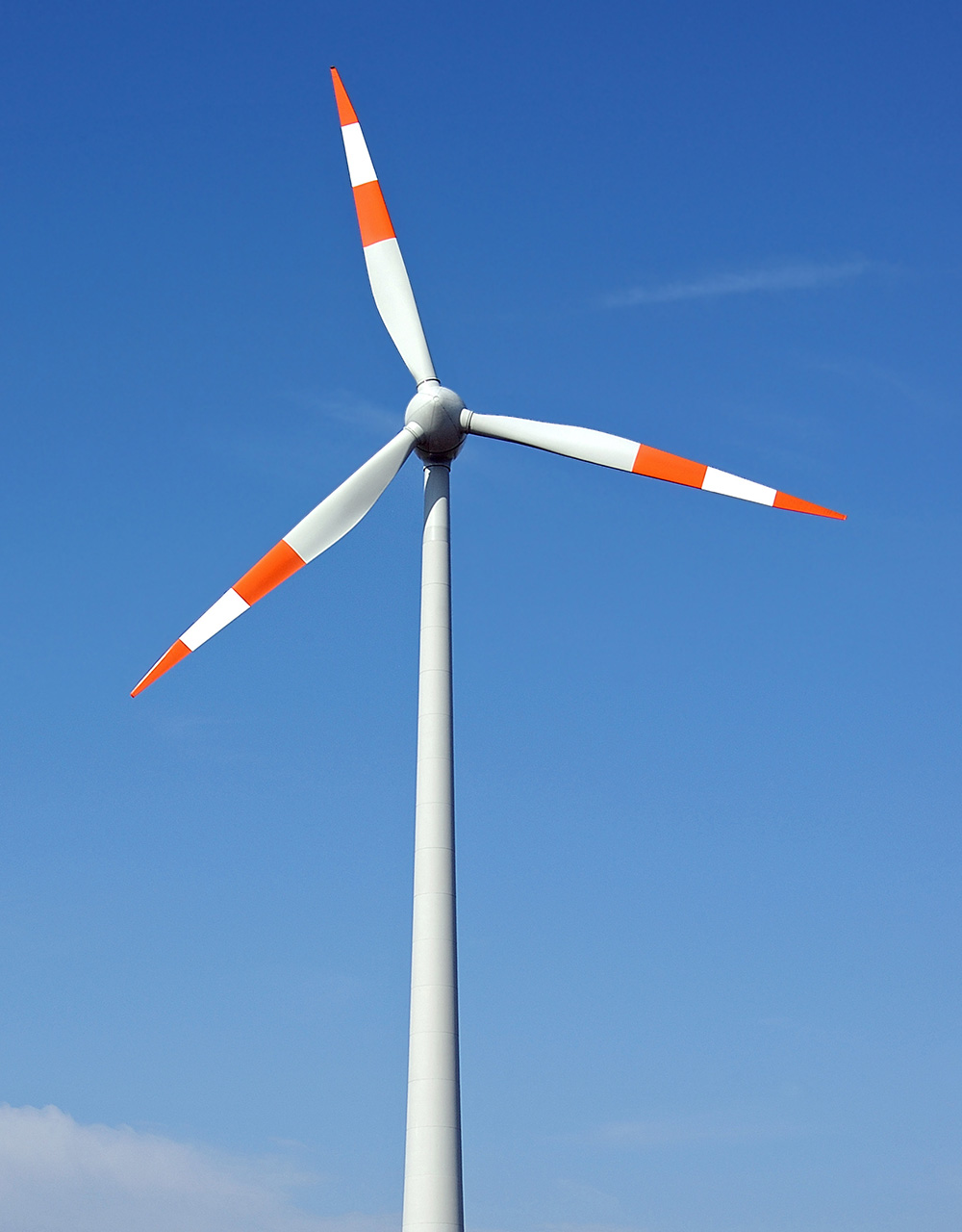
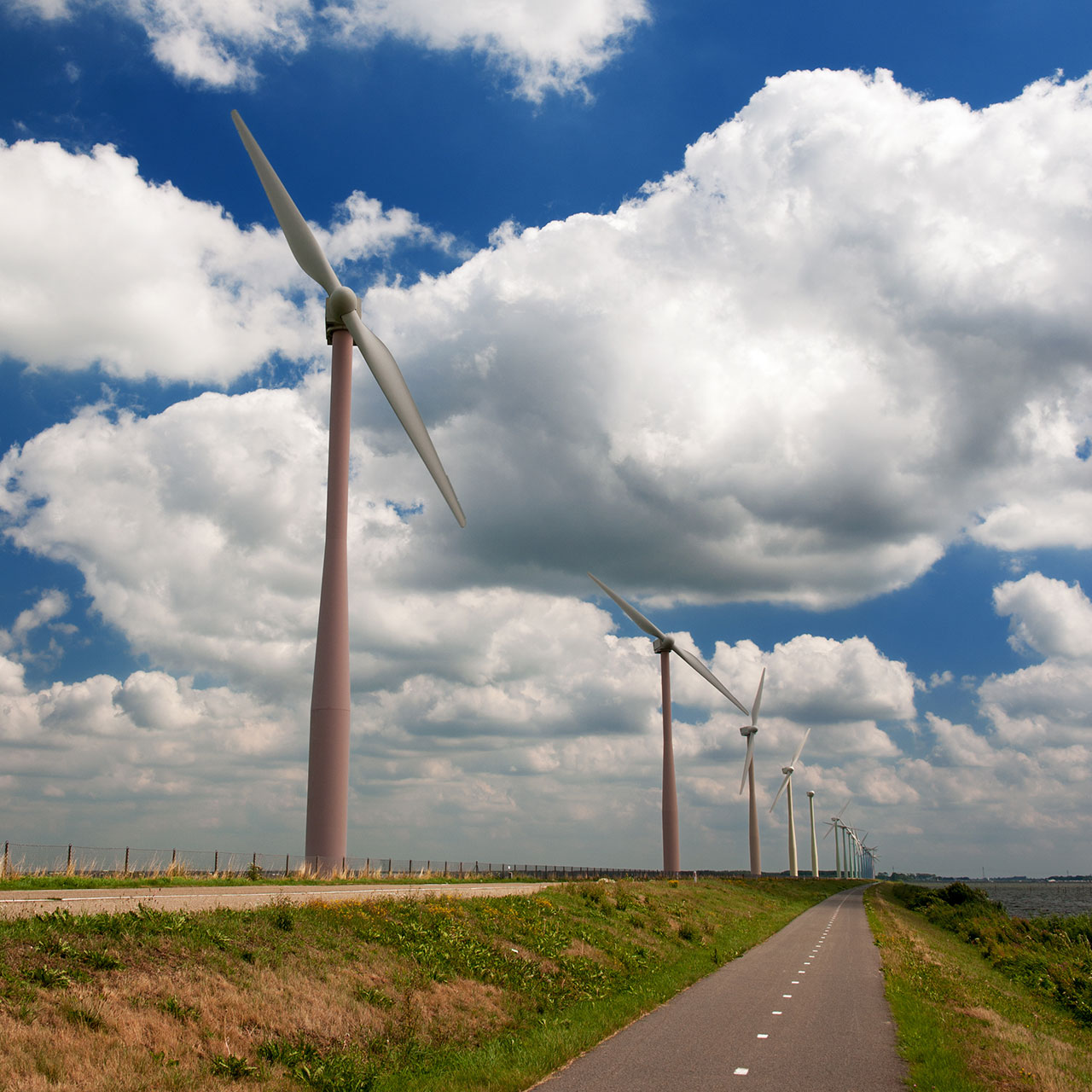
An example of a lift-based wind turbine.
Lift Turbines
Larger, modern propeller-type turbines are based mainly on the lift principle. Their rotor blades have an aerodynamic profile, and the airflow around them produces a pressure distribution that generates lift. The magnitude and direction of this force depend strongly on the angle of attack, defined as the angle between the blade chord and the relative airflow. The lift force acts approximately perpendicular to the relative airflow, and its tangential component produces the torque that turns the rotor. Modern lift-based wind turbines can achieve power coefficients of around 40—50%, depending on operating conditions and rotor design.
Online 3D Model / Wind Turbine
Free Downloads › Online 3D / Wind Turbine
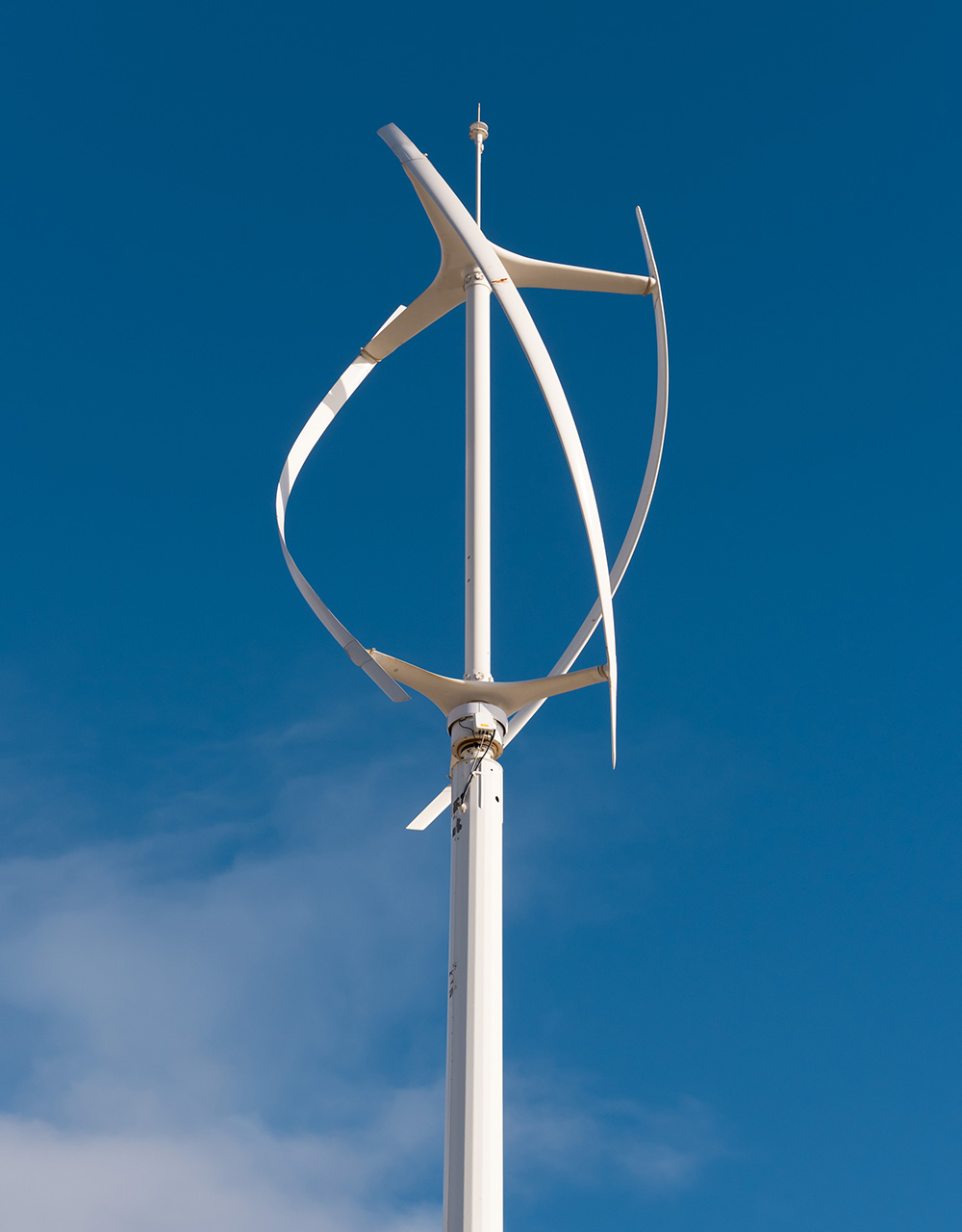
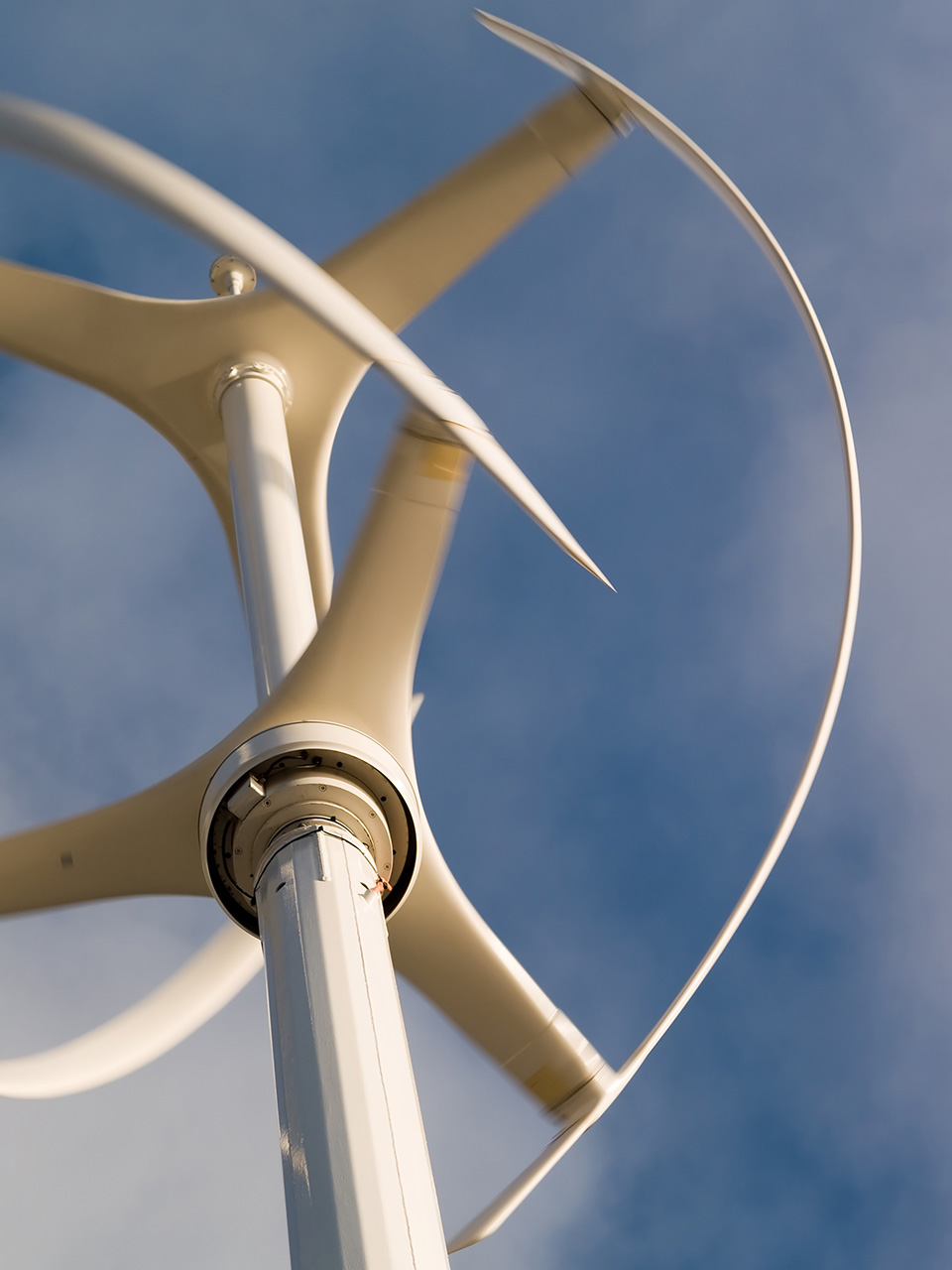
An example of a vertical-axis wind turbine.
Horizontal or Vertical Rotor Axis
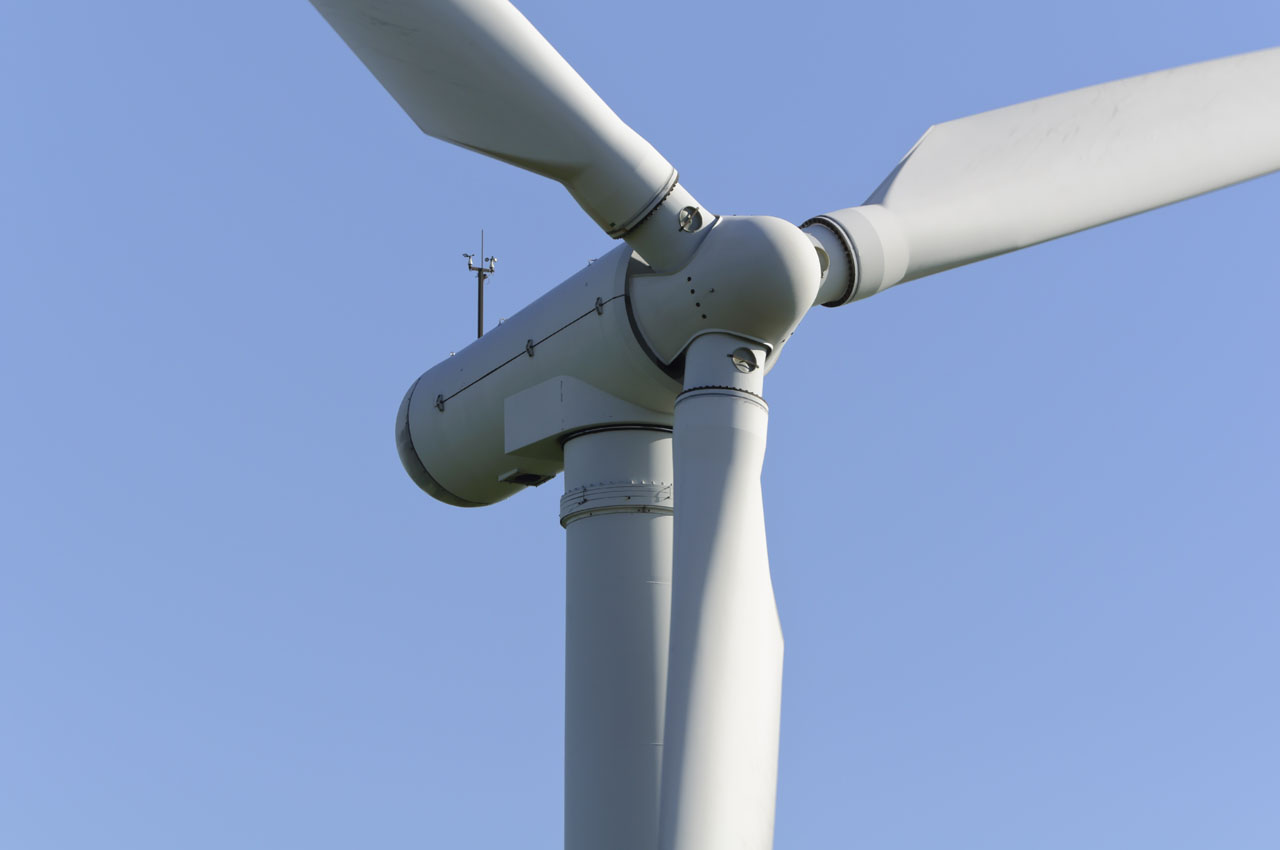
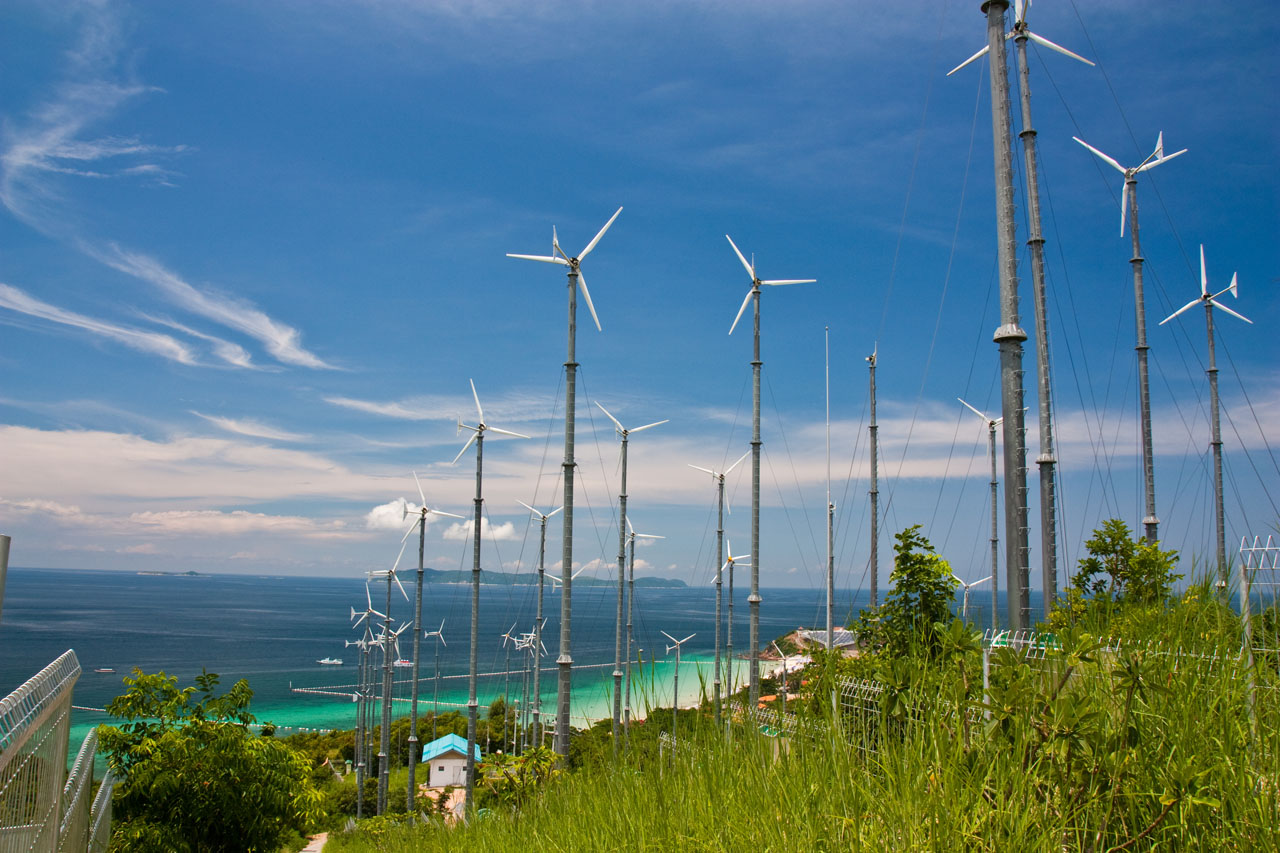
Another way of classifying wind turbines is by the orientation of their main rotor axis, which can be horizontal or vertical. A horizontal axis is typical of modern three-bladed lift-based turbines. The main drivetrain components, including the generator, are usually housed in a nacelle at the top of a tall tower, making maintenance more demanding. A yaw system turns the nacelle so that the rotor faces the wind. In some vertical-axis wind turbines, the generator and other drivetrain components can be located near ground level. These turbines do not need a yaw system to face the wind, but some designs, such as certain Darrieus turbines, may require assistance to start rotating.
The tip speed ratio λ (lambda) is the ratio of the circumferential speed of the blade tips to the wind speed. Different turbine designs operate most efficiently at different tip speed ratios. As a general guide, turbines with a tip speed ratio below about 6 can be considered low-speed, while modern high-speed turbines typically operate at values of 6 or more. In general, rotors with more blades tend to operate at lower tip speed ratios, rotate more slowly and produce higher torque.
9 pictures
9 pictures
Choice of Location
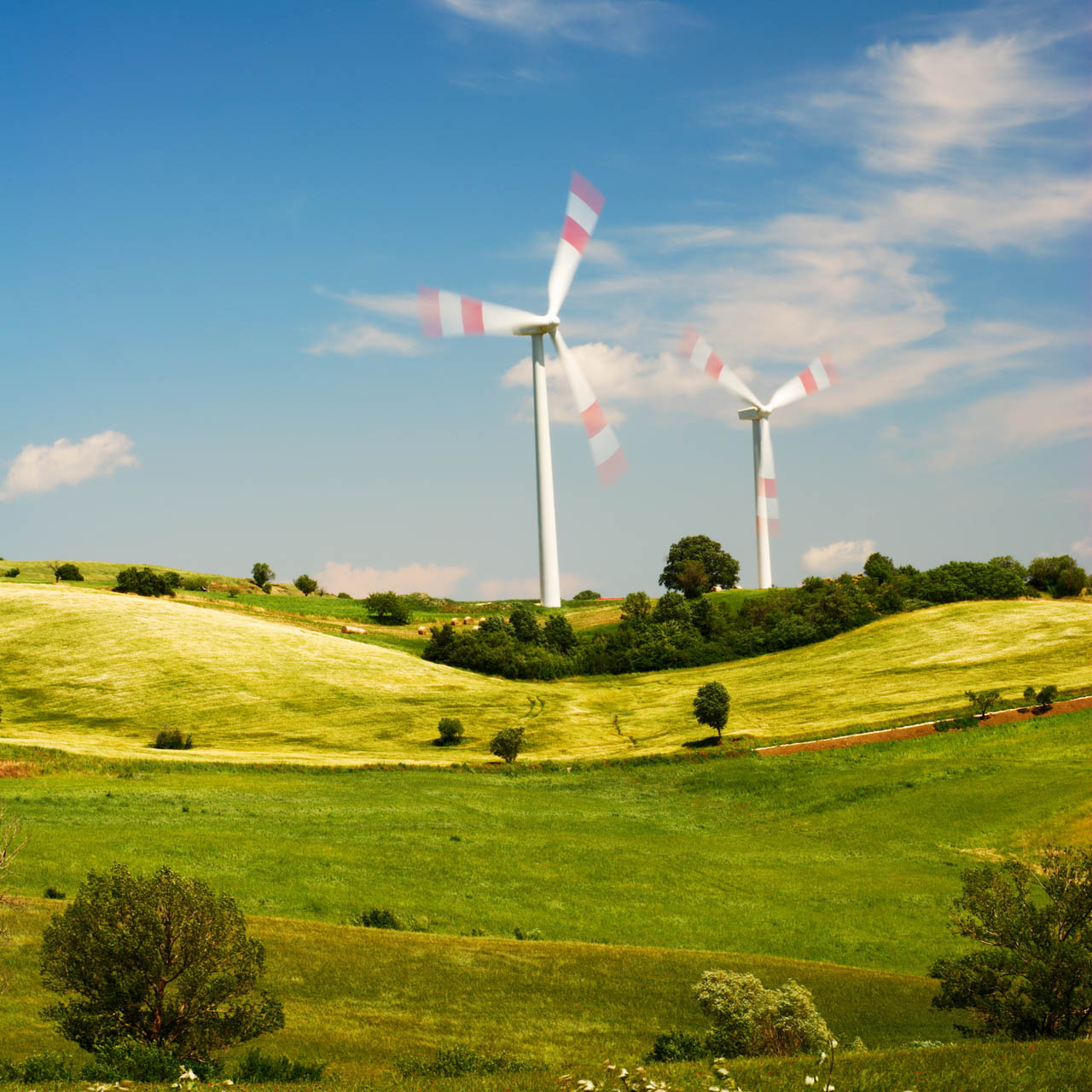
Two wind turbines in the rural region of Molise, Italy.
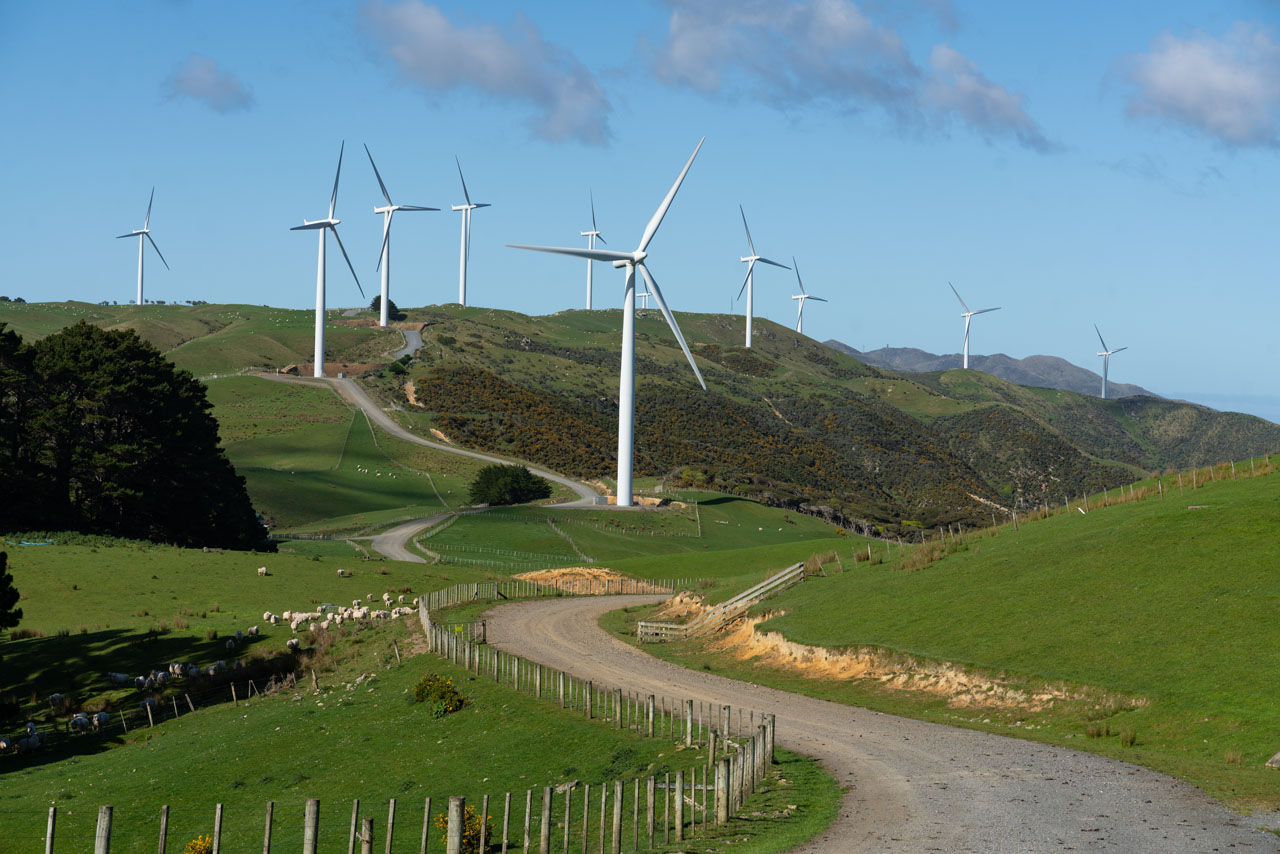
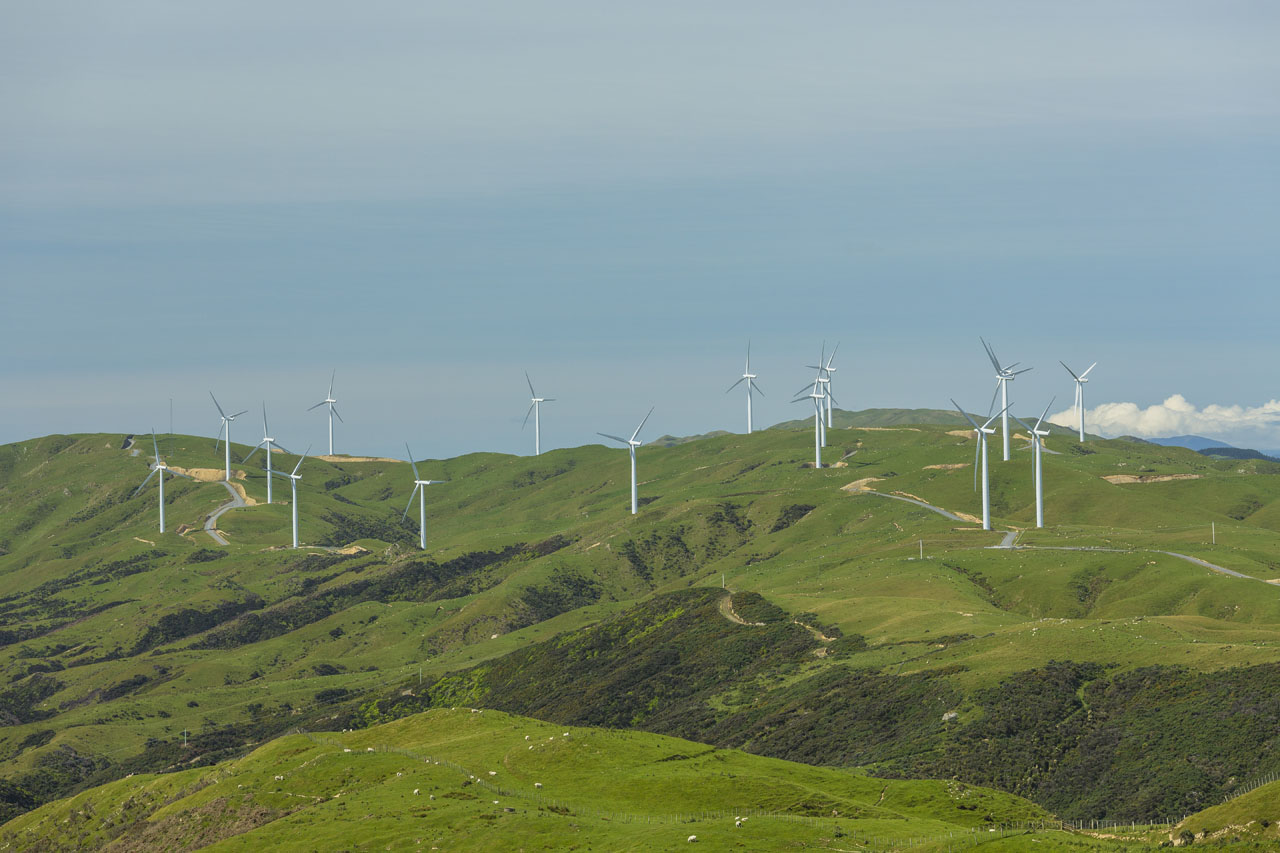
The most important factor when choosing a suitable location for a wind turbine or wind farm is the assessment of local wind conditions. General meteorological data can be used for an initial assessment, while detailed site-specific measurements are required for accurate evaluation. Since the power available in the wind is proportional to the cube of wind speed, accurate wind measurements are particularly important. For larger projects, site-specific wind measurements are typically carried out for at least one year using meteorological masts or remote-sensing instruments, preferably at heights representative of the future turbine rotor. The resulting data are combined with long-term wind records and used to determine the suitable number, type and capacity of turbines in the wind farm.
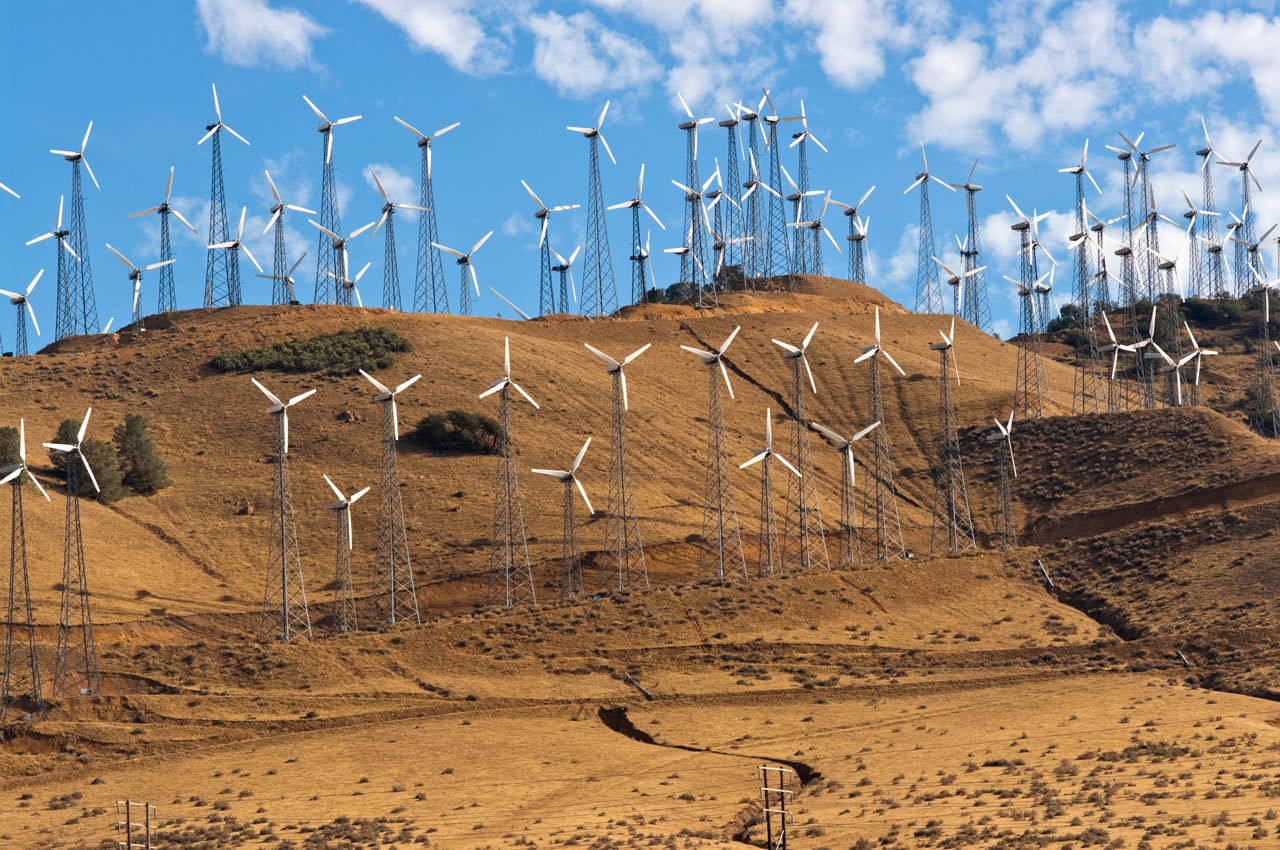
Many other factors must also be taken into account when selecting a location for a wind farm. Ground conditions determine the type of foundation to be used. Accessibility is important not only during construction, when heavy cranes are required, but also throughout the operating lifetime of the wind farm to facilitate maintenance. The accessibility and capacity of the power grid must also be considered to keep connection costs as low as possible. Some limitations may also arise from the nature of the terrain, nearby residential areas, or restrictions related to the distance or height of surrounding buildings.
The environmental impacts associated with the construction and operation of wind turbines must also be considered.
14 pictures
14 pictures


Robie, your AI assistant