


Photovoltaic Farms
5 min read
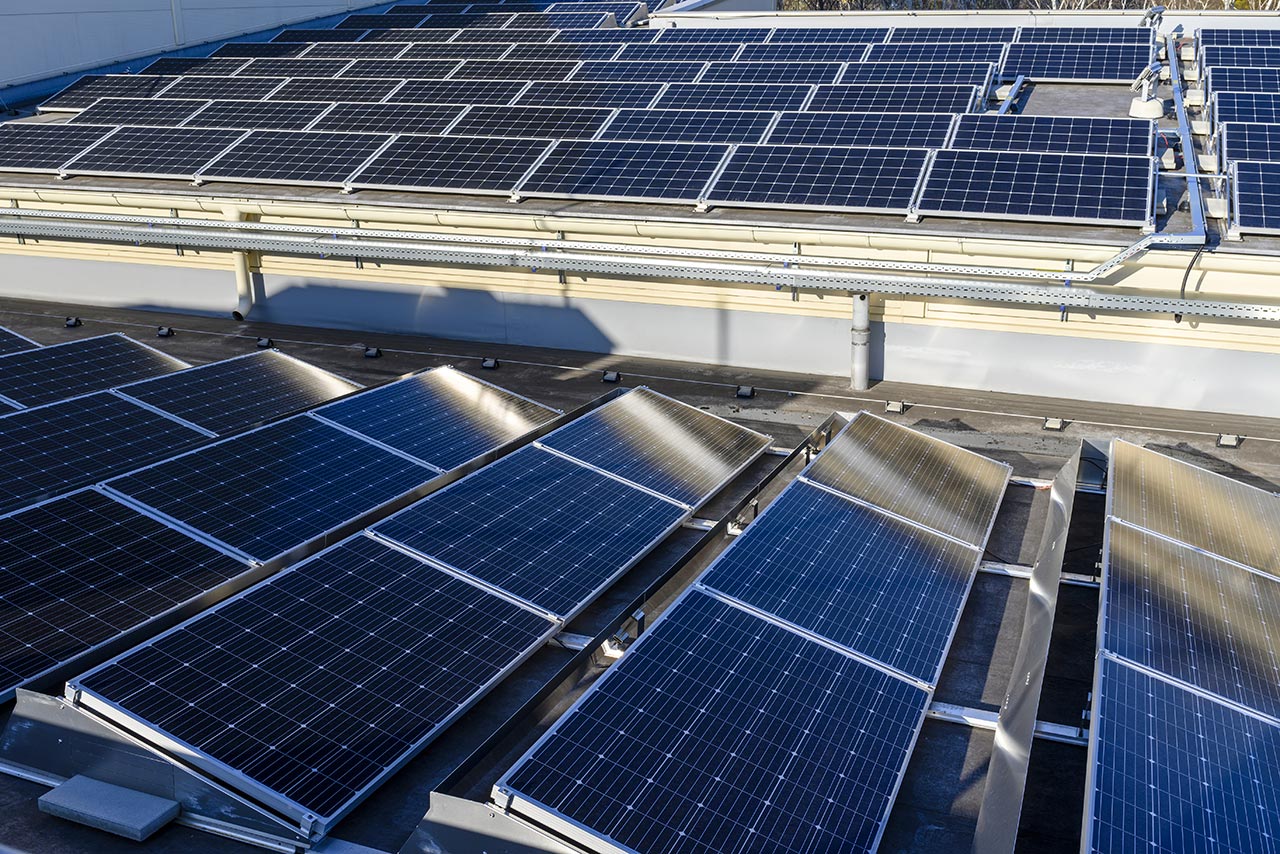
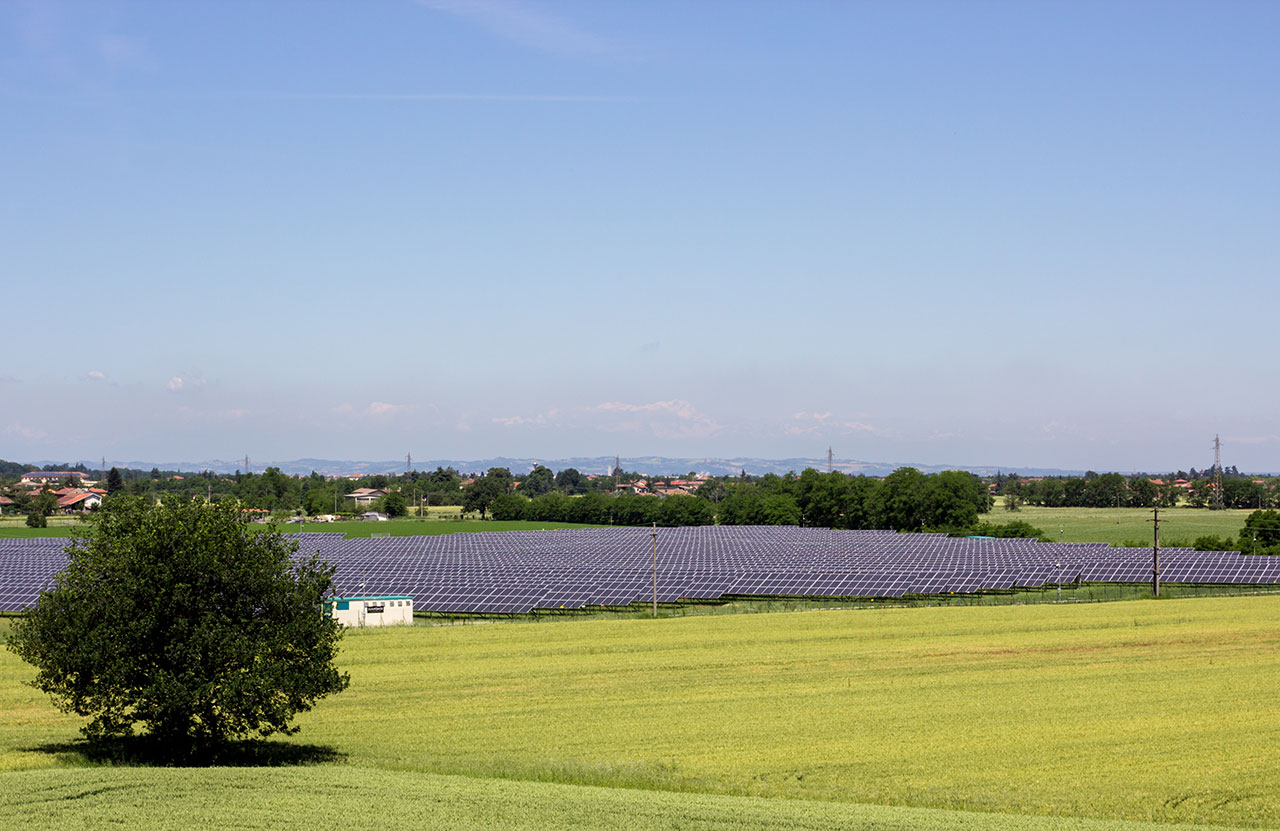
A photovoltaic power plant with fixed solar panels.
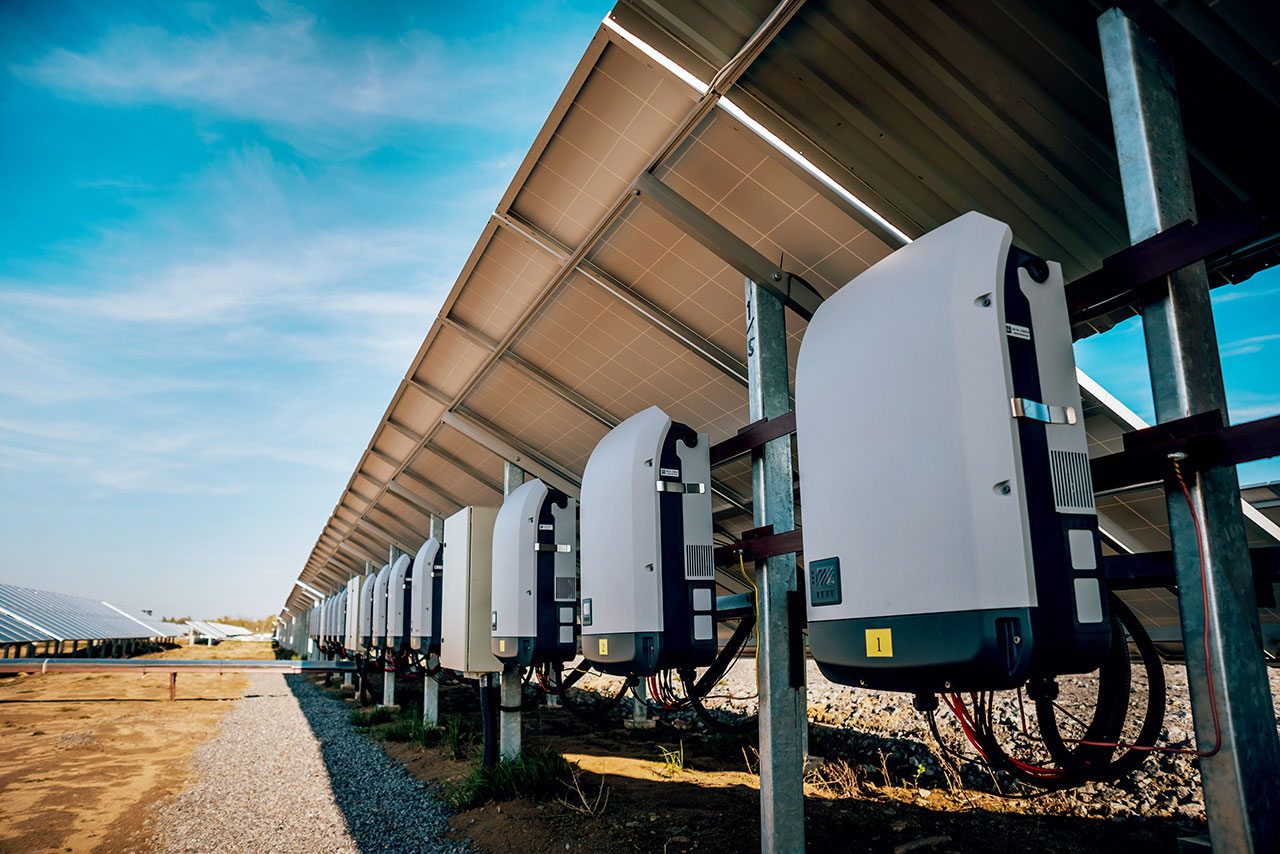
Photovoltaic farms (PV farms) generate electrical energy directly from sunlight using large numbers of solar panels. Because solar radiation has a relatively low power density and the panels must be spaced to avoid excessive shading, large PV farms can cover extensive areas. Solar panels are mounted either on fixed supporting structures or on tracking systems that follow the Sun to increase energy yield. Large PV farms may use tracking systems that continuously adjust the orientation of the panels to follow the Sun. Although trackers increase construction and maintenance costs, they can significantly increase the energy yield of a PV installation. Solar panels generate direct current, which is converted into alternating current by inverters. Transformers then increase the voltage to the level required for connection to the electricity grid.
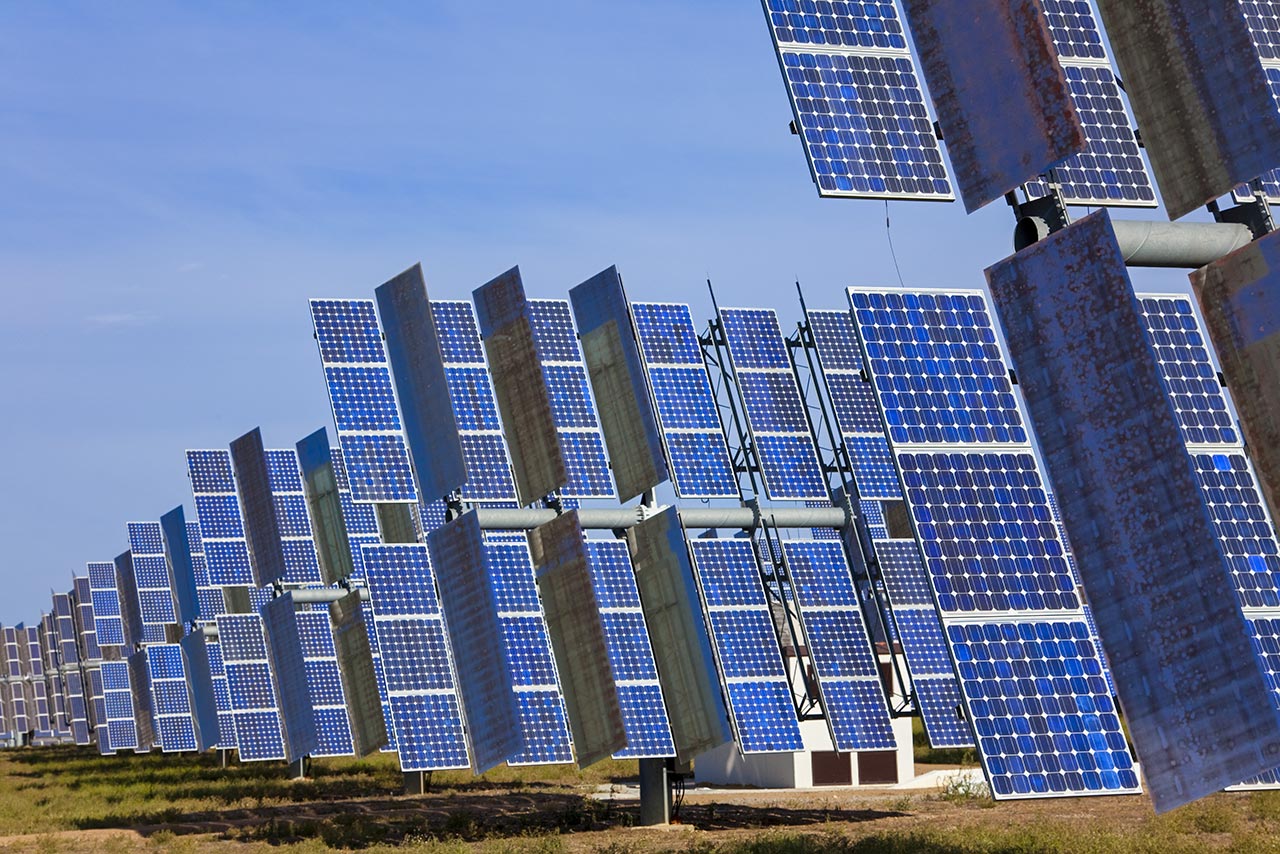
A field of photovoltaic panels with reflective surfaces that increase the amount of sunlight reaching the panels.
Depending on their installed capacity, PV systems range from small installations producing several kilowatts to large photovoltaic farms with capacities of hundreds of megawatts or even several gigawatts. Large PV plants are generally connected to the electricity grid. Standalone, or off-grid, PV systems operate independently of the grid and usually use batteries to store electricity for periods when solar power is unavailable. Such systems are particularly useful in remote locations without access to the electricity grid.
Photovoltaic systems are now being developed worldwide. China is by far the largest market, accounting for around 60% of newly installed PV capacity in 2025. Other major markets include the European Union, India and the United States.
Online 3D Model › Solar power plant / Photovoltaic power plant
Free Downloads › Online 3D › Solar power plant / Photovoltaic power plant
A large ground-mounted photovoltaic farm with an installed capacity of 1,000 MW may occupy several tens of square kilometres. The actual area depends on the type and efficiency of the solar panels, their spacing and whether fixed or tracking structures are used.
Some of the World’s Largest Photovoltaic Parks and Power Plants
Large photovoltaic installations can take different forms, ranging from individual power plants built as a single project to extensive solar parks comprising several neighbouring installations developed in multiple phases. The table below presents examples of some of the largest photovoltaic parks and power plants in different parts of the world.
| Photovoltaic park / power plant | Country | Installed PV capacity |
|---|---|---|
| Talatan Solar Park | China | 17,730 MW |
| Mohammed bin Rashid Al Maktoum Solar Park | United Arab Emirates | ~ 3,160 MW* |
| Shuaibah 1 & 2 Solar PV | Saudi Arabia | 2,660 MW |
| Bhadla Solar Park | India | 2,245 MW |
| Pavagada Solar Park | India | 2,050 MW |
| Al Dhafra Solar PV | United Arab Emirates | 2,000 MW |
| Benban Solar Park | Egypt | 1,465 MW |
| Janaúba Solar Complex | Brazil | 1,200 MWp |
| Gemini Solar Project | United States | 966 MWp / 690 MWac |
| Western Downs Green Power Hub | Australia | 460 MWp |
Installed capacities are approximate and refer to operating photovoltaic capacity. Data updated in 2026.
The World’s Largest Photovoltaic Parks
The world’s very largest photovoltaic parks are currently concentrated in China, where vast solar developments have been built in desert and sparsely populated regions. Many of these parks consist of several neighbouring power plants or project phases rather than a single generating facility. Their total capacities therefore depend partly on how the boundaries of individual solar parks are defined.
| Rank | Photovoltaic park | Country | Operating PV capacity |
|---|---|---|---|
| 1 | Talatan Solar Park | China | 17,730 MW |
| 2 | Urtmorin Solar Park | China | ~ 5,440 MW* |
| 3 | Midong Solar Park | China | ~ 5,000 MW* |
| 4 | Ruoqiang Solar Park | China | 4,000 MW |
| 5 | Hobq Solar Park | China | ~ 4,000 MW* |
| 6 | Otog Front Banner Solar Park | China | ~ 4,000 MW* |
| 7 | Lingwu Photovoltaic Base | China | 4,000 MW |
| 8 | Mengxi Lanhai Solar Power Plant | China | 3,000 MW |
| 9 | Ningxia Tengger New Energy Base | China | 3,000 MW |
| 10 | Nilka Photovoltaic Project | China | 3,000 MW |
Note: Large photovoltaic parks may consist of several neighbouring power plants or project phases developed by different operators. The capacities shown represent operating photovoltaic capacity; published totals may vary depending on how the boundaries of individual solar parks are defined. Projects still under construction are not included. Data updated in 2026.
* Approximate operating PV capacity.
17 pictures
17 pictures


Robie, your AI assistant