


Water Energy and Its Uses
3 min read
The Potential Energy of Water
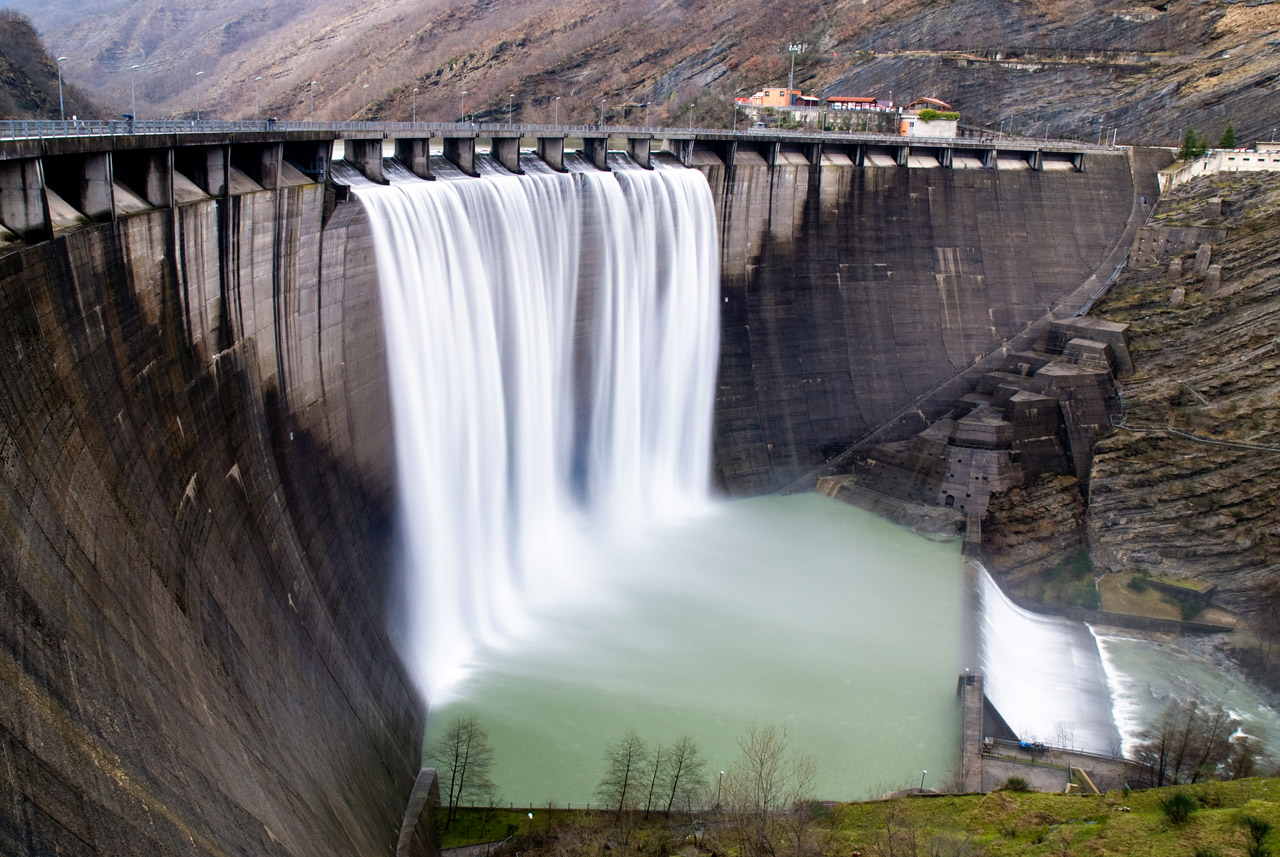
An artificial waterfall formed by water flowing through spillways over the edge of a dam when the water level is high.
Within the Earth’s field of gravity, water always has some potential (positional) energy. This energy can be converted into another type of energy, e.g. kinetic or pressure energy. Potential energy is utilised primarily by reaction turbines.
Kinetic Energy of Water
The kinetic (motion) energy of water depends on its mass and the speed of the water flow. Hydraulic head can be converted into kinetic energy as water accelerates. Kinetic energy drives impulse turbines.
Available Water Energy
The amount of electrical energy generated in a hydroelectric power plant primarily depends on the hydraulic head and the rate of flow through the turbine. In the course of a year, the head may remain relatively stable, while the rate of flow can vary considerably.
A hydroelectric power plant harnesses the energy of water flowing through a given hydraulic head, using turbines to convert it into mechanical energy and generators to convert this mechanical energy into electricity. The approximate output of a hydroelectric power plant can be easily calculated using the following formula:
P = ρ × g × Q × H × η
where:
| P | is the power output in watts (W), |
| ρ | is the water density (kg/m3), |
| g | is the gravitational acceleration (9.81 m/s2), |
| Q | is the volumetric flow rate (m3/s), |
| H | is the hydraulic head (m), |
| η | is the overall efficiency ranging from 0 to 1. |
The annual production of electric energy also depends on fluctuations in the rate of flow throughout the year.
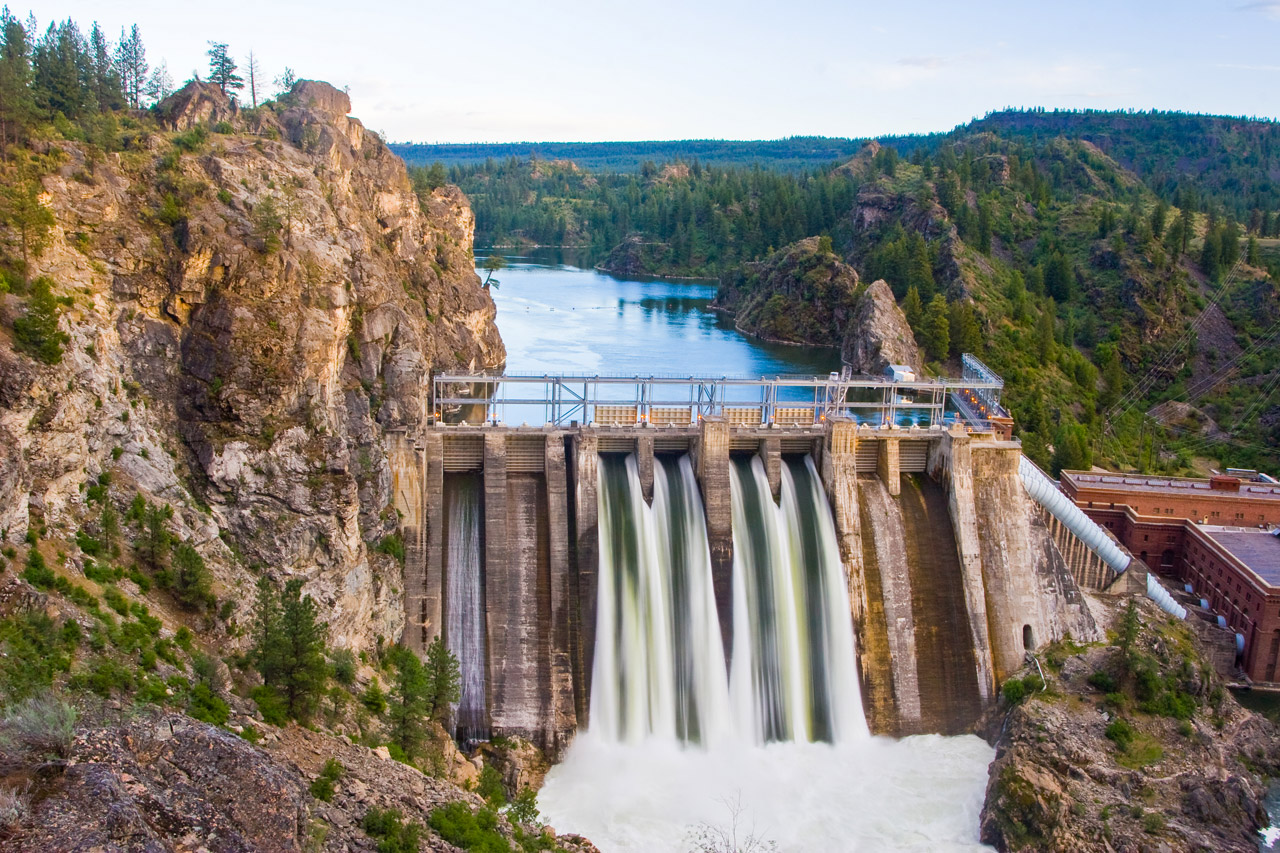
7 pictures
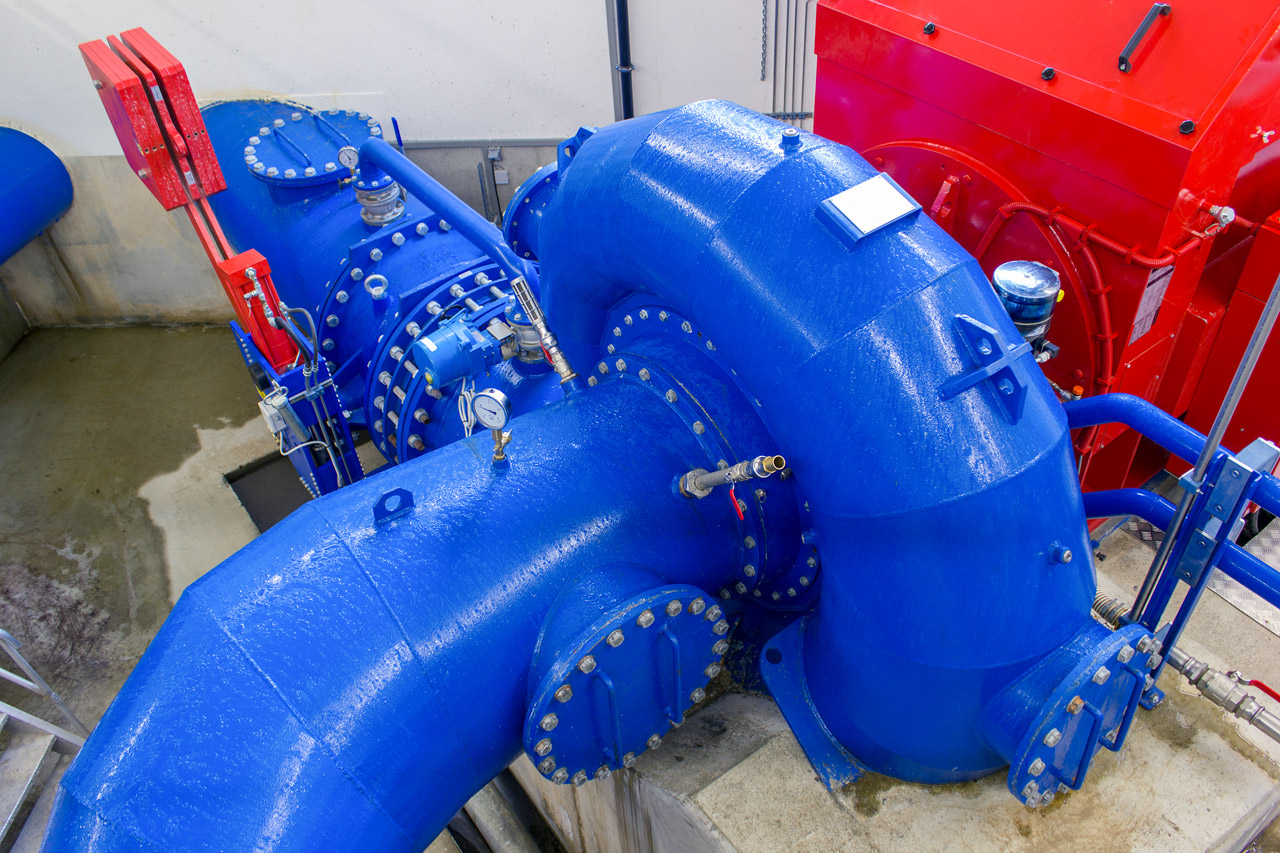

7 pictures
Hydropower Potential

Topographic conditions in Iceland are favorable in terms of hydrologic potential.
The theoretical hydropower potential of a geographic region represents the total amount of electrical energy that could theoretically be produced by harnessing its water resources.
An estimate of the theoretical hydropower potential is based mainly on the topography and water availability of a region. It represents an idealised upper limit of the energy that could be obtained from water flowing from higher elevations towards sea level.
Technical Potential
Technical potential takes into account the part of the theoretical hydropower potential that can be exploited using currently available technology. However, not all technically feasible projects are economically viable. Therefore, economic potential represents the part of the technical potential that can be exploited economically.
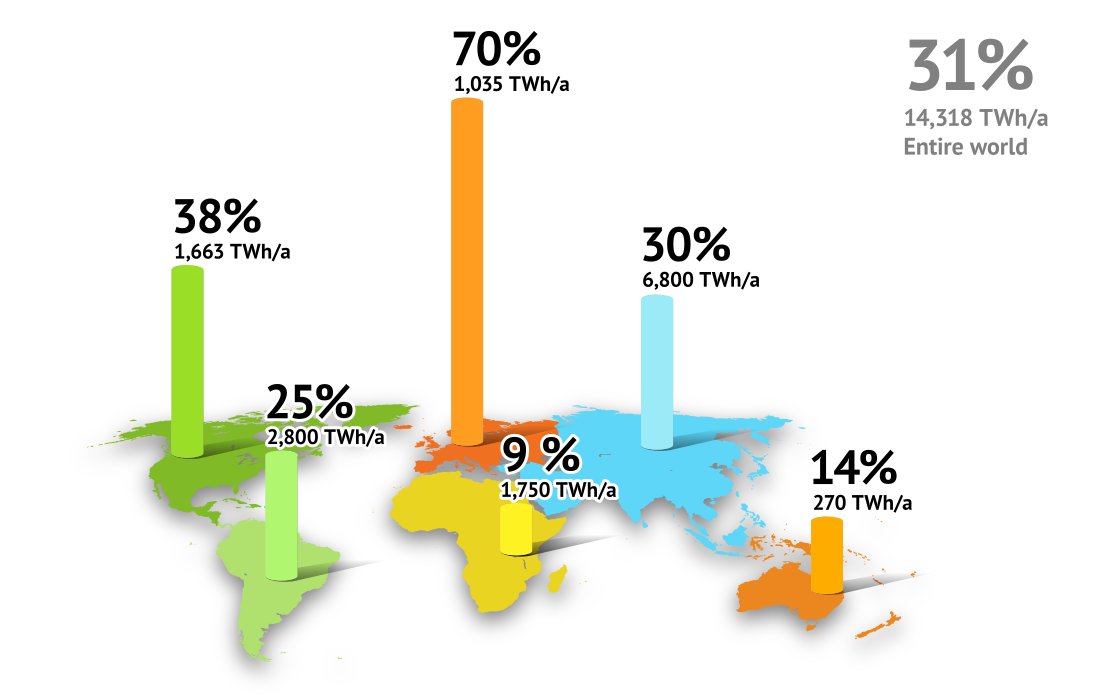
The lower figures indicate the estimated technically feasible hydropower potential of individual continents. The upper figures represent current hydropower generation as a percentage of this potential (2025).


Robie, your AI assistant