




Solar Rays Energy
7 min read
The Sun
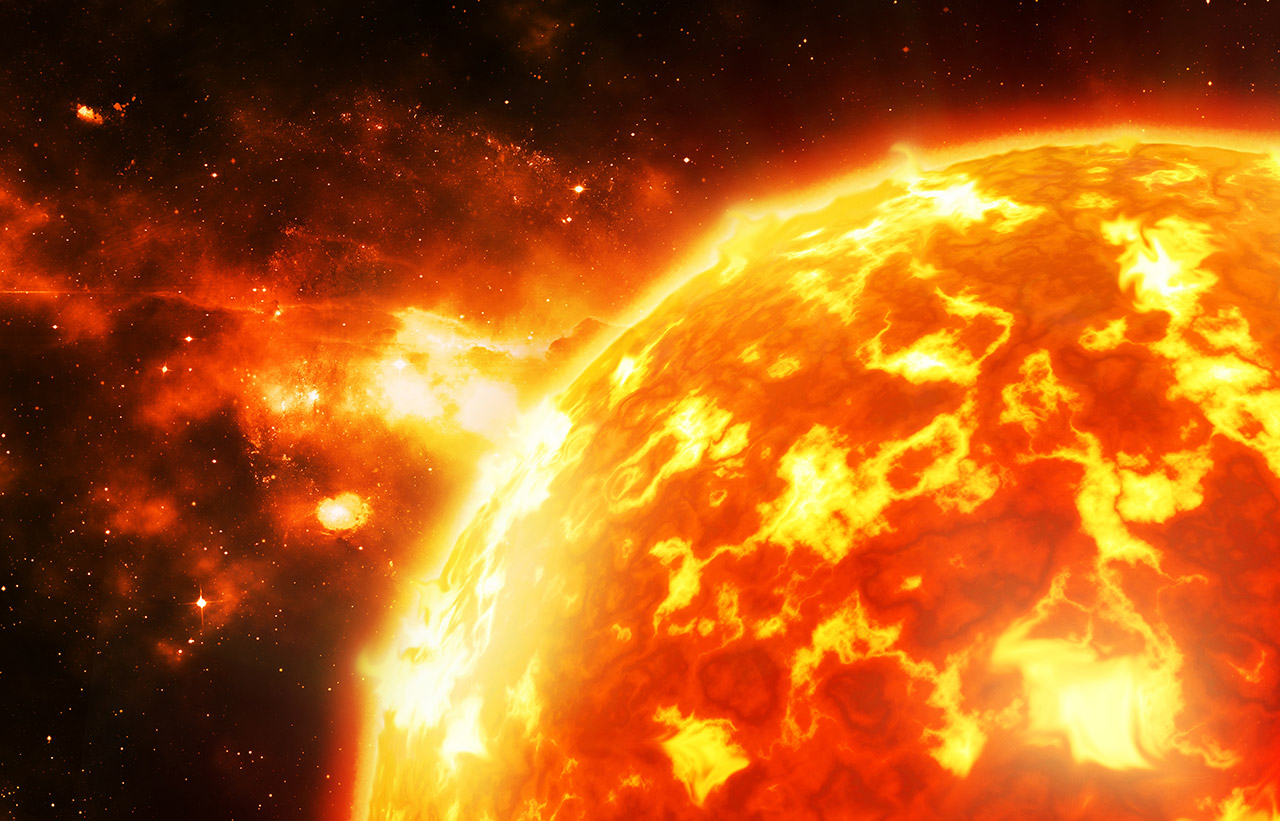
Solar prominences are enormous structures of plasma extending outward from the Sun’s surface into its atmosphere.
The Sun’s energy is released by thermonuclear reactions taking place in its core at temperatures of about 15 million °C. Part of the solar radiation that reaches the Earth’s surface can be utilised in solar installations. These work on the principle of heat absorption or directly convert solar radiation into electricity.
| Distance from the Earth | approx. 150 million km (1 AU) |
| Diameter | 1,392,000 km (109 × Earth) |
| Volume | 1.41 × 10¹⁸ km3 (1,300,000 × Earth) |
| Surface temperature | 5,780 K |
| Corona temperature | 2 million K |
| Power output | 3.8 × 1024 kW |
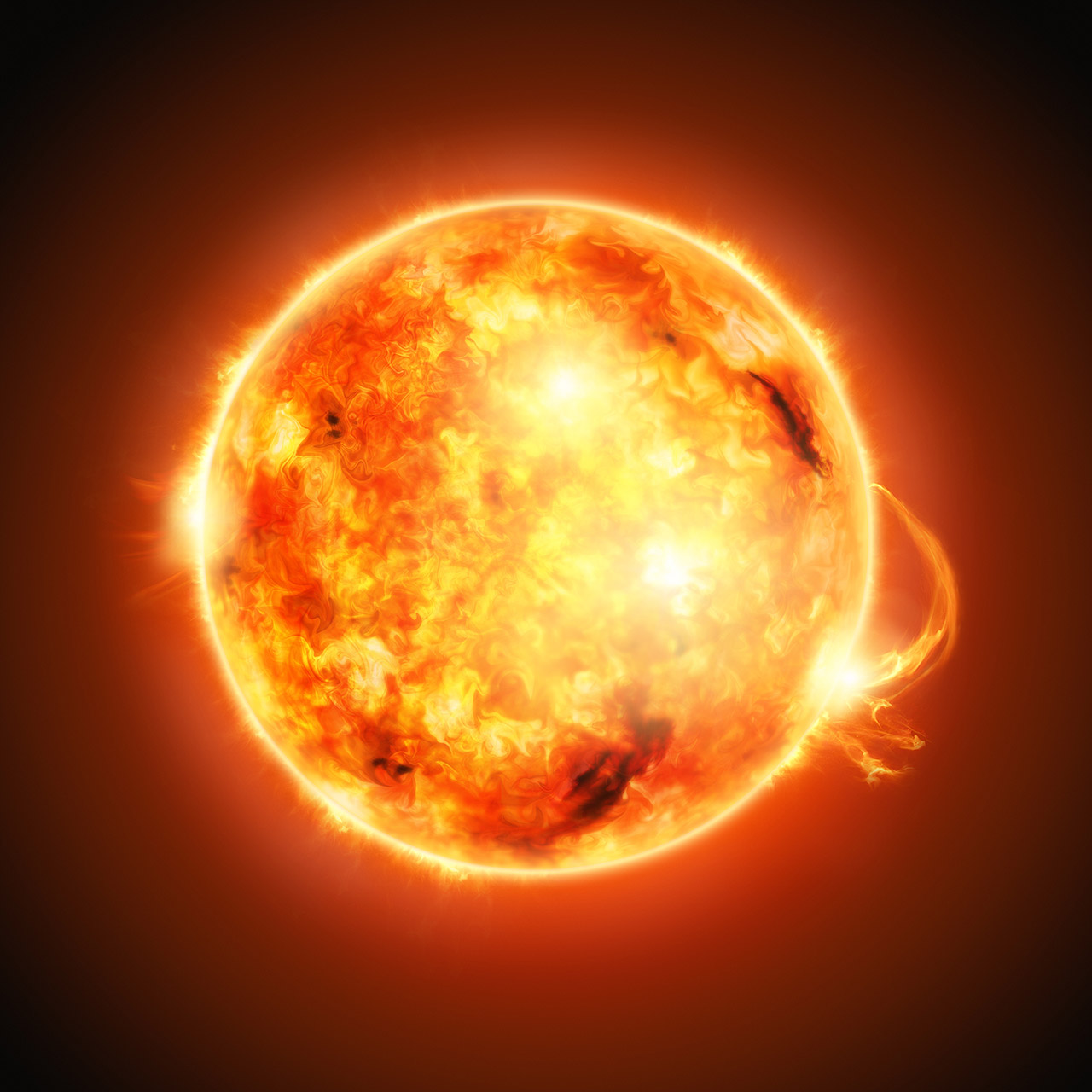
The photosphere forms the visible surface of the Sun, while the outer corona can be observed during a total solar eclipse.
The Sun is the largest body in our Solar System. It is so big that the combined mass of all the remaining objects in the system is only 0.2% of the mass of the Sun. The Sun is in fact one huge, hot plasma ball with a density a little higher than water. Thermonuclear reactions continuously taking place inside the Sun release enormous amounts of energy which is radiated into space. Only about one part in two billion of this energy reaches the Earth, but it is still enough to provide energy for almost all processes on our planet.
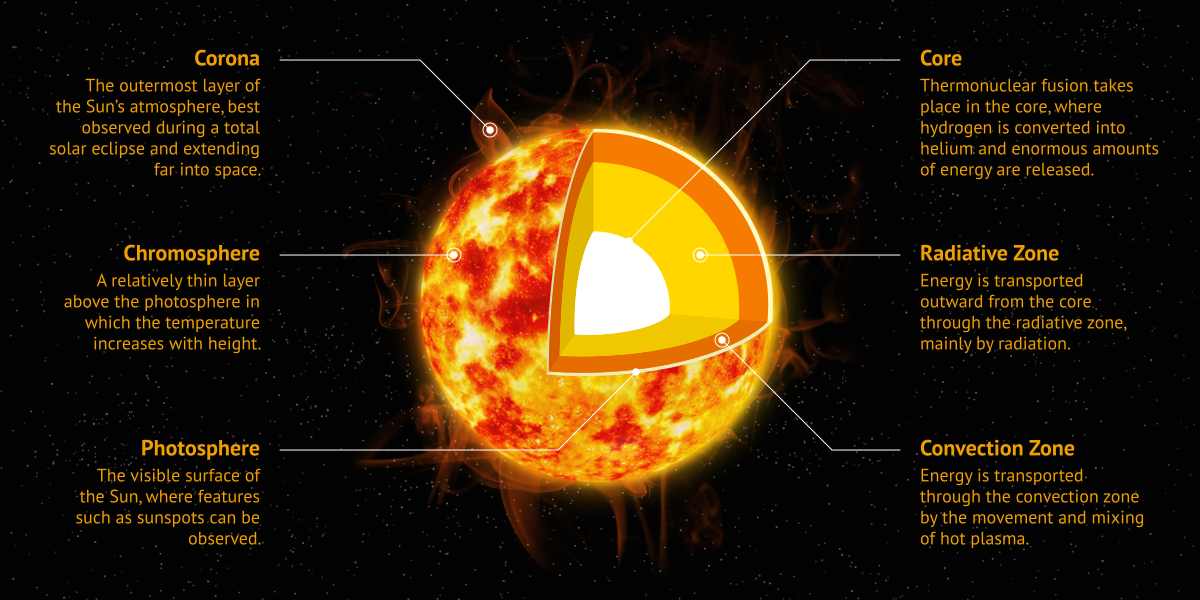
The Sun has several different layers with varying temperatures, pressures and chemical compositions. At the centre of the Sun is the core, where thermonuclear reactions take place. Hydrogen nuclei are converted into helium through a series of reactions, releasing tremendous amounts of energy, initially mainly in the form of gamma radiation. Energy then passes through the radiative zone before reaching the approximately 200 thousand km thick convective zone, where it is transported mainly by convection, i.e. through the movement and mixing of material. The next layer, the photosphere, forms the visible surface of the Sun and is where sunspots can be observed. Above it lies the chromosphere, followed by the outermost layer, the corona, which can be observed during a total solar eclipse. Prominences are large structures of plasma extending outward through the Sun’s atmosphere. The corona reaches far out into our Solar System.
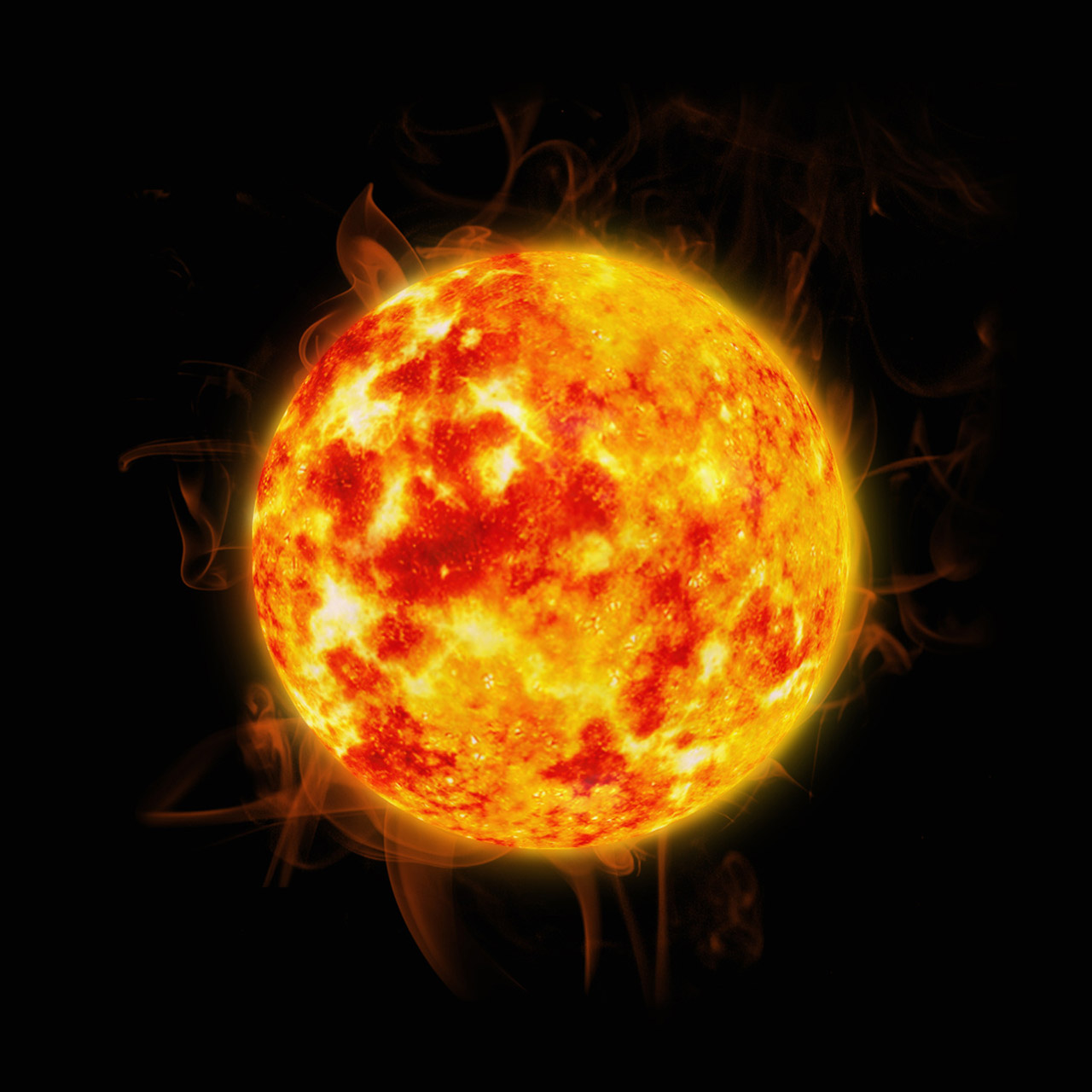
The Sun radiates enormous amounts of energy into space as a result of thermonuclear reactions in its core.
Thanks to its extreme mass and slow rotation, the Sun is an almost perfect sphere. Its equatorial and polar diameters differ only by 10 kilometers.
Thermonuclear reactions in the Sun convert about 600 million tonnes of hydrogen into helium every second. In the process, approximately 4 million tonnes of mass are converted into energy. The life-giving Sun formed approximately 4.6 billion years ago and is now a little less than halfway through its main-sequence lifetime. It is expected to remain in this stage for about another 5 billion years.
Sunlight travels 8 minutes and 19 seconds from the Sun to the Earth. The next nearest star is the Proxima Centauri, the light from which takes 4.22 years to reach the Earth.
Solar Radiation
Solar energy reaches the Earth in the form of solar radiation. About 29% of the incoming radiation is reflected back into space by clouds, the atmosphere and the Earth’s surface. About 23% is absorbed by the atmosphere and clouds, while approximately 48% is absorbed by the Earth’s surface. Over time, the incoming energy absorbed by the Earth system is approximately balanced by energy radiated back into space.
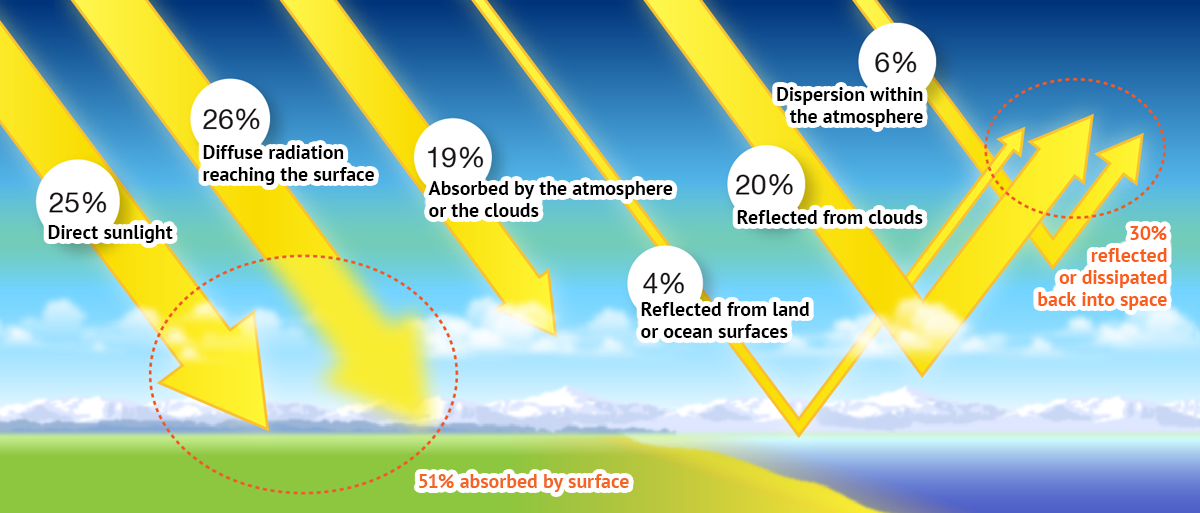
A simplified representation of the Earth’s solar energy budget based on an earlier estimate of the distribution of incoming solar radiation.
Free Downloads › Images / Ratio of solar radiation components incidenting the Earth

About half of the solar radiation reaching the Earth passes through the atmosphere and reaches the Earth’s surface.
Without this balance, the Earth would gradually become warmer or cooler. Approximately the same amount of energy that is absorbed by the Earth system is therefore ultimately radiated back into space. Energy is also transferred between the Earth’s surface and the atmosphere through physical processes such as circulation, evaporation and condensation. The absorbed solar energy is ultimately returned to space as thermal infrared radiation emitted by the Earth’s surface, atmosphere and clouds.
As the Sun’s radiation passes through the atmosphere, part of it is absorbed or scattered. The atmosphere transmits most visible light and parts of the ultraviolet and infrared spectrum. Solar radiation reaches the Earth’s surface either directly or as diffuse sky radiation scattered by molecules, aerosols and clouds in the atmosphere. The ratio between direct and diffuse radiation depends mainly on atmospheric conditions and the Sun’s position in the sky. The amount of solar energy incident on a unit area perpendicular to the Sun’s rays per unit time is called solar irradiance and is expressed in watts per square metre (W/m2).
The highest solar irradiance is reached at a wavelength of around 500 nm, in the blue-green part of the visible spectrum.
The scattering of sunlight illuminates the sky during the day. If it were not for scattering, the sky would be dark during the day as it is at night, with the exception of the sharp bright disc of the Sun.

7 pictures



7 pictures
The Solar Constant
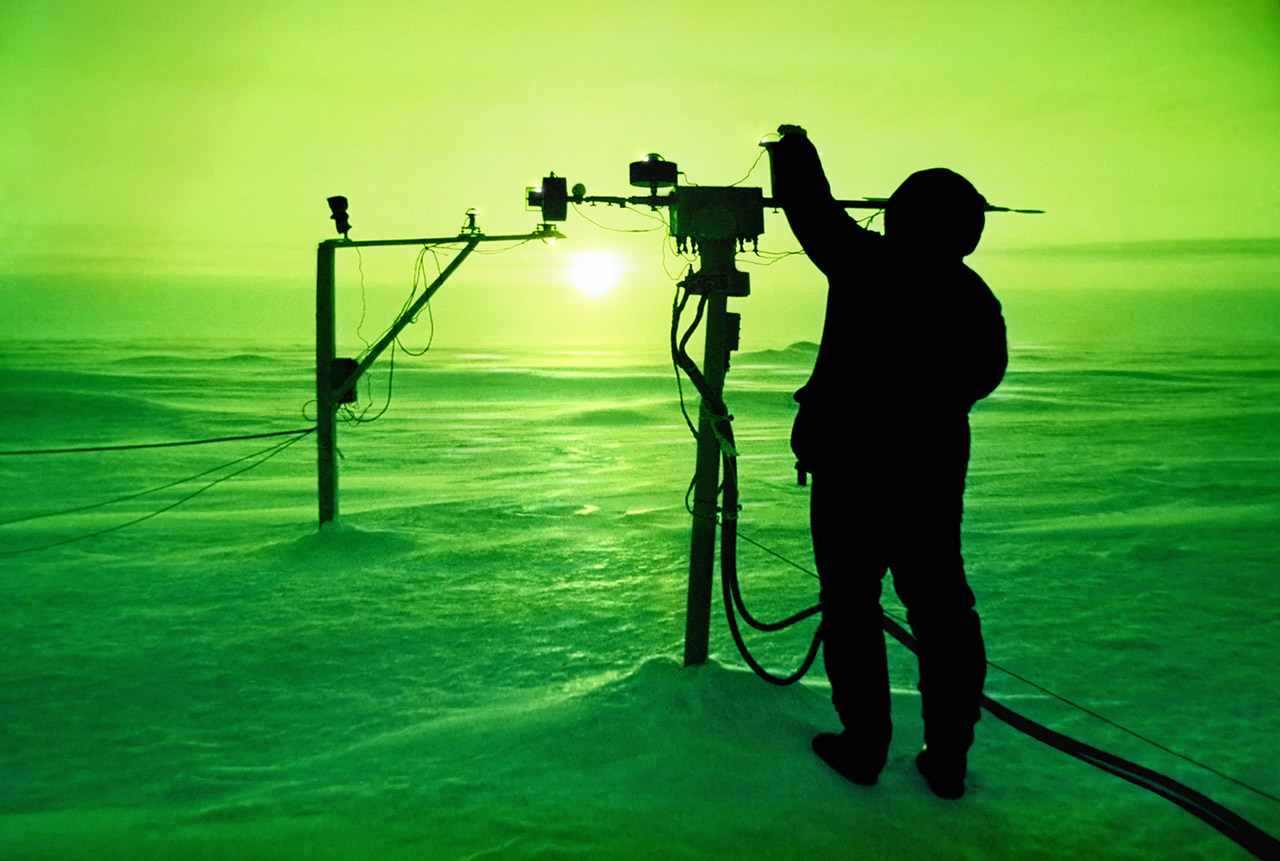
Solar activity monitoring at the North Pole.
The solar constant is the amount of solar energy passing through a 1 m2 area perpendicular to the direction of the radiation in one second at a distance of one astronomical unit (the mean distance of the Earth from the Sun), outside the Earth’s atmosphere. Its mean value is approximately 1,361 W/m2 and it varies by about 0.1% over the Sun’s 11-year activity cycle. Averaged over the entire Earth, about 340 W/m2 of solar radiation reaches the top of the atmosphere, of which about 163 W/m2 is absorbed by the Earth’s surface. Solar irradiation is generally highest at low latitudes. However, because equatorial regions are often affected by considerable cloud cover, some of the most favourable conditions for utilising solar energy occur in the subtropical regions between about 15° and 40° of latitude. The total amount of solar energy reaching the Earth’s surface each year is several thousand times greater than humanity’s annual global energy consumption.
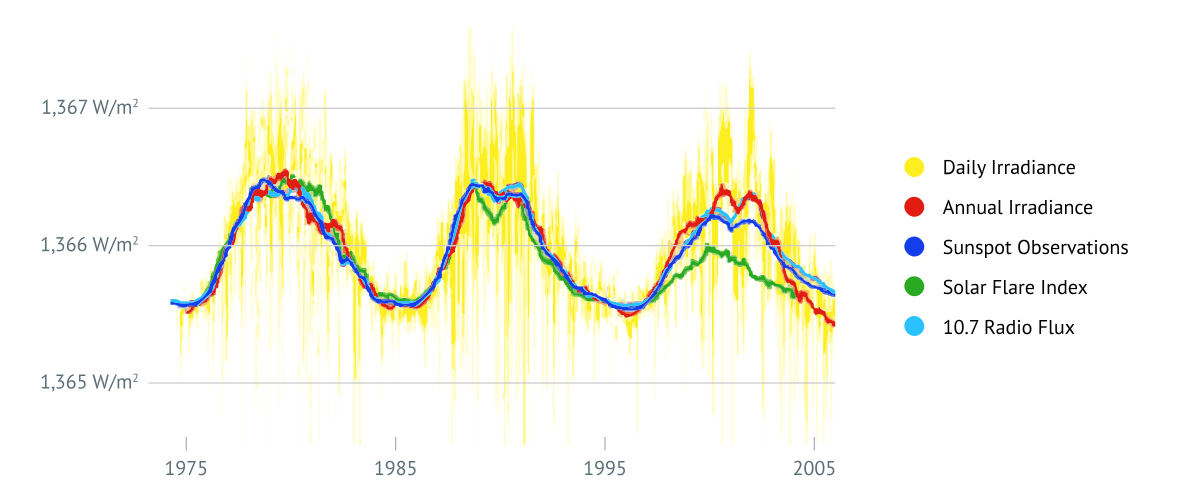
Solar irradiance variations during the solar cycle.
Free Downloads › Images / Solar cycle variations solar irradiance


Robie, your AI assistant