




Gas-cooled Reactor (GCR) and Advanced Gas-cooled Reactor (AGR)
2 min read
Online 3D Model › AGR Reactor / AGR Reactor
Free Downloads › Online 3D › AGR Reactor / AGR Reactor
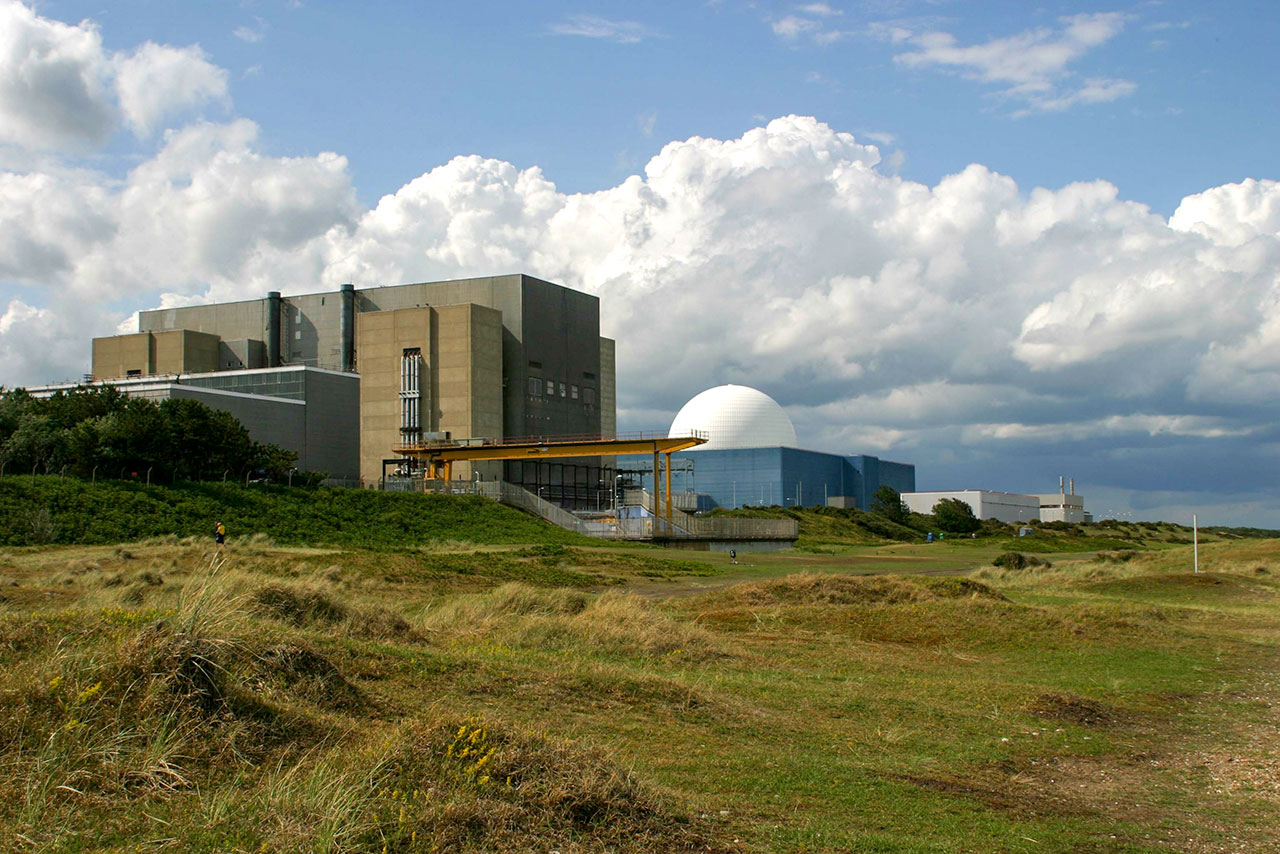
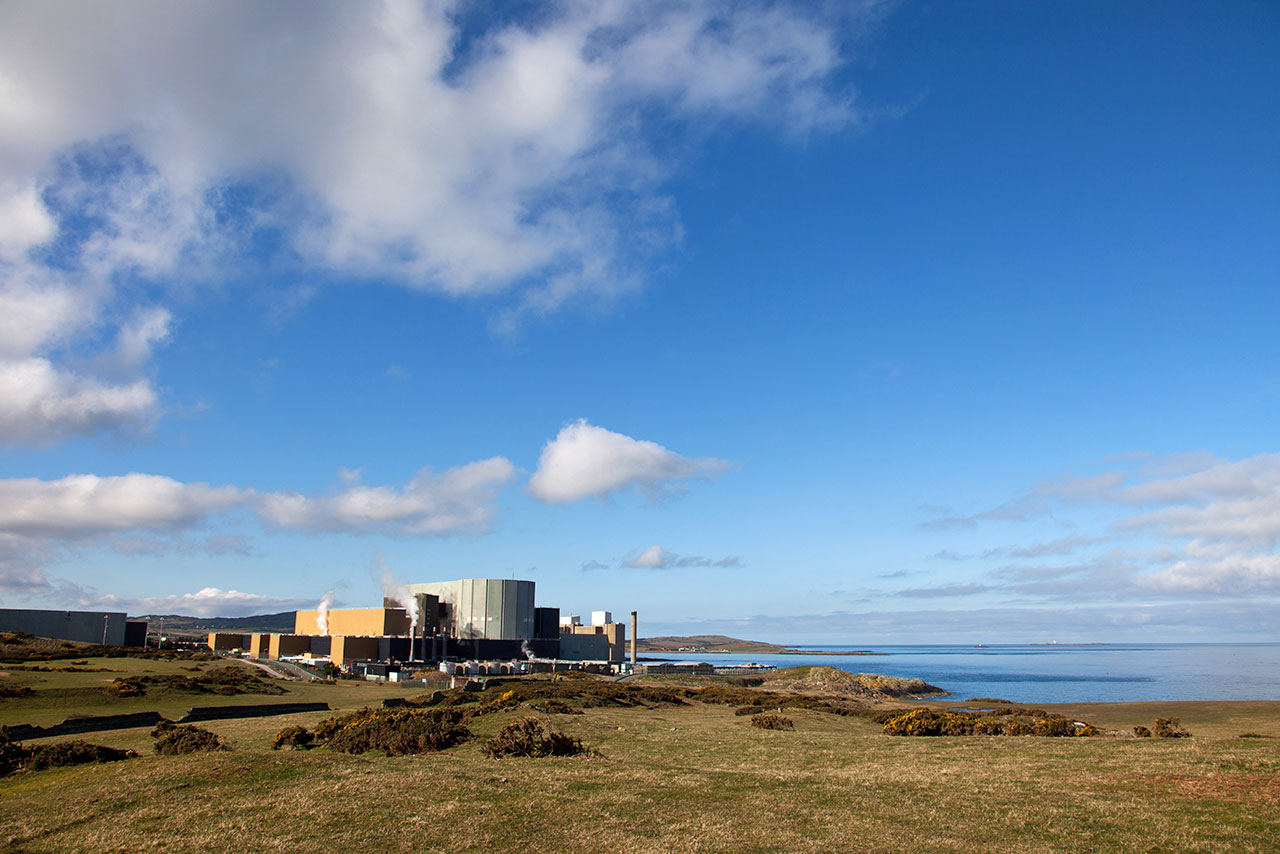
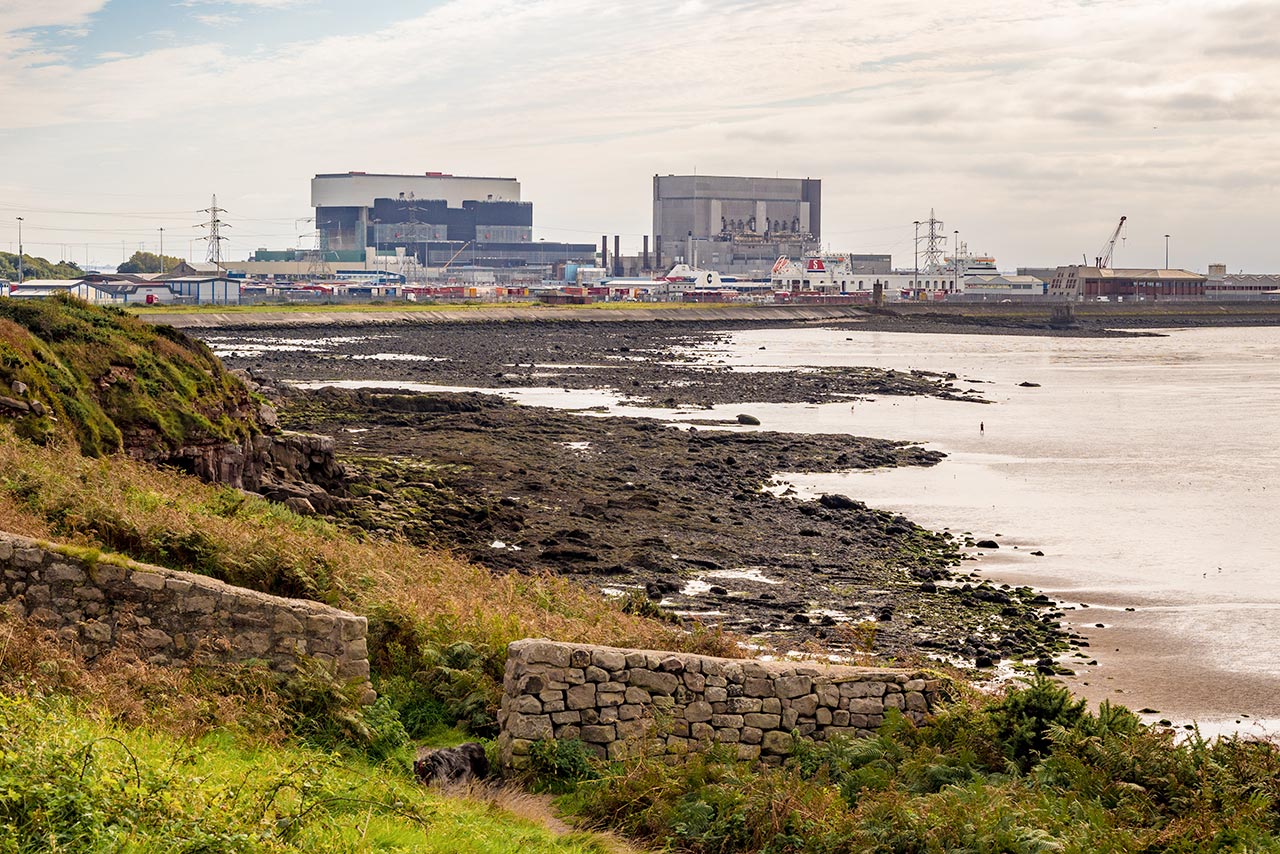
Two views of the Sizewell nuclear site in Suffolk, Great Britain. In the foreground is Sizewell A, with two Magnox reactors undergoing decommissioning; in the background is the operating Sizewell B power station with a single pressurised water reactor.
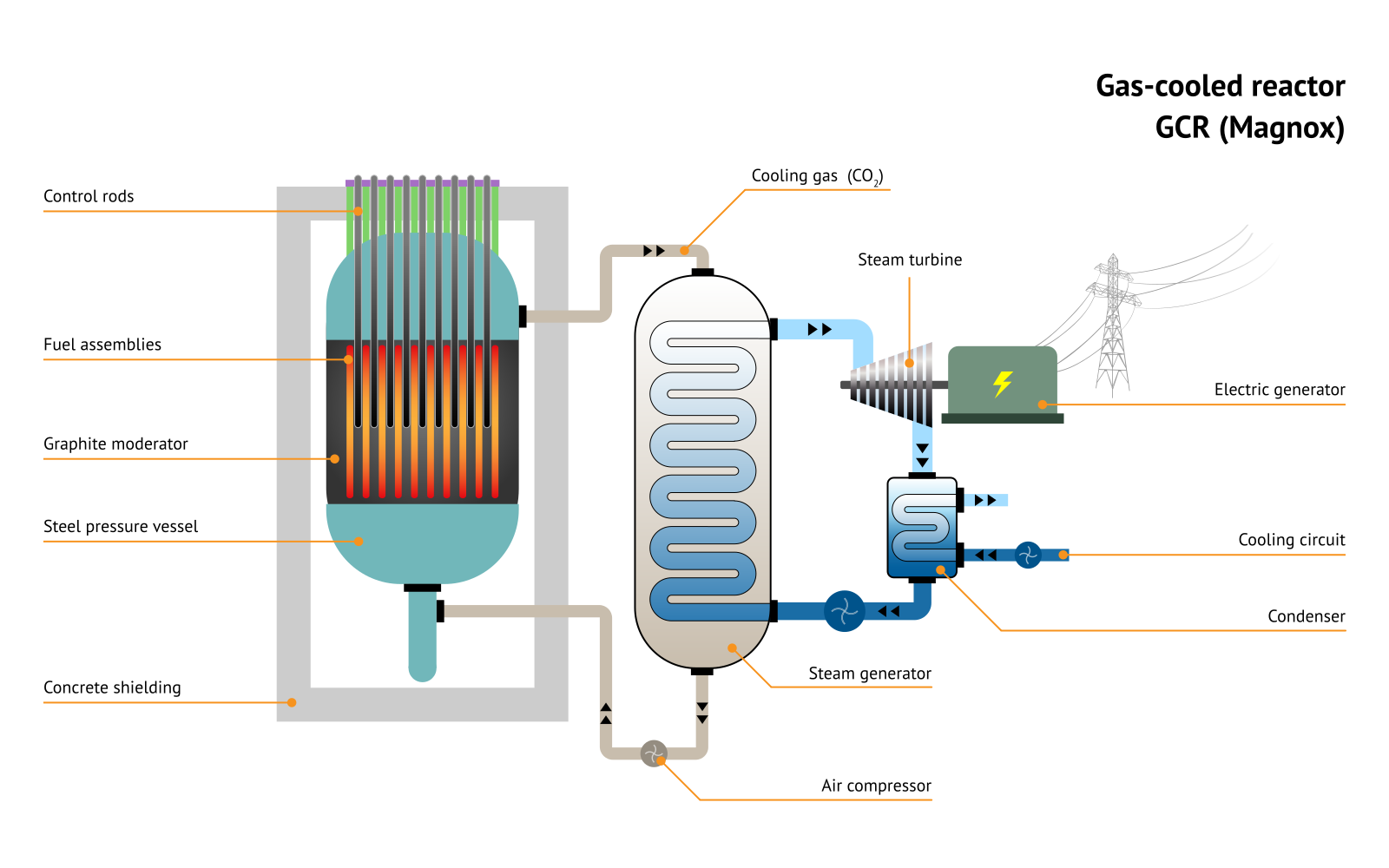
Gas-cooled reactors (GCRs) use gas as the coolant and graphite as the moderator. The first generation of British commercial gas-cooled reactors was known as Magnox, after the magnesium alloy used to clad their fuel. The last Magnox reactor was shut down in 2015. The more advanced AGR (Advanced Gas-cooled Reactor) was subsequently developed in Great Britain and several AGRs remain in operation there today.
Magnox reactors used natural uranium metal as fuel, clad in a magnesium alloy. The reactor core consisted of a large structure of graphite blocks penetrated by numerous vertical fuel channels containing the fuel elements. Carbon dioxide circulated through these channels to remove heat from the fuel. Many Magnox reactors could be refuelled while operating.
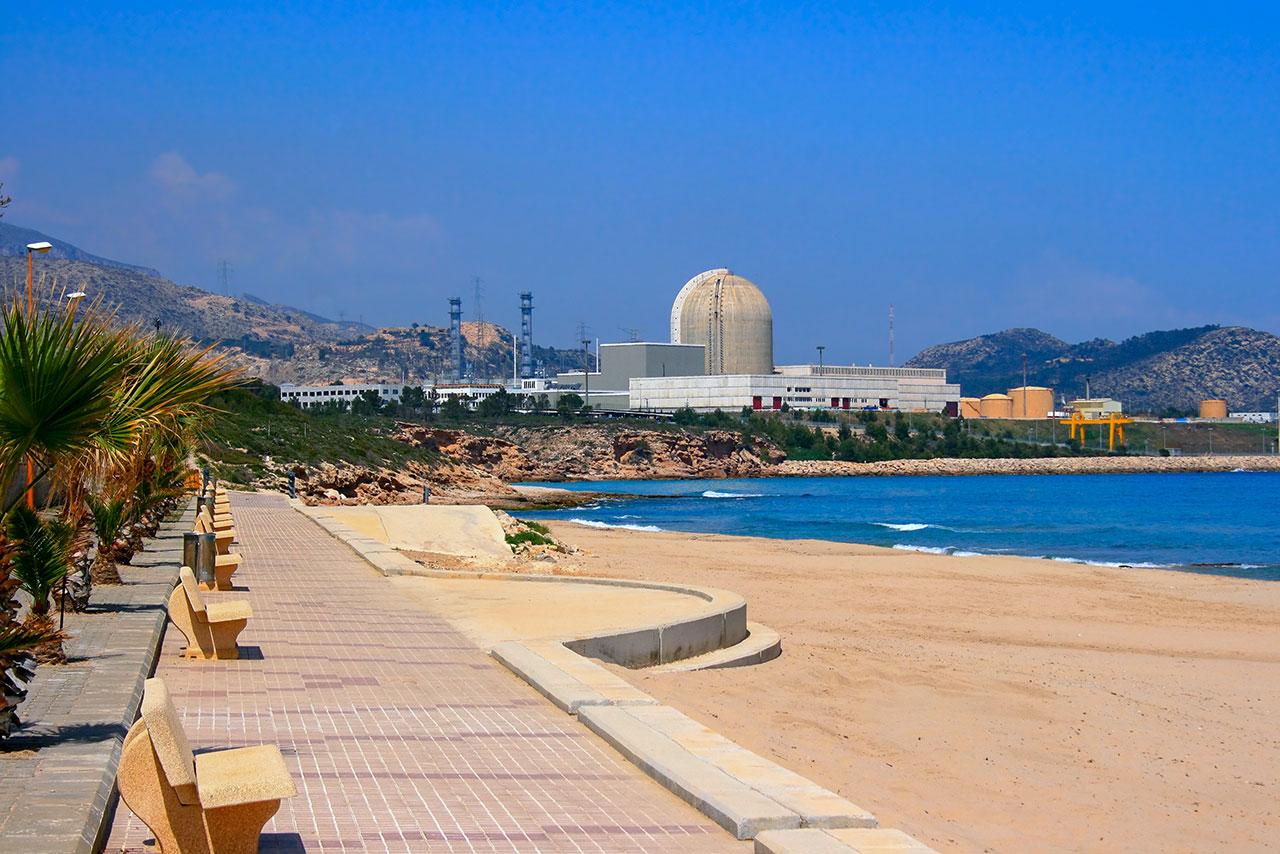
View of the Vandellós nuclear site from the beach at the Spanish resort of L’Almadrava.
Graphite blocks are used as the moderator, with fuel channels passing vertically through the graphite core. Carbon dioxide (CO2) is used as the coolant. In Magnox reactors, the gas leaves the core at a temperature of around 400 °C. AGRs use slightly enriched uranium dioxide fuel clad in stainless steel, allowing the carbon dioxide coolant to reach temperatures of around 650 °C. The hot gas transfers its thermal energy to water in steam generators, producing steam that drives a turbine. Both Magnox and AGR power plants therefore use a two-circuit arrangement.
3 pictures
3 pictures
The high coolant temperature of AGRs allows them to achieve a thermal efficiency of around 40%, unusually high for a nuclear power plant.


Robie, your AI assistant