


Solar Collectors
8 min read
Air Based Collectors
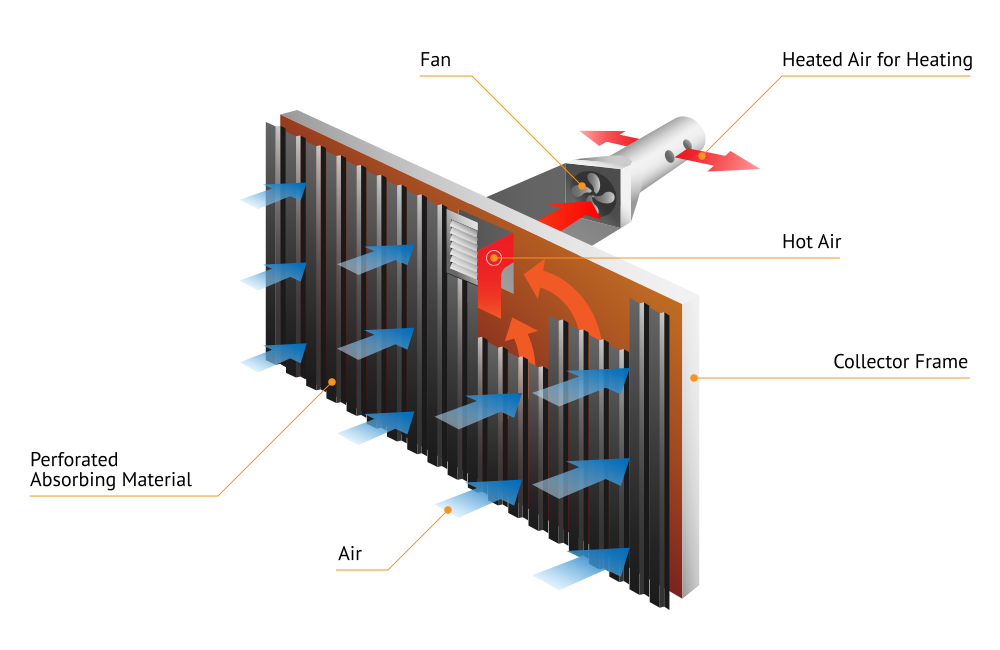
Schematic of an unglazed transpired solar air collector.
Free Downloads › Images / Unglazed transpired solar air collector
The primary purpose of solar air collectors is to heat air that is used in ventilation or space-heating systems. By design, these are very simple devices, usually consisting of a lightweight frame, an absorber, glazing and sometimes a fan for propelling the air through the collector. Since no liquid flows through them, they cannot leak or freeze and do not need to be watertight.
The disadvantages of this system are poorer heat transfer between the absorber and the air and the lower specific heat capacity of air compared with water-based heat transfer fluids. To transfer the required amount of energy, a larger absorber area and a higher airflow rate may be needed. For thermal energy storage, hot air can be passed through a storage medium containing solid materials, such as rocks.
Here are three types of air-based solar collector designs:
Unglazed collectors
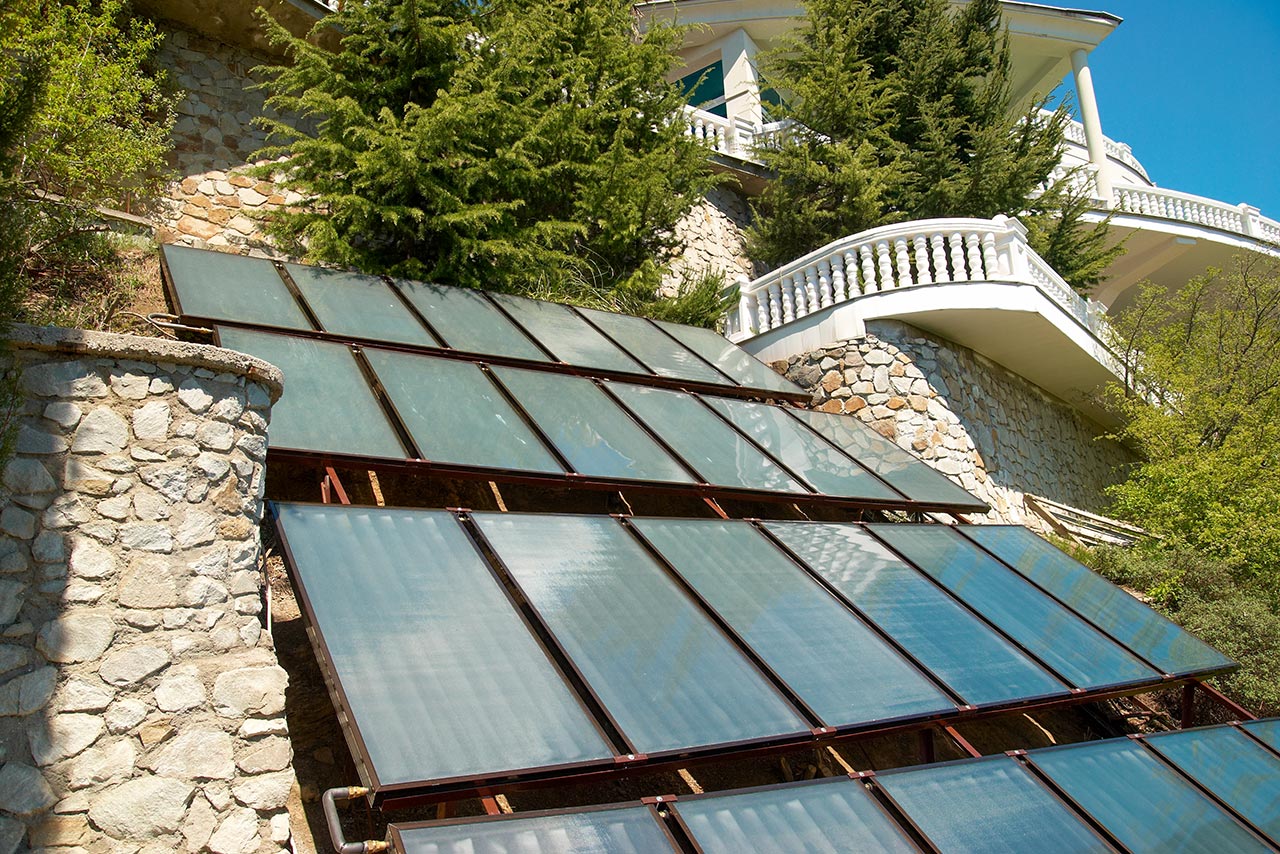
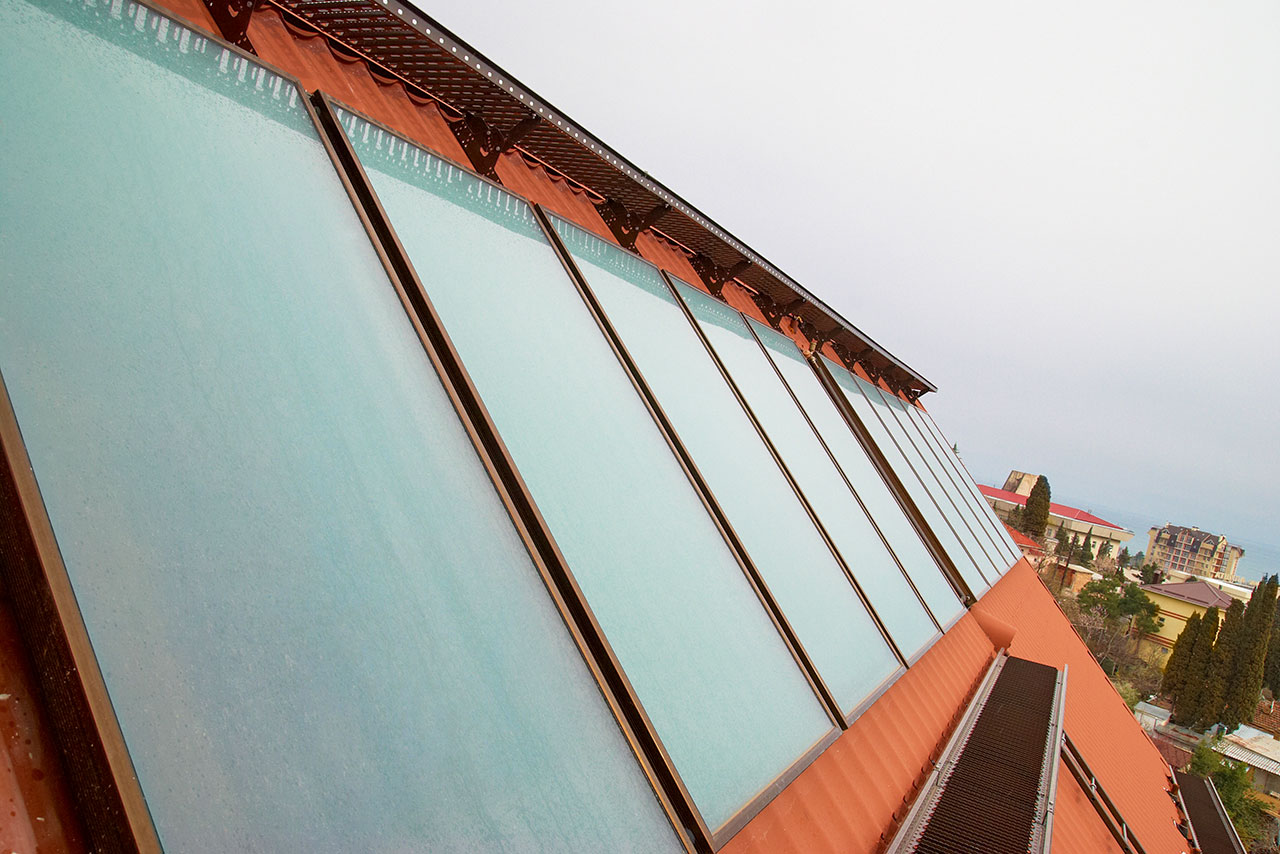
An unusual integration of flat-plate solar collectors into the architecture of a house.
The absorber is exposed directly to sunlight without a transparent cover. This results in higher convective heat losses but eliminates optical losses associated with glazing. Because of their simple design, unglazed air collectors are widely used to preheat ventilation air, often in the form of a dark perforated absorber installed on the façade of a building.
Glazed collectors
The absorber is covered by a transparent cover which reduces heat losses from the collector. These collectors can reach higher temperatures and can be connected to ventilation or space-heating systems. A fan powered by a photovoltaic panel may also be incorporated. When the Sun is shining, the fan automatically circulates the heated air to where it is required.
Closed-system solar air collectors with thermal storage
Glazed air collectors can store heat in thermal storage systems containing solid materials, such as rocks. Functionally, these systems are similar to liquid-based solar thermal systems, but use air as the heat transfer medium.
8 pictures
8 pictures
“Sunshine duration” is the period during which direct solar irradiance exceeds 120 W/m2.
Flat-Plate Collectors
Online 3D Model › Energy Efficient House / Flat-Plate Solar Collector
Free Downloads › Online 3D › Energy Efficient House / Flat-Plate Solar Collector
Video: 3D model of a flat-plate collector.
Free Downloads › Animations / 3D model of a flat-plate collector
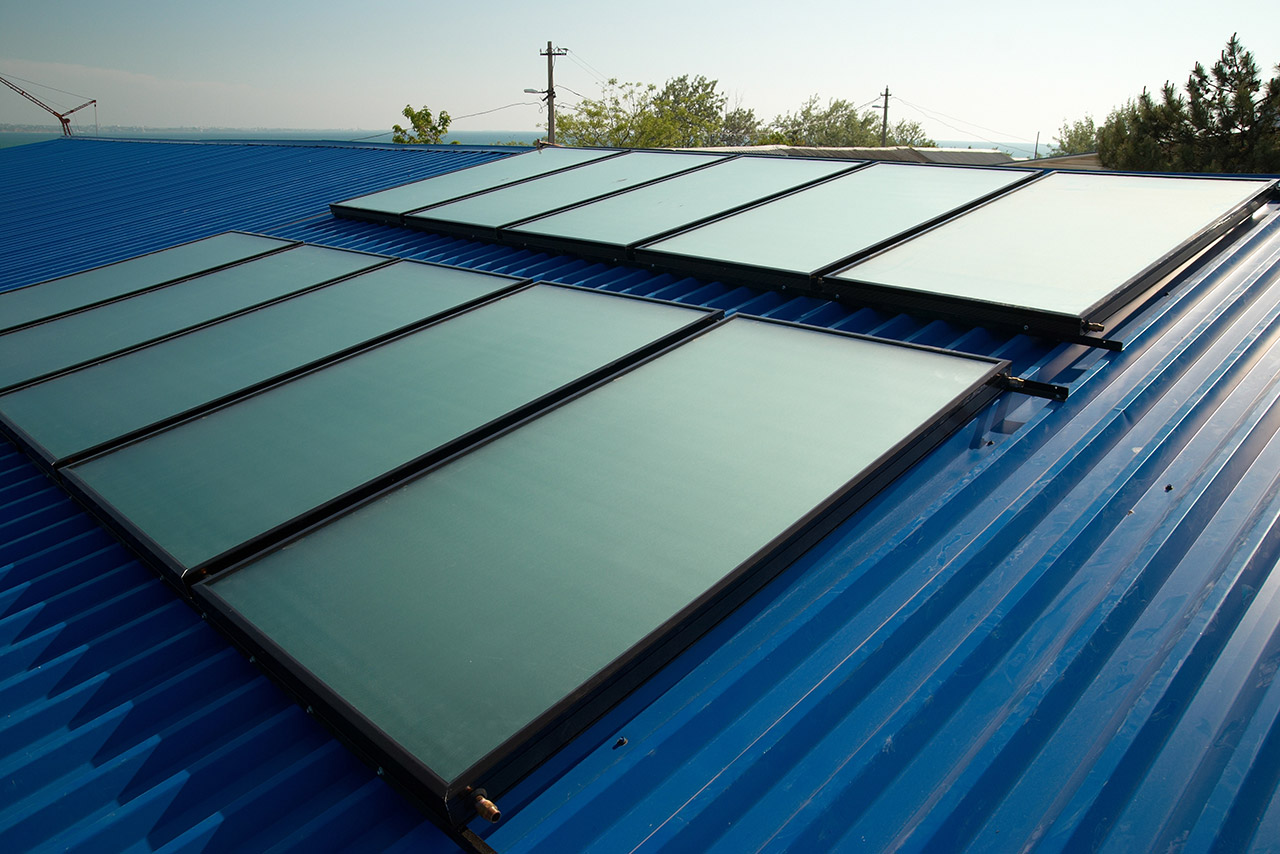
Flat-plate solar collectors are basic components of solar water-heating systems and can also be used as a supplementary heat source in space-heating systems.
The output of a flat-plate collector depends on many factors, particularly on the amount of solar radiation reaching its surface. The greatest instantaneous gain is achieved when the collector surface is perpendicular to the Sun’s rays. For fixed collectors in the Northern Hemisphere, an approximately southerly orientation generally provides the highest annual solar gain. The optimum inclination depends on the location and the season. In Central Europe, a collector inclination of approximately 20—30° is suitable for maximising summer gains, while around 60° favours winter operation. In practice, variable inclination is rarely used, and fixed collectors are commonly installed at an intermediate angle of around 40—50°, depending on the location and intended use.
A flat-plate solar collector captures solar radiation in a copper or aluminium absorber, which heats up and transfers heat to a heat transfer medium circulating through pipes. The absorber is usually provided with a dark selective coating that combines high absorption of solar radiation with low thermal emissivity, thereby improving collector efficiency. To minimise heat loss, the absorber is insulated from the back and sides of the collector using conventional insulating materials and is covered by a transparent glass or plastic cover.
The efficiency of flat-plate solar collectors depends strongly on operating conditions and can exceed 70% when the temperature difference between the collector and the surroundings is small. Well-designed solar thermal collectors can remain in service for more than 20 years. The energy savings achieved by a solar thermal system depend on the climate, system design and intended use.
Adjusting the collector inclination seasonally can increase the solar energy yield compared with a fixed collector that is not optimally inclined.
The optical efficiency of a solar collector is the ratio of the solar radiation absorbed by the collector to the solar radiation incident on its reference area. It depends mainly on the transmittance of the transparent cover and the absorptance of the absorber.
Evacuated Tube Collectors
Online 3D Model › Energy Efficient House / Evacuated Tube Solar Collector
Free Downloads › Online 3D › Energy Efficient House / Evacuated Tube Solar Collector
Video: 3D model of an evacuated tube collector.
Free Downloads › Animations / 3D model of an evacuated tube collector
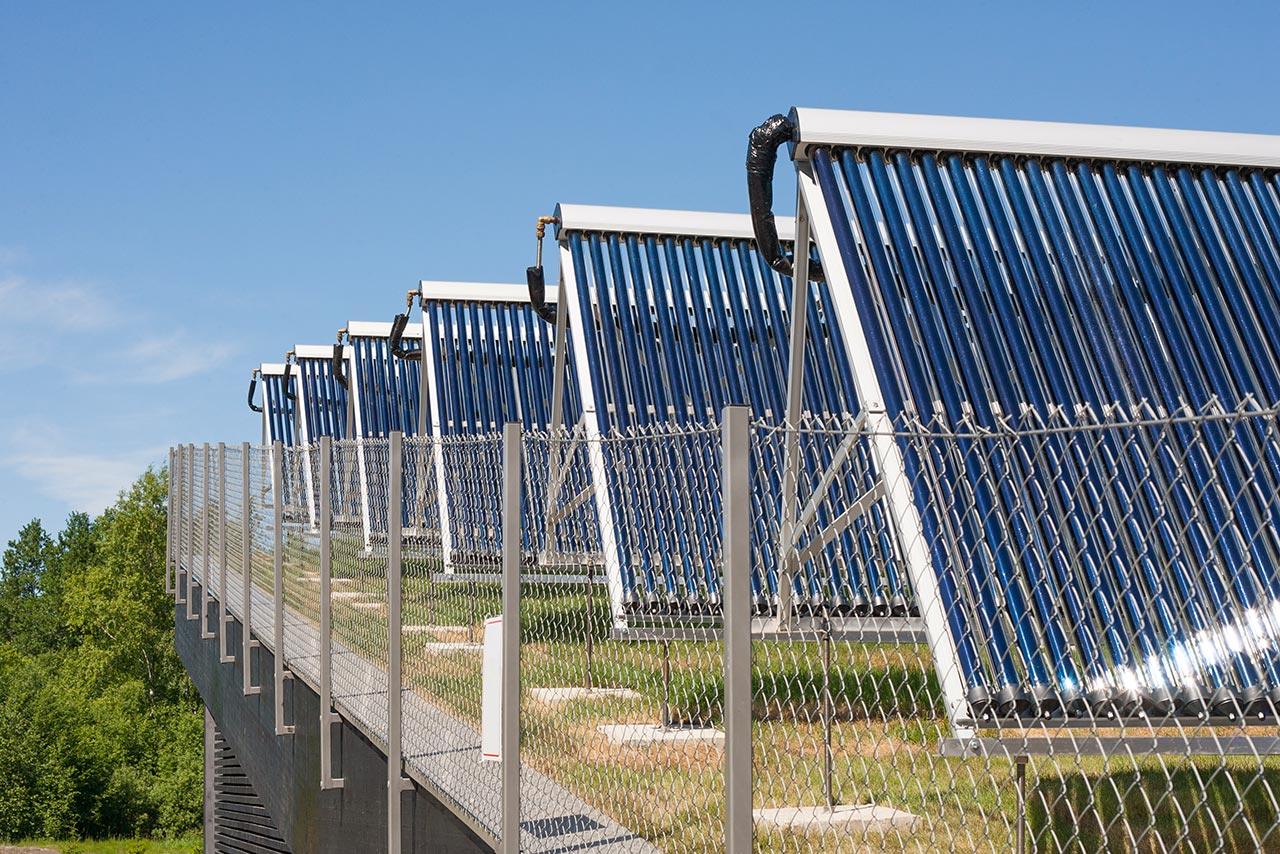
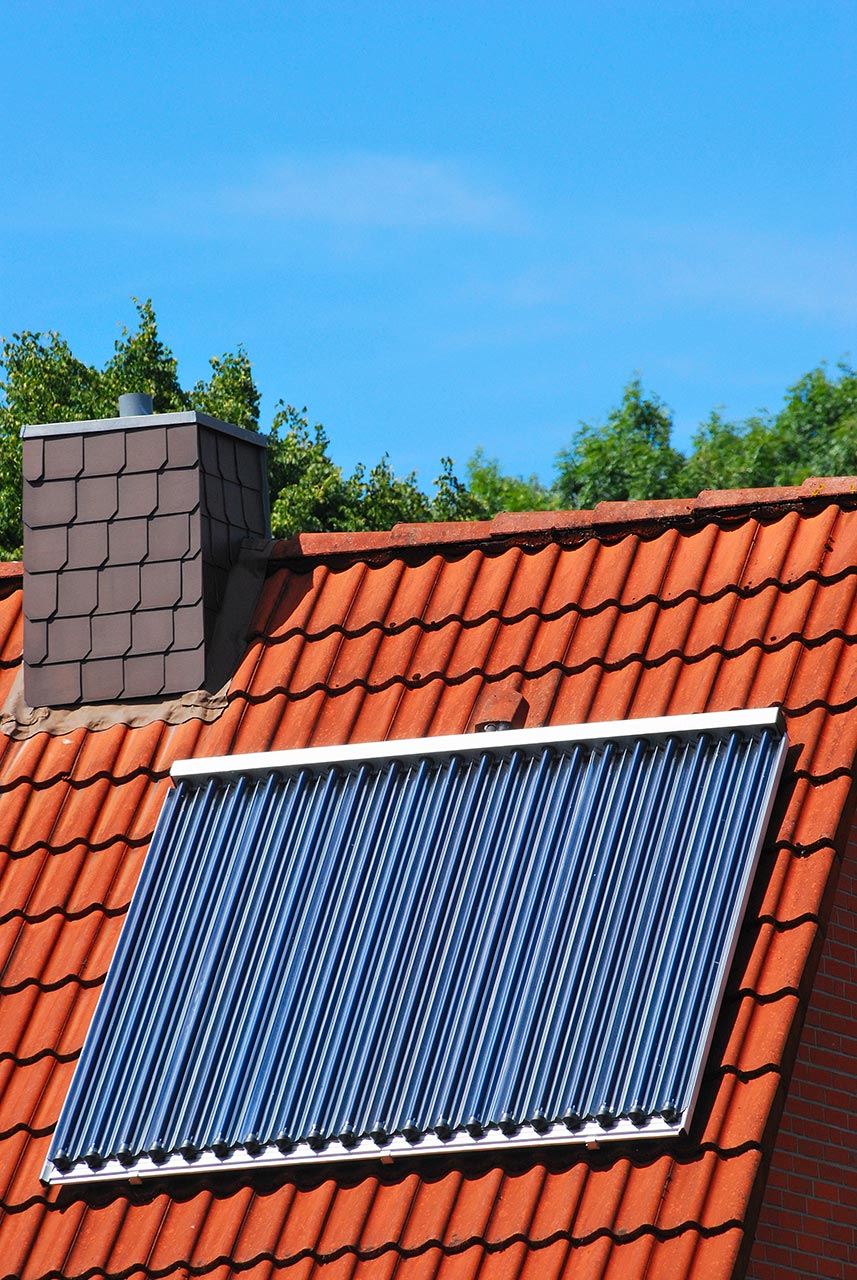
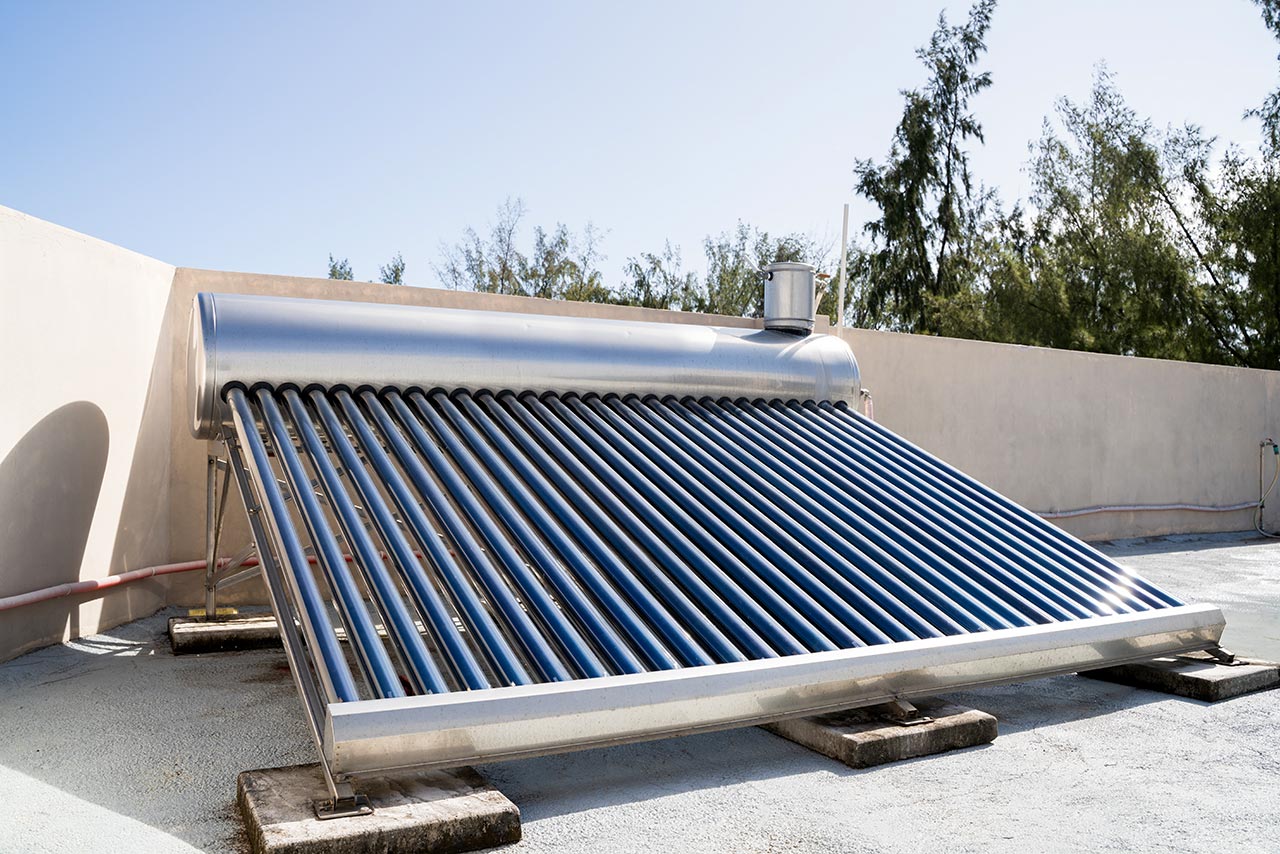
Evacuated tube solar collectors use a vacuum for thermal insulation. Thanks to this design, they lose less heat than other types of collectors and can achieve higher efficiency at low solar irradiance and low outside air temperatures.
Evacuated tube collectors can be categorised according to the construction of the evacuated tubes as single-walled or double-walled, and according to the method of heat transfer as direct-flow or heat-pipe collectors. In direct-flow designs, such as U-pipe collectors, the heat transfer medium circulates through pipes thermally connected to the absorber. A heat pipe, on the other hand, is a sealed tube containing a small amount of working fluid with a low boiling point. The working fluid evaporates when heated and the vapour rises to the condensation zone, where it transfers heat to the heat transfer medium circulating through the collector manifold. It then condenses and returns in liquid form to the bottom of the heat pipe.
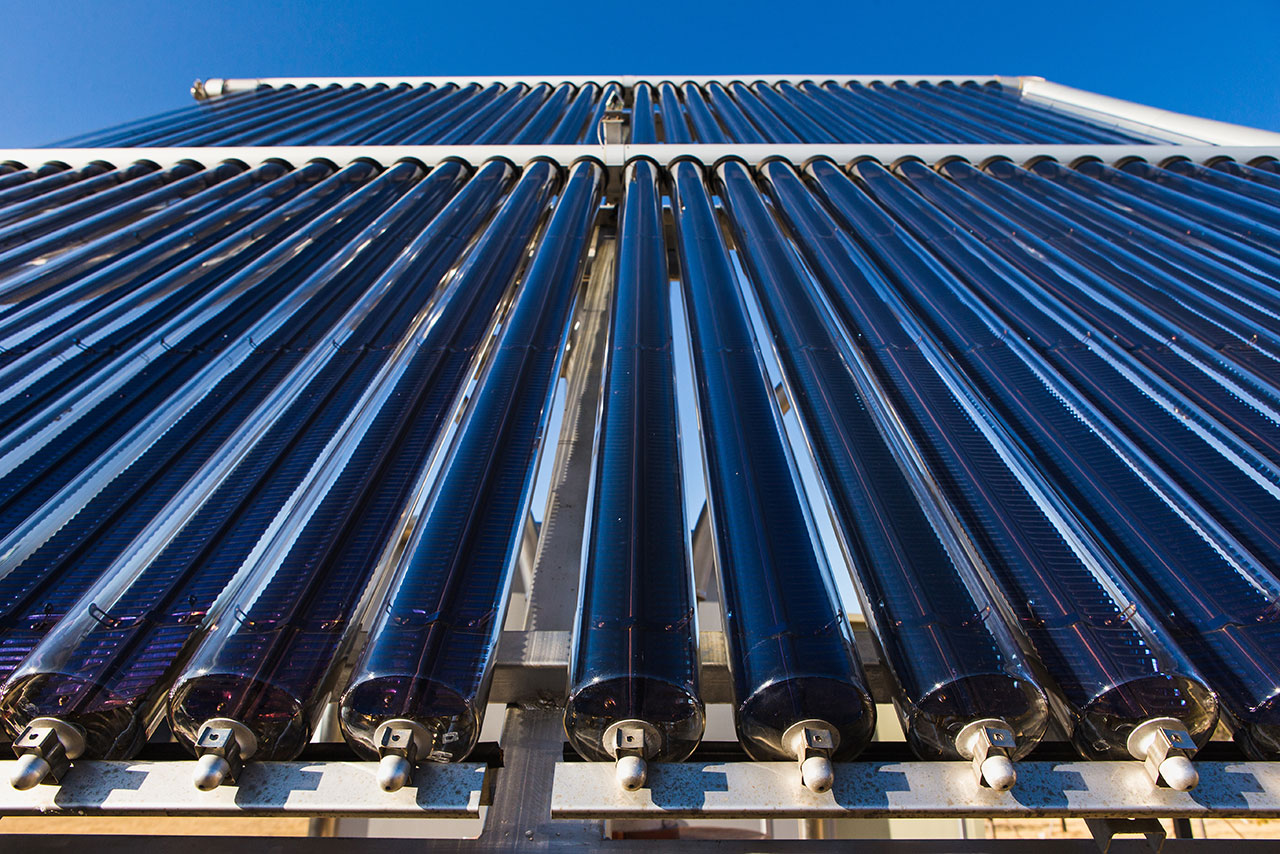
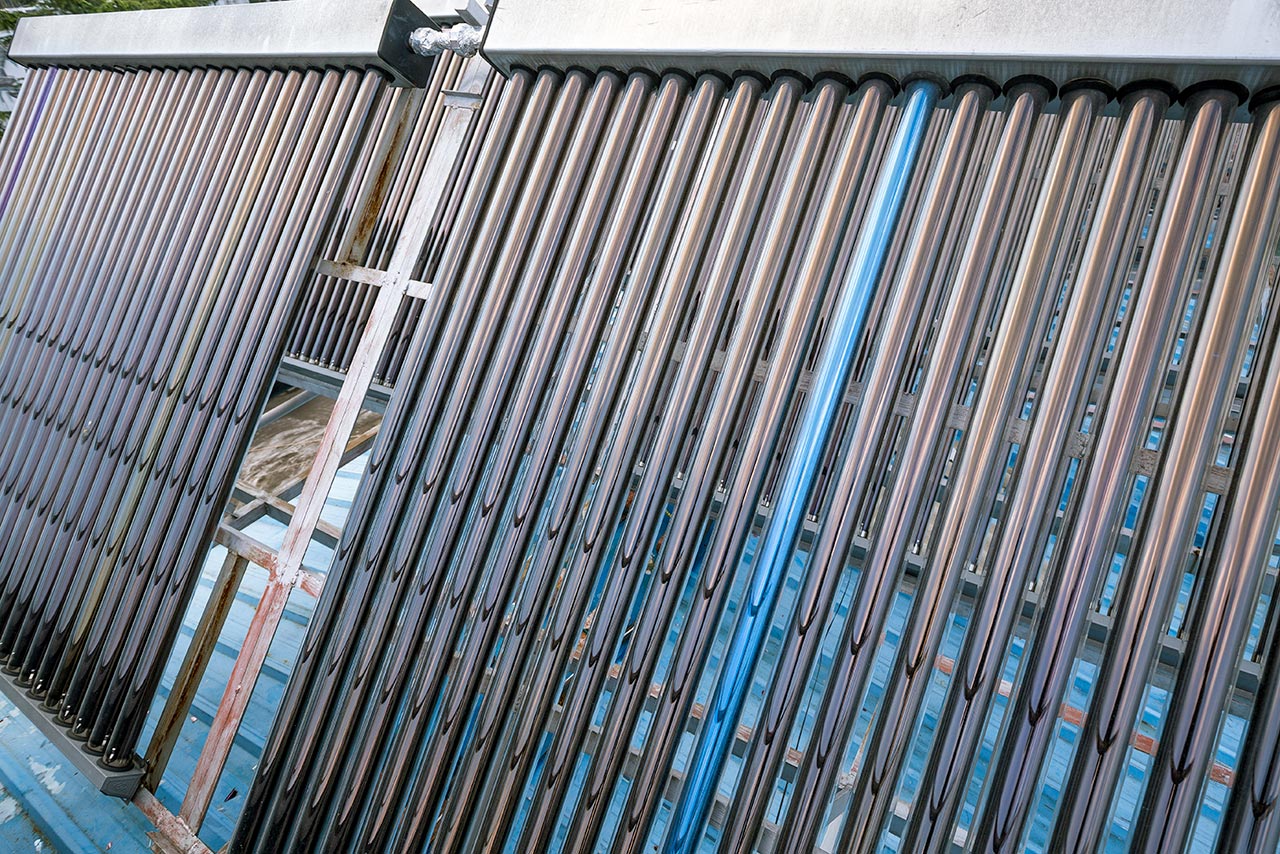
A detailed view of the selectively coated tubes of an evacuated tube collector.
Single-walled evacuated tube solar collectors consist of a single evacuated glass tube containing a flat absorber with a selective coating. The absorber is thermally connected to a heat pipe or U-pipe. Where a metal pipe passes through the glass wall, the glass-to-metal seal must maintain the insulating vacuum despite the different thermal expansion of the two materials. This represents a technically demanding part of the design.
A double-walled evacuated tube consists of two glass tubes, one inside the other, working on the same principle as a vacuum flask. The space between the two tubes is evacuated to reduce heat loss to the surroundings. The outer surface of the inner glass tube is covered with a selective coating that forms the cylindrical absorber. Heat is transferred from this absorber to a U-pipe or heat pipe located inside the inner tube. A heat transfer fin provides good thermal contact between the absorber and the U-pipe or heat pipe. The lower part of the evacuated tube contains a barium getter, which absorbs residual gases and helps to maintain the vacuum. The normally silver-coloured getter turns white if the vacuum is lost.
9 pictures
9 pictures


Robie, your AI assistant