


Wind Turbine and its Working Principle
2 min read
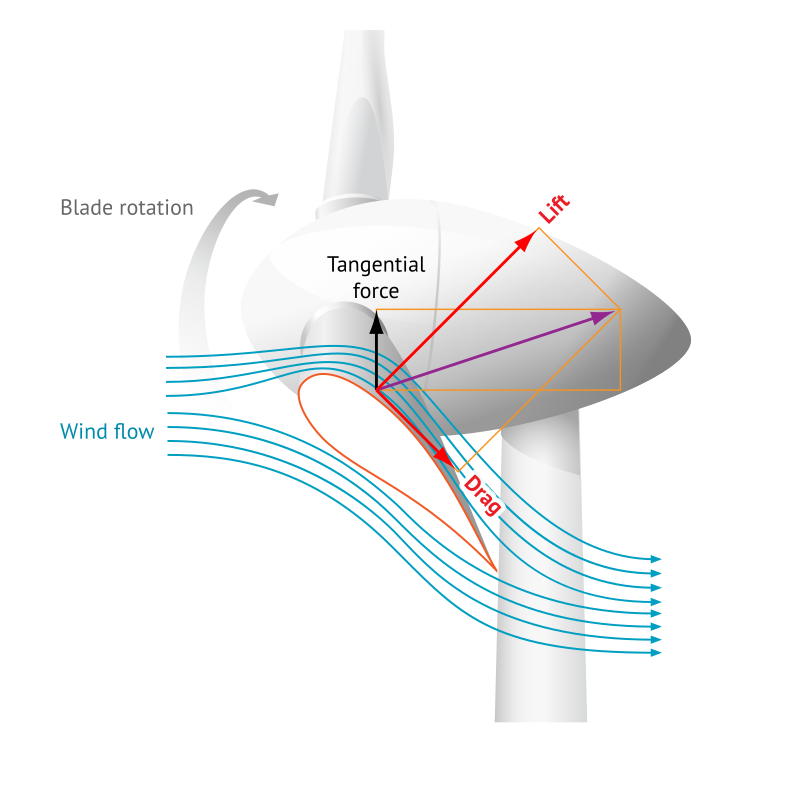
Aerodynamic forces acting on the blade of a horizontal-axis wind turbine.
Free Downloads › Images / Working principle of a horizontal-axis wind turbine
In a wind turbine, the kinetic energy of the flowing air is converted into mechanical rotational energy of the rotor. In geared turbines, a gearbox increases the low rotational speed of the rotor to drive the generator, which converts mechanical energy into electrical energy. Some horizontal-axis turbines use a multipole generator connected directly to the rotor, eliminating the need for a gearbox.
Rotor blades are among the most important components of a wind turbine. They must withstand considerable aerodynamic and mechanical loads during operation. Their aerodynamic profile and angle of attack are crucial for efficient energy extraction. Wind turbines typically start generating electricity at wind speeds of around 3—4 m/s (6—8 knots). Wind turbines typically reach their rated power at wind speeds of around 12—15 m/s (23—29 knots). At very high wind speeds, typically around 25 m/s (49 knots) or more, turbines are shut down to prevent damage.
Video: 3D model of a horizontal-axis wind turbine.
Free Downloads › Animations / 3D model of a horizontal axis wind turbine
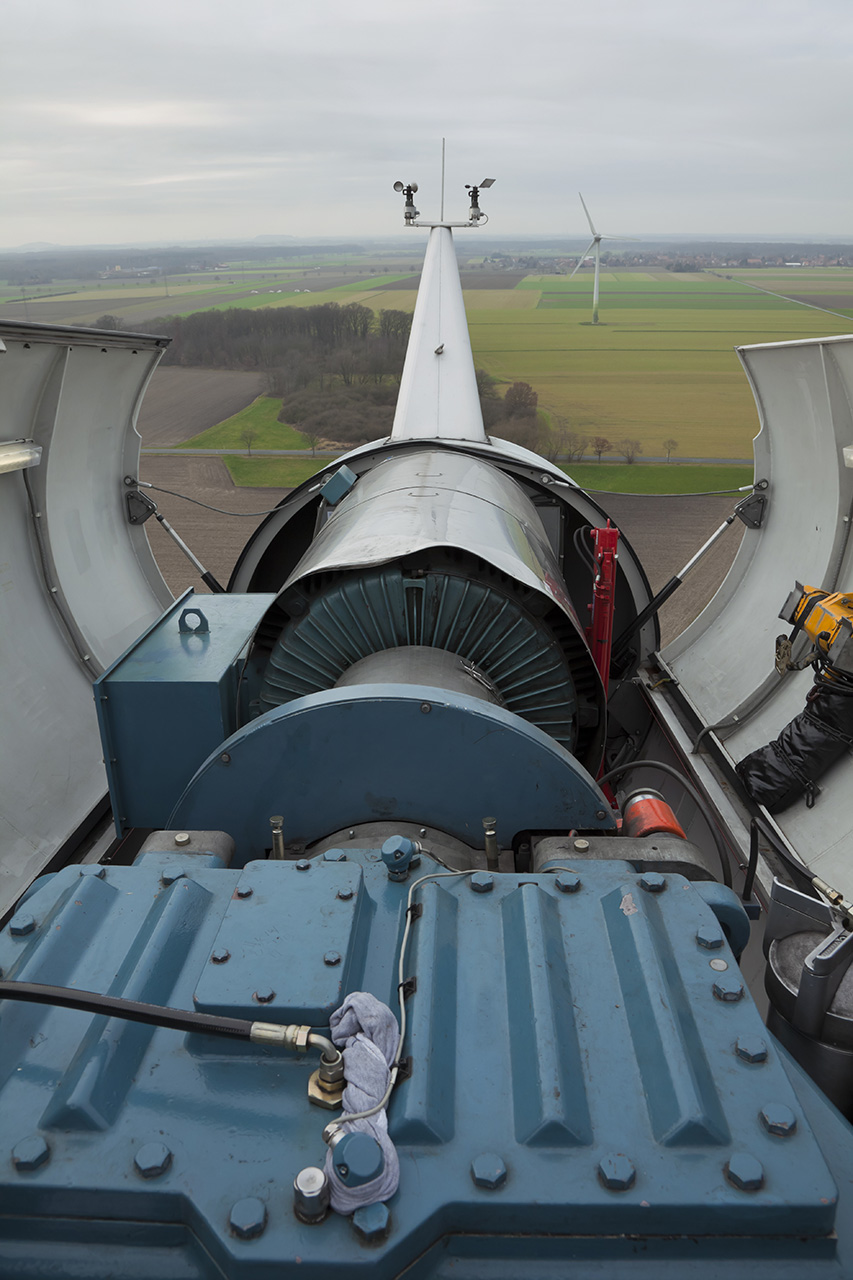
The gearbox of a wind turbine, with the electric generator located behind it in the nacelle.
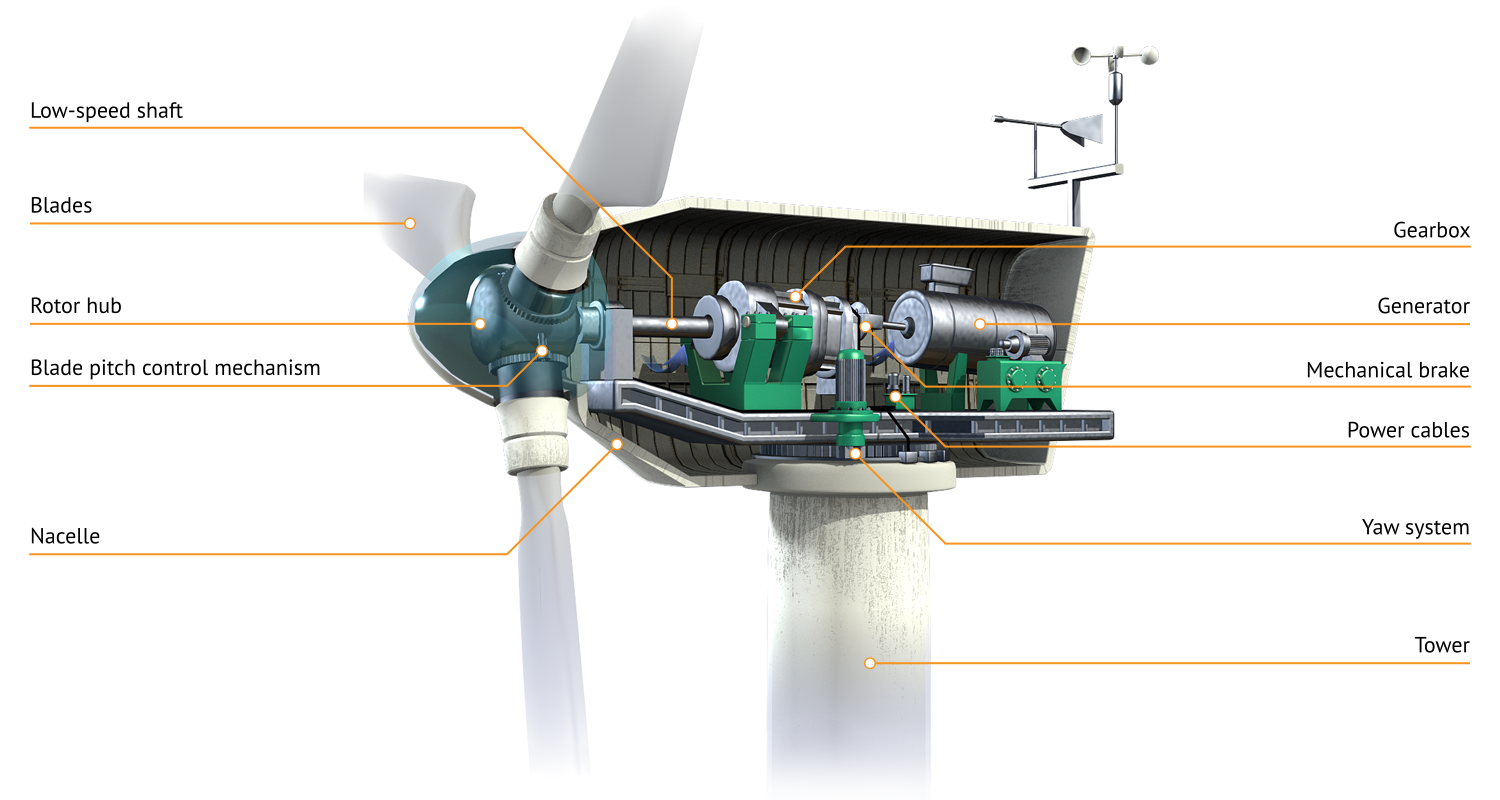
Main components of a horizontal-axis wind turbine.
Free Downloads › Images / Generator room of a horizontal-axis wind turbine
Online 3D Model / Wind Turbine
Free Downloads › Online 3D / Wind Turbine
The gearbox of a 2 MW wind turbine can weigh around 15 tonnes.
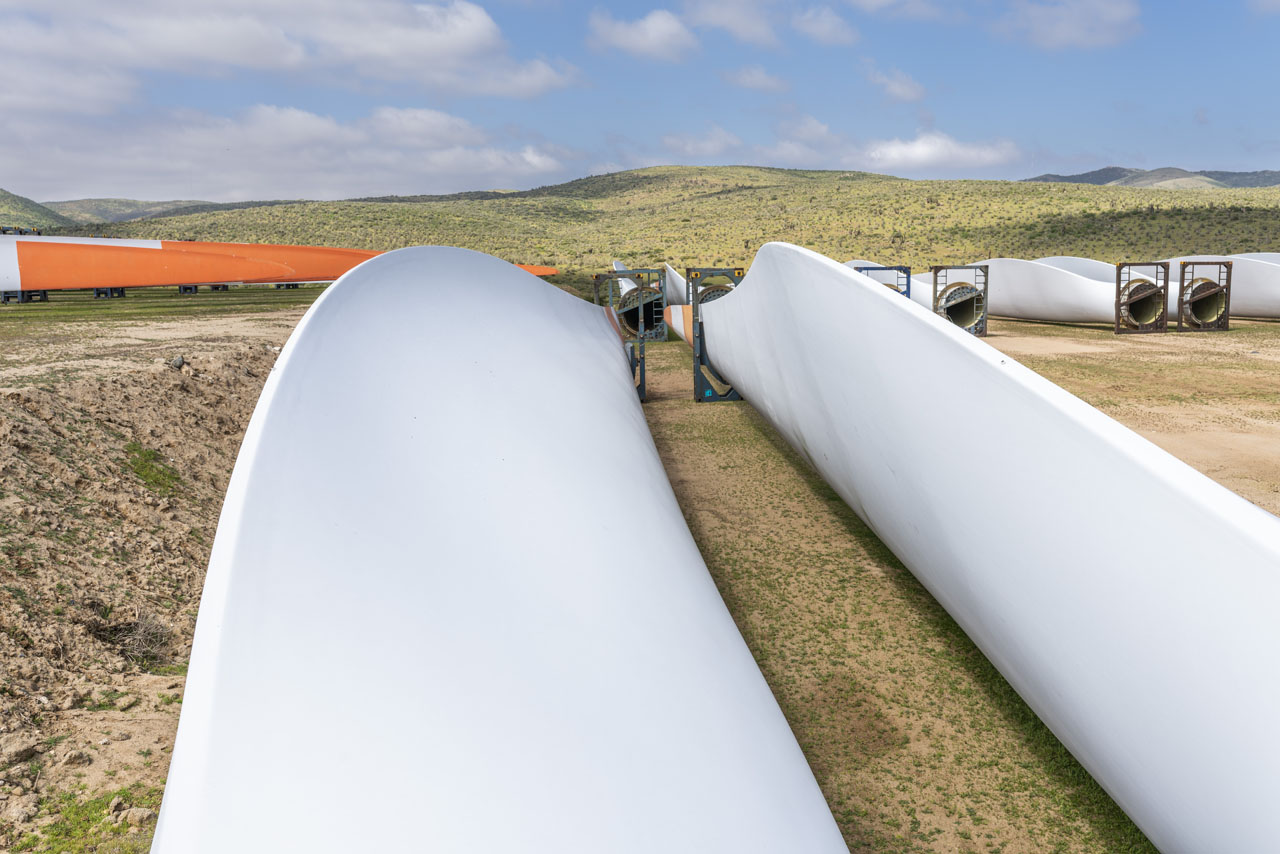
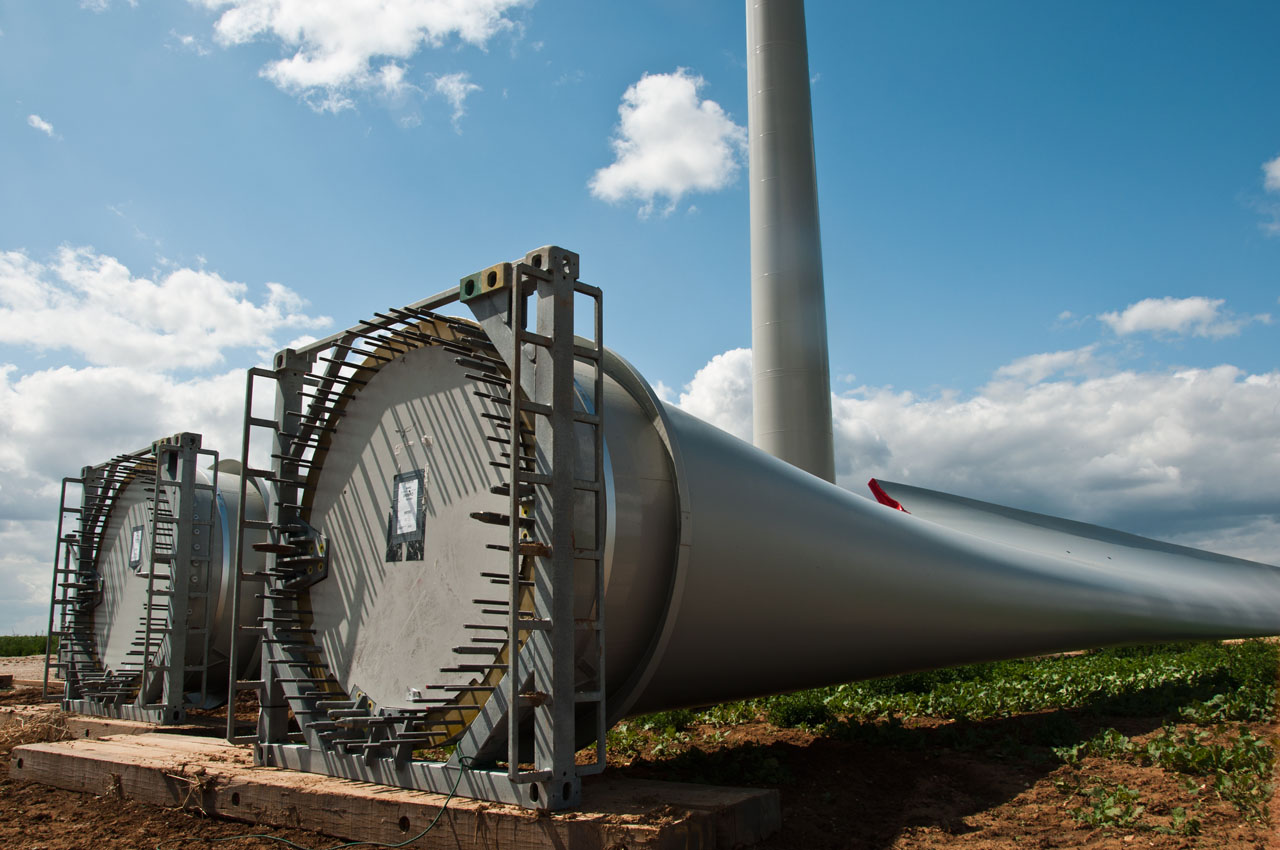
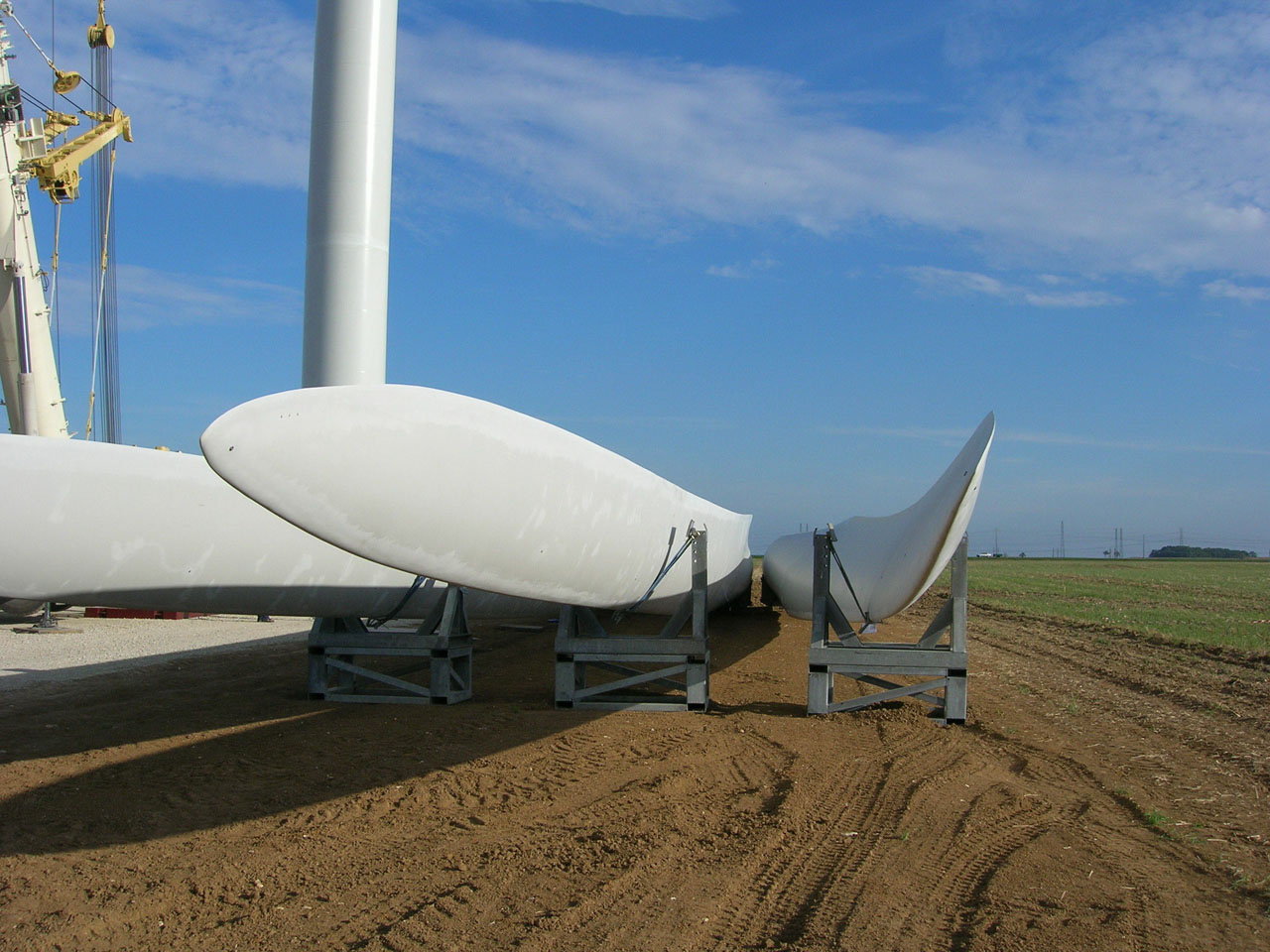
The rotor blades of large wind turbines are made of fibre-reinforced composite materials.
6 pictures
6 pictures


Robie, your AI assistant