


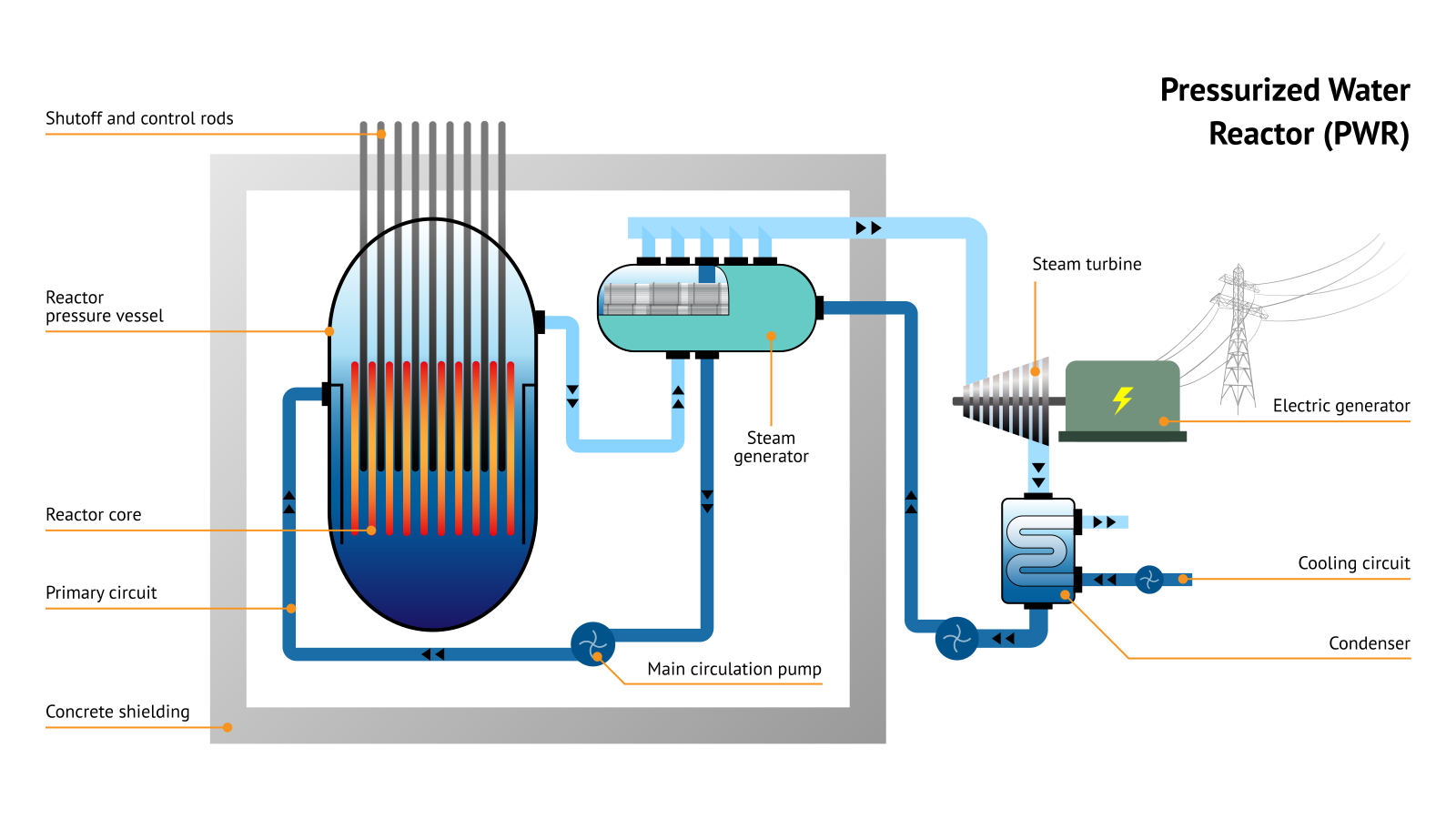


Pressurized Water Reactor (PWR)
2 min read
Online 3D Model › NPP PWR / Reactor
Free Downloads › Online 3D › NPP PWR / REACTOR
The pressurised water reactor (PWR) is the most common type of nuclear power reactor in the world, accounting for around two-thirds of all reactors in operation. The VVER (an acronym derived from the Russian vodo-vodyanoy energetichesky reaktor) is a Soviet-developed type of pressurised water reactor. PWR technology was originally developed in the United States, while the VVER design evolved independently in the Soviet Union.
Ceramic uranium dioxide pellets, typically containing uranium enriched to around 3%—5% in uranium-235, are used as fuel. They are inserted into fuel rods that are assembled into fuel assemblies about 4 metres long. The reactor core is housed in a steel pressure vessel and is typically about 3.5 metres high and 3 metres in diameter. The reactor is periodically shut down for refuelling, typically every 12 to 24 months, when a portion of the fuel assemblies is replaced.
Light water is used as both the moderator and the coolant, making the PWR a type of light water reactor (LWR). Water circulates in the primary circuit at a pressure of about 15.5 MPa and leaves the reactor at a temperature of around 315 °C. The thermal energy is transferred in steam generator to water in the secondary circuit, where steam is produced to drive a turbine. A PWR nuclear power plant therefore uses a two-circuit arrangement.
Video: View of the Watts Bar Nuclear Plant in the USA, with two Westinghouse pressurised water reactors.
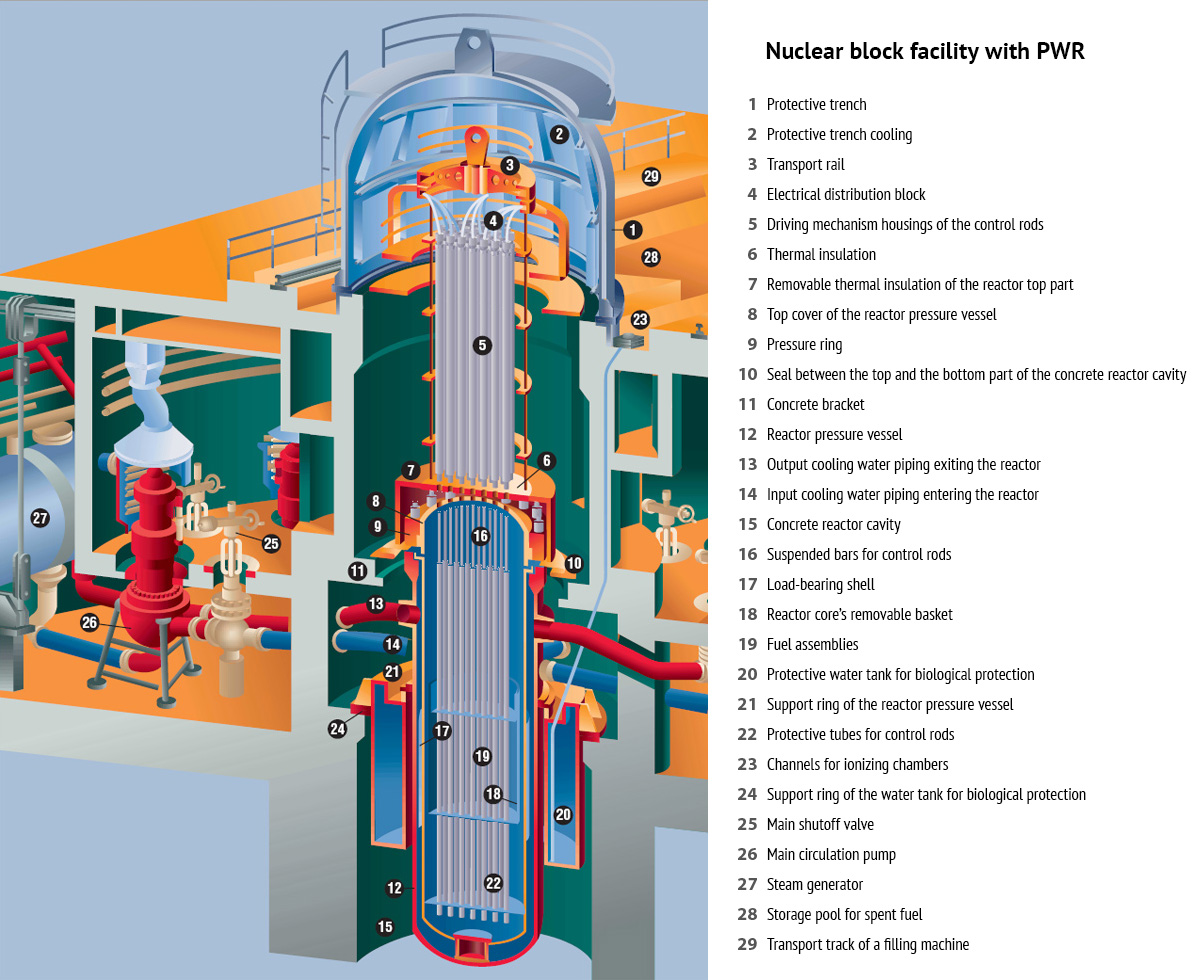
Cross-sectional diagram of a nuclear power unit with a PWR.
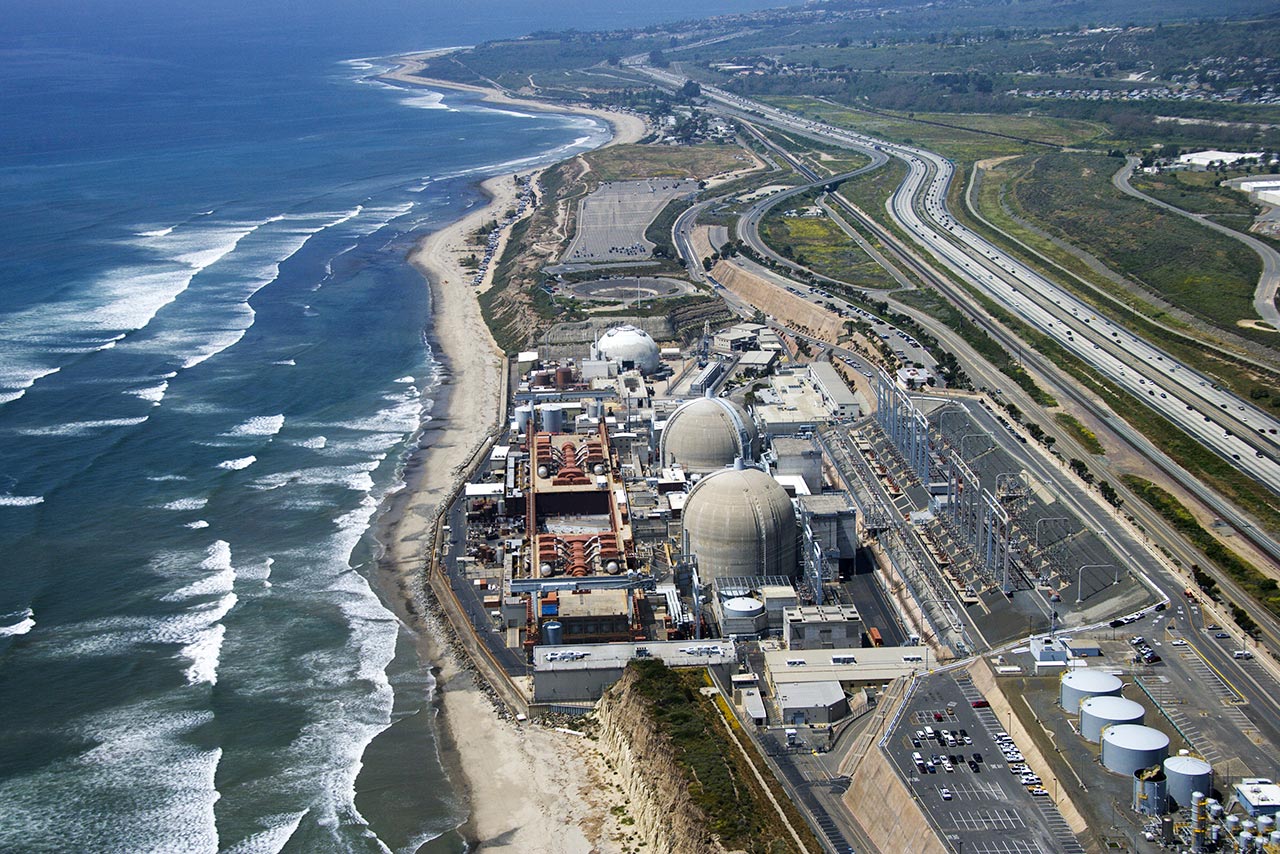
16 pictures
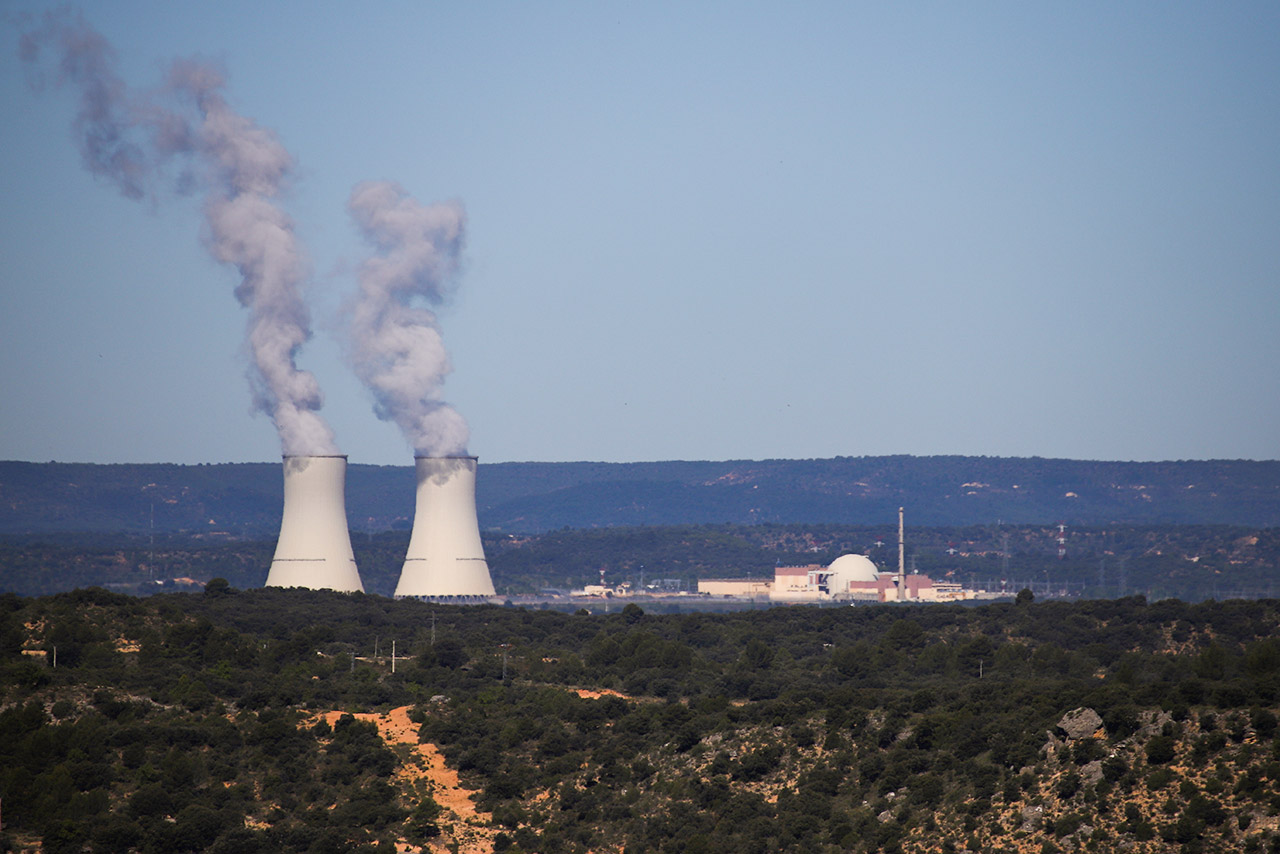
16 pictures
Pressurised water reactors are also widely used to power nuclear submarines and aircraft carriers.


Robie, your AI assistant